

What Is the Best Binding for a Hardcover Book?
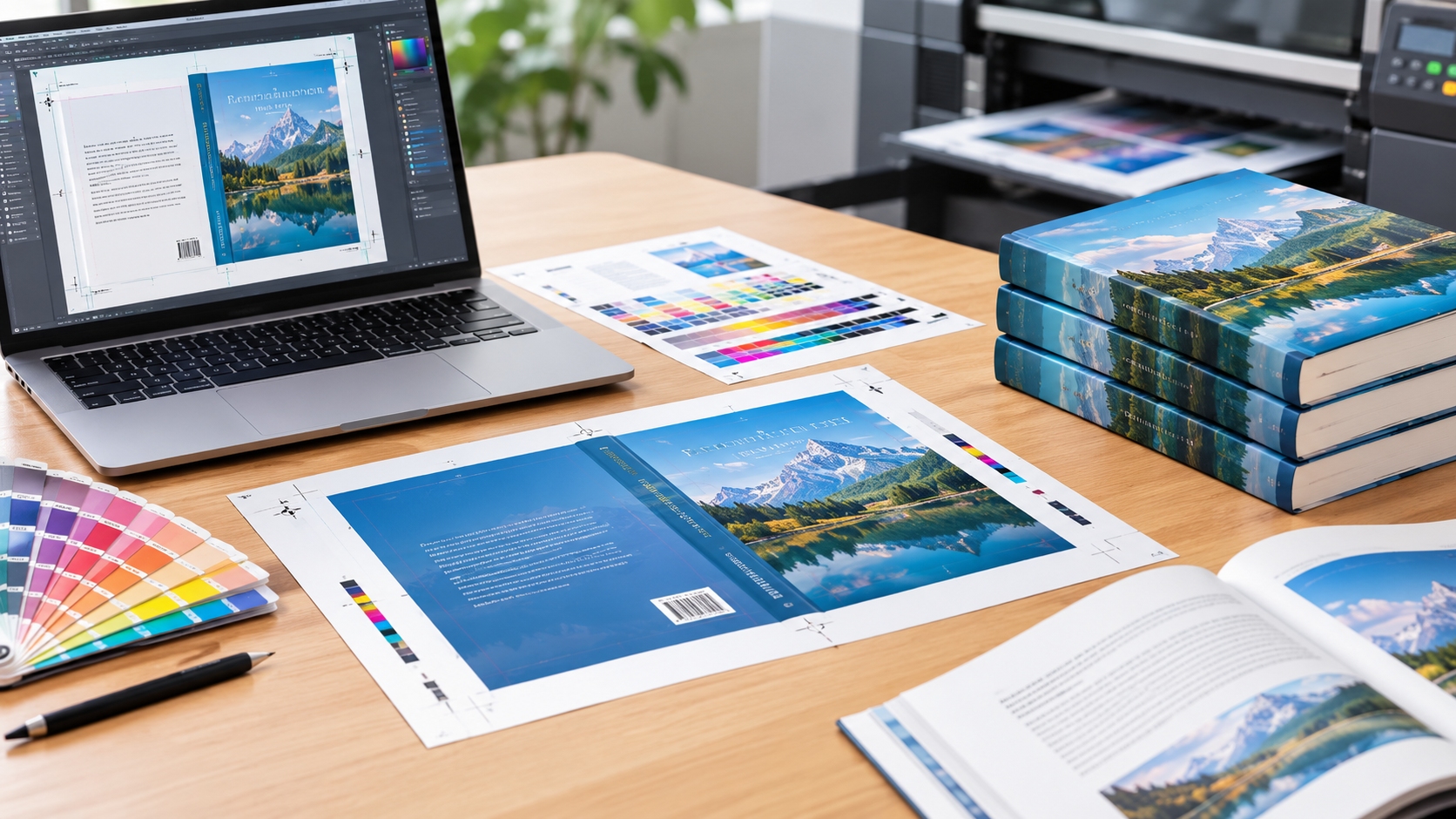
The selection of the best binding for a hardcover book is a crucial factor in guaranteeing the hardcover’s durability, readability, look and general output quality. From the printing of a textbook to the publication of a novel, printing for a corporation or a high-end photo album, the type of binding that is used can make a huge difference in the end result.
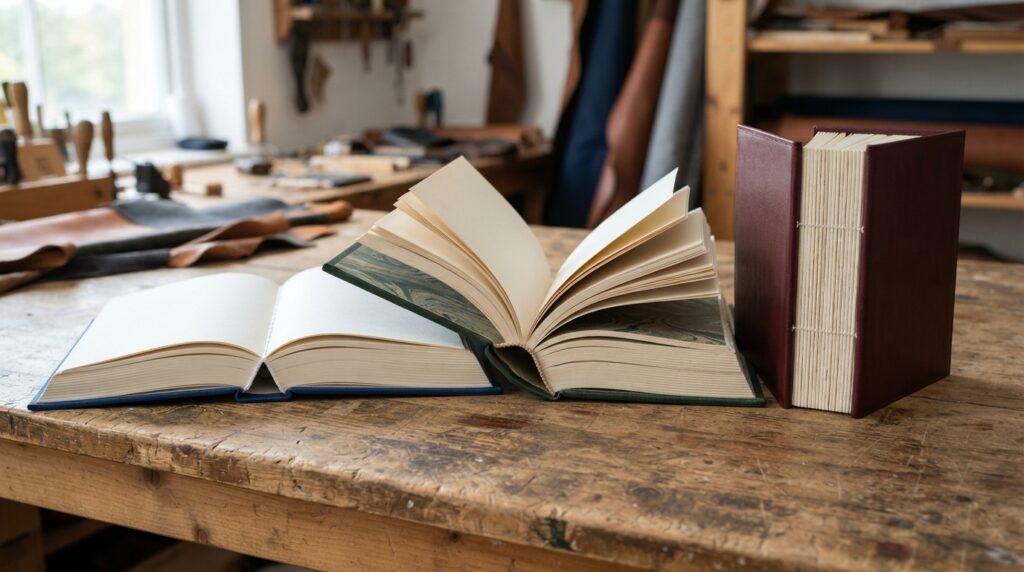
Case binding is the most durable, professional and page protective form of binding for most hardcover books. It’s not always the best binding, though, depending on the book’s usage, the number of pages, the budget, the paper quality, and how often the book will be used.
Here we will look at the most popular hard cover book binding options, their pros and cons, and how to decide which to use for your publishing project.
What Is Hardcover Book Binding?
Hardcover book binding involves the process of printing pages on to a rigid cover to protect the printed matter, which is known as hardcover book binding. While paperback books have soft paper covers, hardcover books have hard boards covered with either printed paper, cloth, leather, or specialty paper.
The binding is used to keep the pages of the book together and to attach the book block to the cover. A good binding is more durable, facilitates easy reading and makes for a more aesthetically pleasing book.
Hardcover binding is popularly used for:
- Novels and literary publications
- Textbooks and educational materials
- Children’s books and illustrated books
- Photography books and art collections
- Business reports and corporate publications
- Premium gift books and commemorative editions
- Journals, diaries, and reference books
Different binding techniques offer different levels of strength, flexibility, and cost efficiency. Understanding these differences helps publishers and businesses make informed printing decisions.
What Is the Best Binding Method for a Hardcover Book?
Case binding is generally the best binding method for hardcover books. It combines a durable book block with a rigid cover, creating a sturdy product suitable for frequent reading and long-term storage.
However, case binding includes different ways of assembling and attaching the pages. Sewn binding and adhesive binding are two common approaches used in hardcover book production.
1. Sewn Case Binding
Sewn case binding is one of the most durable and premium hardcover binding methods. The printed pages are arranged into folded sections, which are sewn together before being attached to the hardcover case.
This construction creates a strong connection between the sections and helps the book withstand repeated opening and closing.
Advantages:
- Excellent durability for long-term use
- Strong page retention
- Better flexibility when opening the book
- Suitable for thick books and frequent handling
- Ideal for premium publications and archival collections
Disadvantages:
- Generally more expensive than adhesive-only binding
- Requires additional production steps
- May involve longer manufacturing times
Sewn case binding is particularly suitable for hardcover textbooks, reference books, premium novels, art books, and publications intended to last for many years.
For publishers prioritizing longevity and quality, sewn binding is often the best investment.
2. Adhesive Case Binding
Adhesive case binding uses glue to secure the pages together at the spine before the book block is attached to the hardcover case. Depending on the manufacturing process, the spine may be prepared through milling or other methods to improve adhesive penetration.
Common adhesive technologies include hot-melt adhesives and polyurethane reactive (PUR) adhesives.
Advantages:
- Often more economical than sewn binding
- Efficient for commercial printing
- Suitable for many standard hardcover books
- Supports a clean, professional spine appearance
- Works well for medium- and large-scale production
Disadvantages:
- Durability depends heavily on adhesive quality and preparation
- Some constructions may open less flexibly than sewn books
- Poor manufacturing can cause pages to loosen or detach
Adhesive case binding is a practical choice for novels, business books, training manuals, and general hardcover publications where production efficiency and cost control are important.
For many commercial printing projects, it offers a strong balance between quality and affordability.
3. Smyth-Sewn Binding
Smyth-sewn binding is a specific sewing technique in which folded page sections are sewn together through their folds. The resulting book block is then attached to a hardcover case.
It is widely associated with high-quality books that need to remain intact through extensive use.
Advantages:
- Strong section-to-section connections
- Good flexibility when opening the book
- Excellent durability under repeated handling
- Suitable for premium and reference publications
Disadvantages:
- Higher production costs than many adhesive-only alternatives
- More complex manufacturing requirements
- May be unnecessary for inexpensive, short-life publications
Smyth-sewn binding is particularly appropriate for premium hardcover books, academic publications, cookbooks, and books expected to receive frequent use.
It is important to note that Smyth sewing is a type of sewn binding rather than a completely separate cover-binding category. It can be incorporated into case-bound book production.
Hardcover Book Binding Methods Compared
The best binding method depends on the balance between durability, production costs, and the intended use of the book.
| Binding method | Durability | Relative cost | Best applications |
|---|---|---|---|
| Sewn case binding | Excellent | High | Premium books, reference books |
| Smyth-sewn binding | Excellent | High | Textbooks, cookbooks, frequent-use books |
| Adhesive case binding | Good to very good | Low to medium | Novels, business books |
| PUR adhesive binding | Good to very good | Medium | Commercial hardcover books |
| Specialty reinforced binding | Depends on construction | Medium to high | Heavy-use or specialized publications |
These ratings are general guidelines. Actual performance depends on paper weight, page count, adhesive formulation, sewing specifications, cover construction, and manufacturing quality.
PUR adhesive is not a complete hardcover binding method by itself. It is an adhesive option that can be used in a case-binding workflow.
Which Binding Is Best for Different Types of Hardcover Books?
There is no single binding solution that is ideal for every publication. Consider the book’s intended use before selecting a binding method.
Best Binding for Hardcover Novels
For most hardcover novels, adhesive case binding provides a good balance between affordability and professional appearance. It is especially suitable for commercial fiction, short novels, and publications printed in larger quantities.
If the book is intended to become a premium edition or remain in circulation for many years, sewn case binding may be worth the additional cost.
Best Binding for Textbooks
Textbooks are frequently opened, carried, and referenced throughout the school year. Sewn case binding is often a strong choice because it helps the book withstand repeated use.
For textbooks with tight budgets, a well-manufactured adhesive-bound hardcover may also perform effectively, depending on the page count and expected lifespan.
Best Binding for Photo Books and Art Books
Photo books and art books often feature heavy paper, large illustrations, and premium finishes. Sewn binding can improve durability, while an appropriate spine construction can help the book open more comfortably.
For panoramic images or photography that crosses the center of two pages, discuss lay-flat requirements with your printer. Standard sewn or adhesive case binding does not automatically guarantee a fully flat opening.
Best Binding for Children’s Hardcover Books
Children’s books must withstand frequent handling. The ideal binding depends on the page format.
For conventional paper-page picture books, sewn or carefully manufactured adhesive case binding may be suitable. For books with thick cardboard pages, such as board books, specialized board-book construction is usually more appropriate.
Rounded corners, reinforced covers, and durable materials can further improve the finished product.
Best Binding for Premium Gift Books
For commemorative books, limited editions, and luxury publications, sewn case binding is often preferred because of its durability and premium feel.
Additional options include cloth covers, foil stamping, embossed logos, ribbon markers, and decorative endpapers. These finishing details enhance presentation, although they do not replace the importance of sound binding construction.
What Factors Should You Consider When Choosing Hardcover Binding?
Before selecting a binding method, evaluate the following factors.
1. Page Count and Book Thickness
Thicker books place greater demands on the spine and page attachment. A high-page-count publication may benefit from sewn sections, an appropriate spine design, and reinforced construction.
The printer should evaluate the final page count, paper thickness, and total book block thickness before recommending a binding method.
2. Paper Type and Weight
Different papers behave differently during binding. Heavy coated paper, lightweight uncoated paper, and specialty stock can affect flexibility, adhesive performance, and how comfortably the book opens.
Photo books and illustrated publications may require additional testing because heavier paper increases the stress placed on the spine.
3. Durability Requirements
Consider how frequently the book will be used and how long it needs to last.
For archival collections, frequently used reference books, and premium editions, sewn case binding is often a sensible choice. For general commercial publications, adhesive case binding may provide sufficient performance at a lower cost.
4. Printing Budget and Order Quantity
Binding costs vary according to materials, labor, production equipment, order quantity, and finishing requirements.
Sewing generally introduces additional manufacturing steps, while adhesive binding can be more efficient for many commercial projects. However, the total cost difference depends on the printer and project specifications.
Request quotations for multiple binding options when durability and budget requirements are uncertain.
5. Cover Materials and Finishing
Hardcover books can use printed paper wraps, cloth, leather, or other specialty materials. Finishing options may include lamination, embossing, debossing, foil stamping, and spot UV coating.
Choose materials and finishes that complement the book’s purpose while ensuring compatibility with the selected cover construction.
How Much Does Hardcover Book Binding Cost?
Hardcover book binding costs vary significantly depending on the project. There is no universal price because manufacturers calculate quotations using several variables.
The most important cost factors include:
- Total page count and book dimensions
- Paper type, weight, and print specifications
- Sewn or adhesive-bound construction
- Hardcover board thickness and cover materials
- Special finishes and additional accessories
- Printing quantity and production schedule
Sewn case binding typically costs more than adhesive-only construction because it requires additional materials and manufacturing operations.
However, choosing the least expensive binding is not always the most economical long-term decision. If a book needs to withstand years of use, a more durable construction may reduce the risk of premature damage and replacement.
For an accurate quotation, provide your printer with the book’s dimensions, page count, paper specifications, cover design, order quantity, and preferred binding method.
Frequently Asked Questions About Hardcover Book Binding
Is sewn binding better than glued binding?
Sewn binding generally offers better durability and flexibility, especially for books that are frequently opened. However, high-quality adhesive binding can be a cost-effective option for many commercial hardcover books.
The best choice depends on the book’s purpose, construction quality, and budget.
Can a hardcover book lay completely flat?
Some hardcover books can open relatively flat, but not all case-bound books provide true lay-flat performance. The result depends on the binding structure, paper, spine design, and manufacturing technique.
If full-page photographs or panoramic illustrations are important, request a sample or discuss specialized lay-flat construction with your printer.
What is the most durable hardcover binding?
Sewn case binding, including Smyth-sewn construction, is generally among the most durable choices for conventional hardcover books. Nevertheless, overall durability also depends on the cover attachment, adhesive quality, paper, and manufacturing standards.
Is hardcover binding more expensive than paperback binding?
Generally, yes. Hardcover books require rigid cover boards, additional cover materials, and a more involved manufacturing process. Sewn hardcover books may cost more still because of the additional sewing operations.
The actual difference depends on the specifications and production quantity.
Which hardcover binding is best for bulk printing?
Adhesive case binding is often an efficient option for bulk commercial printing. Sewn case binding may be preferable when long-term durability is a major requirement.
The best solution balances unit cost, production volume, and expected product lifespan.
Conclusion: What Is the Best Binding for a Hardcover Book?
Sewn case binding is good for long-lasting quality and durability, and adhesive case binding is a great choice for cost-effective commercial production.
Sewn binding is typically a good option for textbooks, higher quality editions, reference books, and publications that are used often. In cases of larger commercial print runs, business books, and novels, adhesive case binding can provide the perfect balance of appearance, performance, and cost.
Prior to ordering, consider the number of pages, paper, purpose, cover, and print budget. An experienced book printing manufacturer can assist you to choose the binding method you are looking for based on your quality requirements and production needs.
When printing any single premium copy or thousands of hardcover books, the right binding can help preserve your content, enhance the reading experience, and ensure your printed book will be a lasting asset for your readers.
Share on Social:


