

What Is the Standard Board Book Size for Toddlers?
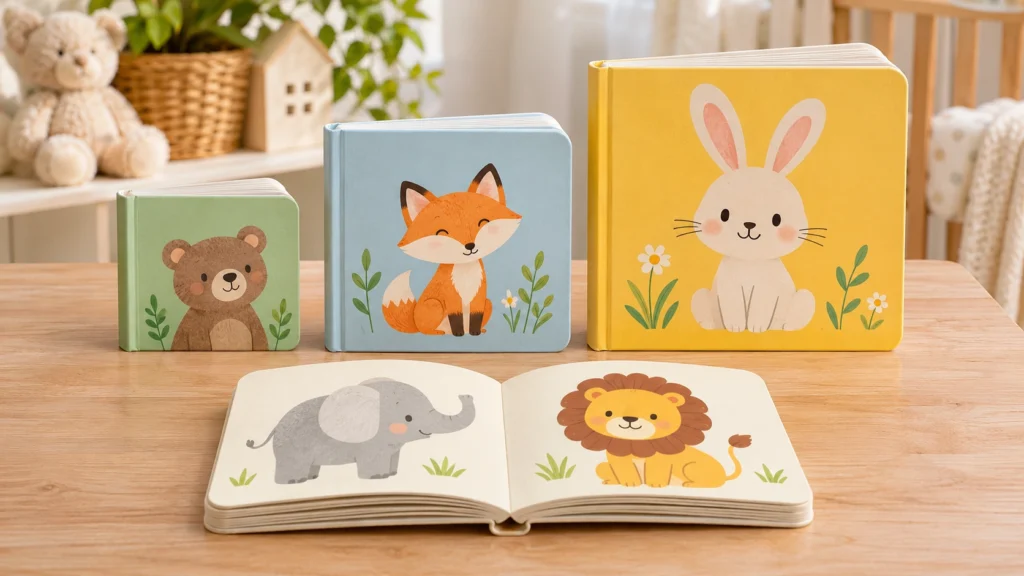
There is no single universal board book size for toddlers. Common formats include 6 × 6, 7 × 7, and 8 × 8 inches, alongside rectangular options such as 5 × 7 inches. A 6 × 6-inch square is a useful starting point for a compact book, while larger formats provide more room for illustrations and shared reading.
The right choice depends on the content, finished weight, page construction, and how children will use the book.
For publishers, “standard” should mean a practical, repeatable specification—not a size selected without testing.
Common Toddler Board Book Sizes
Board books come in several familiar formats. Square books are particularly versatile because they accommodate simple illustrations, short text, and balanced spreads.
| Finished size, width × height | Metric equivalent | Possible application |
|---|---|---|
| 5 × 7 inches | 127 × 177.8 mm | Compact portrait stories |
| 6 × 6 inches | 152.4 × 152.4 mm | First words and simple concepts |
| 7 × 7 inches | 177.8 × 177.8 mm | Illustrated stories and learning themes |
| 8 × 8 inches | 203.2 × 203.2 mm | Larger pictures and shared reading |
| 6 × 8 inches | 152.4 × 203.2 mm | Portrait illustrations and short narratives |
These are common production options, not age-based requirements. A larger book is not automatically more educational, and a smaller book is not automatically easier to handle.
Why 6 × 6 Inches Is a Useful Starting Point
The 6 × 6 inch size of a board book can accommodate an illustration and a short phrase, but without taking up too much space.
Can be useful for animals, colors, counting and everyday items. The square shape also can be an advantage in that it can be relatively easy to construct a uniform series.
However, make sure to check the final thickness. It can be a bulky book even if it is compact and has lots of heavy leaves.
Make two or three actual-size spreads before committing. If illustrations must be made smaller or text too small, make the format bigger instead of too small.
When Should Publishers Choose a Larger Format?
A 7 × 7 or 8 × 8-inch format can give illustrations more breathing room.
That additional space may help when the book contains several objects to identify, a scene to explore, or pictures intended to be viewed by an adult and child together.
The tradeoff is greater surface area and potentially more weight. A larger book may be comfortable on a lap but less convenient to carry.
For illustrated stories that need flexible paper pages instead of rigid leaves, compare children’s hardcover picture books as a separate format. Page construction matters as much as dimensions.
Square, Portrait, or Landscape?
Choose the shape around the artwork and reading sequence.
Square pages offer a flexible layout. Portrait pages suit tall subjects and vertically arranged scenes. Landscape pages provide space for wide illustrations, although the open book can become quite broad.
| Page shape | Useful for | Watch out for |
|---|---|---|
| Square | Simple concepts and balanced illustrations | Repetitive layouts without visual variety |
| Portrait | Characters, tall objects, and sequential scenes | Narrow space for wide artwork |
| Landscape | Vehicles, panoramas, and wide compositions | A broad footprint when open |
Avoid cropping every image just to preserve a preferred format. Test the most difficult artwork first; it usually reveals whether the proportions work.
Size and Weight Should Be Evaluated Together
Publishers sometimes focus on width and height while overlooking the complete object.
Board construction, page count, cover style, and additional features all contribute to weight and handling. Two books measuring 6 × 6 inches can feel surprisingly different.
Request a blank dummy using the intended materials. Check whether the leaves turn comfortably and whether the book opens without excessive force.
If you are considering custom hardcover book printing alongside a board book edition, evaluate each construction independently. A hardcover case surrounding paper pages behaves differently from a book made with rigid leaves.
Leave Enough Space for Text and Trimming
Don’t use tiny type on a small book.
Be brief and leave ample space for letters. Don’t put key information near the trim line, rounded corners or binding.
Rounded corners take away some of the rectangular page area. A face or page number placed close to the corner could be impacted.
Follow manufacturer’s bleed, safe and binding allowances. Never copy dimensions off another printer’s template and take them as facts.
Ask if the size is for the page block or for the book, and if it is the latter, for the exterior of the book (including the cover).
Does a Standard Size Reduce Printing Costs?
A familiar size may be practical, but it is not guaranteed to be the cheapest option.
Cost depends on sheet layout, equipment, material use, page count, construction, and quantity. Ask the printer to compare your preferred size with a nearby alternative.
Include packaging in that comparison. Small changes can affect carton quantities, shipping volume, and the fit of a boxed collection.
If you plan a related gift edition, coordinate dimensions early for a hardcover book with a slipcase. Packaging should fit the approved finished book.
What Should Publishers Approve Before Production?
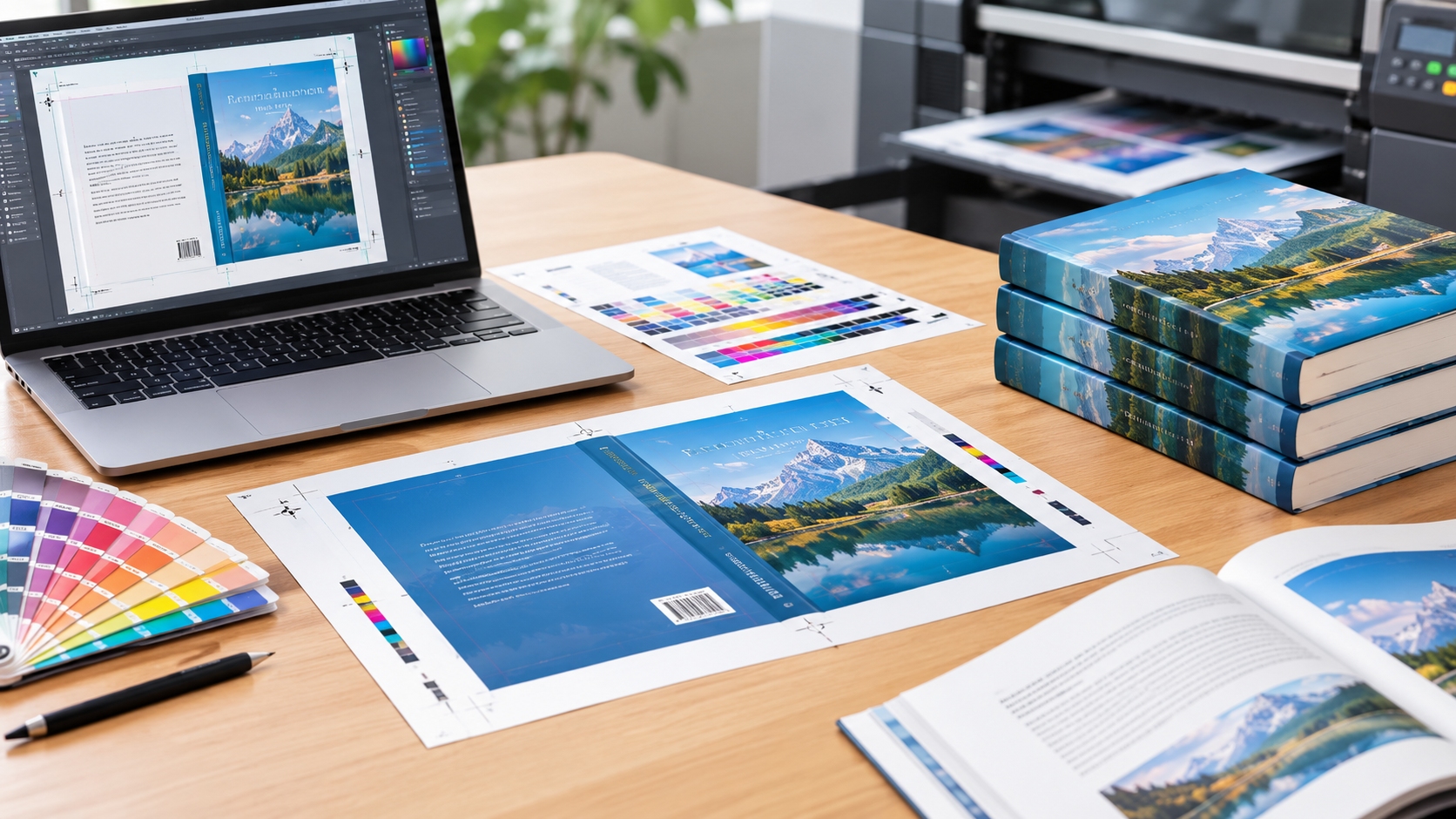
Sign more than a PDF.
All of these should be verified through a physical sample. The image quality and artwork placement should also be clearly established in printed proofs.
Document materials and construction that is agreed upon. Any substitution should be reviewed as it may affect thickness, weight, and/or performance.
Just because they are large doesn’t mean they are suitable for toddlers. Other factors like materials, construction, target age group and applicable product requirements must also be considered.
Frequently Asked Questions
Is 6 × 6 inches the standard toddler board book size?
It is a common option, but there is no single universal size. Compare it with nearby formats before finalizing.
Is 8 × 8 inches too large for toddlers?
Not necessarily. It may suit shared reading, but assess the finished weight and handling with a physical sample.
Are square board books better than rectangular ones?
Neither is universally better. Choose the proportions that support the artwork, text, and intended use.
Can publishers order a custom size?
Often, yes. Confirm equipment limits, production efficiency, packaging, and any minimum quantity requirements.
Should dimensions be written width first?
Yes. Specify width × height and clearly identify inches or millimeters throughout the order.
Do rounded corners change the stated size?
They change the corner profile rather than the overall bounding dimensions. Keep important content inside the approved safe area.
Does a smaller board book always cost less?
No. Manufacturing layout, materials, features, and order quantity can affect the comparison.
When should the final size be confirmed?
Confirm it before completing illustrations and production artwork. Approve an actual-size dummy before authorizing mass production.
Separate reference check: the common dimensions discussed above appear among established board book printing options.
Share on Social:


