

PUR vs EVA Binding: Key Differences, Costs & Benefits
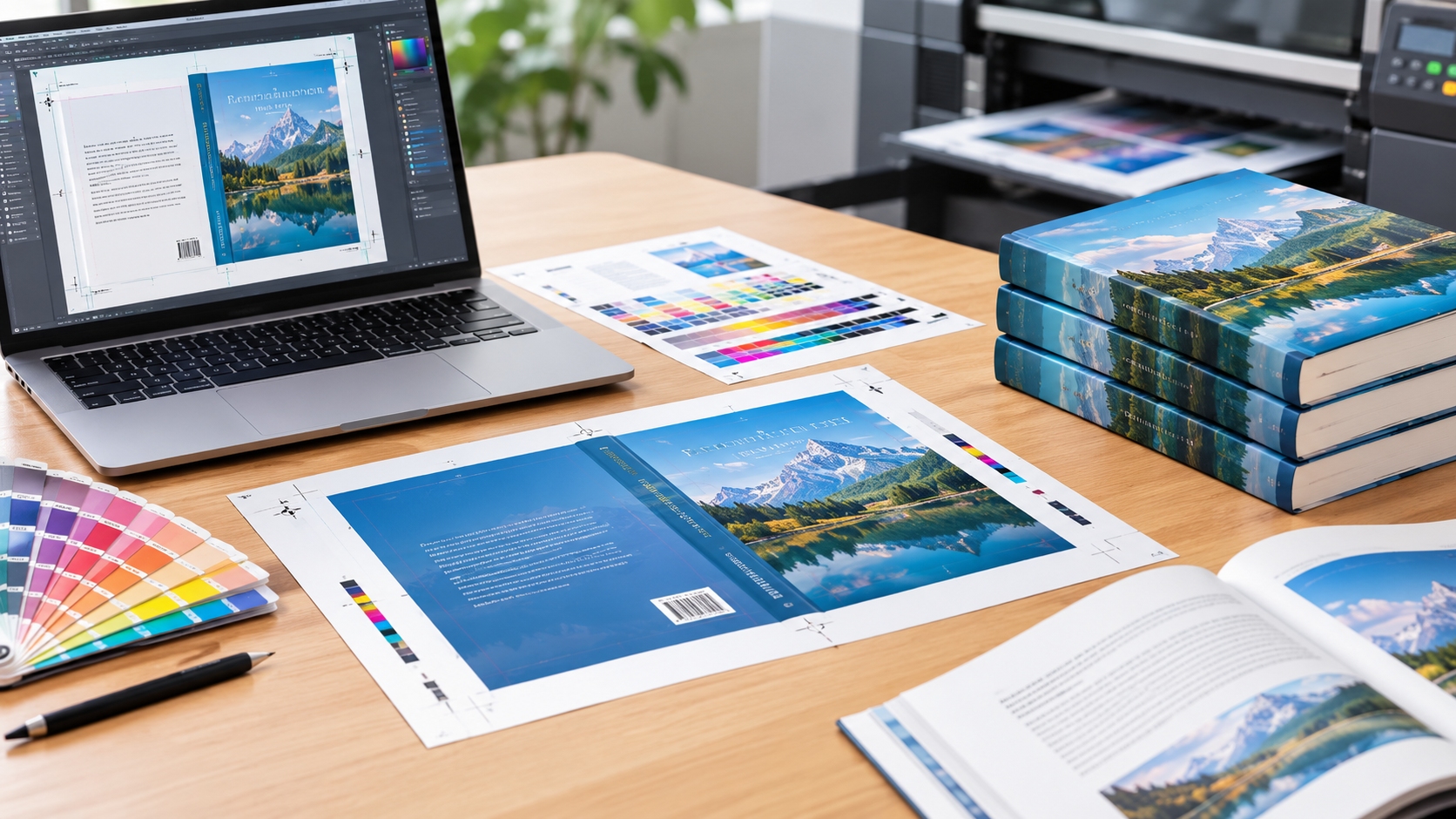
For books, catalogs, manuals, and other printed materials, there are several methods of binding, one of which is PUR.In binding a book, catalog, manual or other print materials, it is important to understand the difference between PUR vs EVA binding. PUR (Polyurethane Reactive) and EVA (Ethylene Vinyl Acetate) are two types of binding that are commonly used in perfect binding. They glue pages to the spine of the book and put it together so that there is no need for sewn signatures or staples.
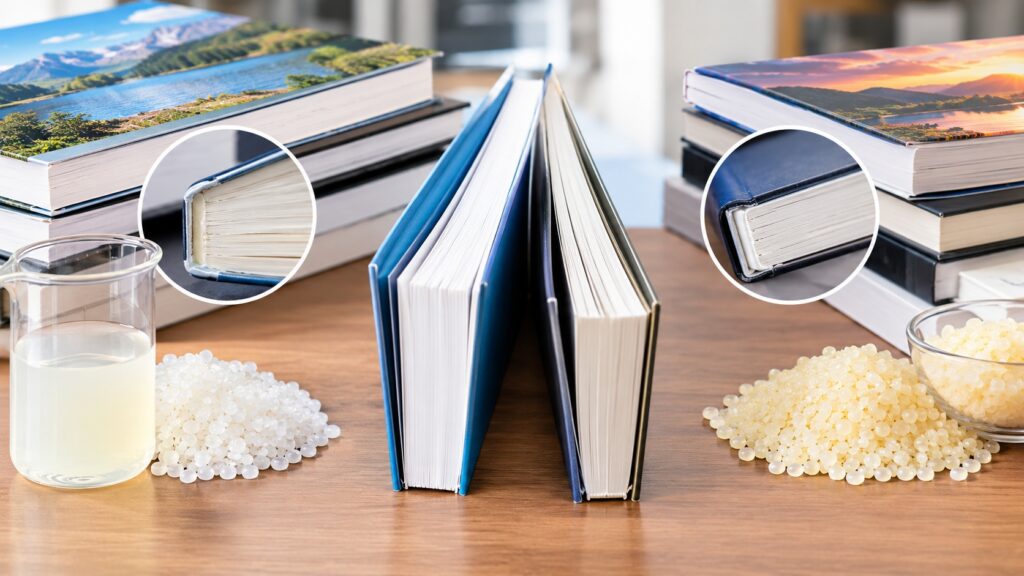
But PUR and EVA adhesives have different bonding and flexibility, durability, moisture resistance, production requirements, and cost. The selection of the suitable method can impact the completed book quality, life expectancy, and the total printing budget.
Here’s a primer on PUR vs EVA binding, along with the pros and cons of each type, to help publishers, businesses and book buyers select the right one for their printing projects.
1. What Is PUR Binding?
Polyurethane reactive adhesive is used for PUR binding to join pages of a book to its cover. Once the adhesive is applied it bonds chemically to the paper and moisture in the air.
PUR adhesive is different from conventional hot-melt glue in that after application, it will cure and improve the adhesive bond strength. Ideal for challenging book-printing applications where high page retention and durability is essential.
PUR binding is used for high quality paperback books, textbooks, art books, product catalogs, corporate publications and other items that are handled often.
Advantages of PUR Binding
1. Strong page adhesion
PUR adhesive is used to join the paper to the book spine. Can prevent pages from falling out or becoming loose, especially books that are opened and manipulated often.
2. Excellent flexibility
PUR adhesive is flexible, enabling the spine to bend while in use. This property is particularly beneficial on thicker books and publications which must be opened many times without over stressing the spine.
3. Coated paper compatibility data is provided.Coated paper compatibility data is included.
Some conventional adhesives can have problems sticking to coated paper because the surface surface can be difficult to penetrate and adhere to. Many coated and heavily printed stocks will print very well with PUR, provided that proper preparation is followed.
4. Excellent frost and freeze tolerance
PUR adhesive will have a better resistance to heat after curing compared to a conventional EVA hot-melt adhesive. This can help to preserve the integrity of the book’s binding in areas of temperature variation.
5. Acceptable for high quality publications.
PUR is frequently used for high quality paperback book, photo books, annual reports and other publications that require bonding on the page and quality and durability.
Disadvantages of PUR Binding
Despite its advantages, PUR binding also has limitations.
- Higher production costs: PUR adhesive, equipment, and maintenance can cost more than conventional EVA binding.
- Longer curing time: The adhesive needs time to cure fully, which may affect finishing, packing, and shipping schedules.
- Equipment requirements: Printers need compatible binding equipment and appropriate adhesive-handling procedures.
- More demanding maintenance: PUR systems require careful cleaning and moisture control to prevent adhesive from curing prematurely inside the equipment.
For these reasons, PUR binding is often more attractive for premium or demanding applications than for every low-cost, high-volume publication.
2. What Is EVA Binding?
EVA binding uses Ethylene Vinyl Acetate, a thermoplastic hot-melt adhesive. The adhesive is heated until it melts, applied to the book spine, and allowed to cool. As it cools and solidifies, it holds the pages together and bonds them to the cover.
EVA is a traditional adhesive solution used widely in commercial perfect binding. It is popular because it supports efficient production and can be economical for large printing runs.
EVA binding is commonly used for paperback novels, promotional books, workbooks, brochures, catalogs, and other publications where production efficiency and affordability are priorities.
Advantages of EVA Binding
1. Lower production costs
EVA adhesive is generally less expensive than PUR adhesive. For budget-conscious projects, this can help reduce the total cost of book production.
2. Fast processing
EVA adhesive bonds as it cools, allowing books to move through the production process relatively quickly. This makes it useful for printers handling large volumes or tight production schedules.
3. Established production technology
EVA binding is supported by a wide range of conventional perfect-binding equipment. Many commercial printing facilities already have the machinery and expertise required for EVA production.
4. Suitable for standard paperbacks
For books that receive moderate handling, EVA can provide satisfactory binding strength and durability. It is often an appropriate option for novels, short-run publications, promotional materials, and general-purpose books.
5. Efficient for high-volume printing
When a project prioritizes low unit cost and fast turnaround, EVA binding can offer an attractive balance between performance and production efficiency.
Disadvantages of EVA Binding
EVA also has limitations that should be considered before selecting it.
- Lower resistance to heat: EVA adhesive can soften at elevated temperatures, potentially weakening the binding under demanding conditions.
- Variable performance on coated paper: Some coated papers are more difficult to bond reliably, depending on their surface characteristics and the adhesive formulation.
- Potentially lower long-term durability: Compared with a well-executed PUR binding, some EVA applications may be more susceptible to page pullout or spine cracking after repeated use.
- Less suitable for demanding applications: Books that require exceptional page retention or frequent opening may benefit from PUR or another binding method.
The actual performance of EVA binding depends on adhesive quality, paper selection, spine preparation, machine settings, and production control.
3. PUR vs EVA Binding: Key Differences
The main difference between PUR and EVA binding lies in how the adhesives bond, cure, and perform during the life of the book.
| Feature | PUR Binding | EVA Binding |
|---|---|---|
| Full name | Polyurethane Reactive | Ethylene Vinyl Acetate |
| Adhesive type | Reactive polyurethane | Thermoplastic hot melt |
| Bonding mechanism | Moisture-triggered chemical curing | Cooling and solidification |
| Binding strength | Generally higher | Suitable for standard applications |
| Flexibility | Excellent after curing | Depends on adhesive formulation |
| Heat resistance | Generally better after curing | Generally lower |
| Coated paper | Often performs very well | Depends more heavily on paper and formulation |
| Production speed | Requires curing considerations | Fast handling after cooling |
| Adhesive cost | Usually higher | Usually lower |
| Equipment requirements | Specialized PUR-compatible systems | Conventional hot-melt systems |
| Typical applications | Premium books, textbooks, catalogs | Novels, workbooks, promotional books |
These comparisons describe typical performance, not an absolute guarantee. A well-produced EVA book can outperform a poorly produced PUR book, and the best choice depends on the specific materials and production process.
4. Which Binding Is Stronger: PUR or EVA?
For many demanding paperback applications, PUR binding offers stronger and more durable page adhesion than conventional EVA binding.
The reason is that PUR adhesive chemically reacts during curing rather than relying solely on cooling to form a bond. Once properly cured, the adhesive can maintain strong adhesion even when the book is opened repeatedly.
This makes PUR a good option for thick books, coated-paper publications, textbooks, and catalogs that need to withstand frequent handling.
EVA binding, however, remains suitable for many standard publications. A paperback novel that is read occasionally may not require the additional durability of PUR.
To compare the two methods accurately, consider three factors:
- Page pull strength: How securely the pages remain attached to the spine.
- Spine flexibility: How well the adhesive tolerates repeated opening and closing.
- Environmental conditions: Whether the book will be exposed to high temperatures or other demanding conditions.
If durability is the main priority, PUR is often the preferred option. If the book has a shorter expected service life and a limited production budget, EVA may be sufficient.
5. PUR vs EVA Binding Cost
Cost is an important consideration when printing books in bulk. EVA binding generally has a lower adhesive cost and can offer efficient production for large runs. PUR binding often costs more because of its adhesive, equipment requirements, maintenance, and curing considerations.
However, the total price of a bound book depends on more than the adhesive.
Important cost factors include:
- Book size and page count
- Paper weight, coating, and paper type
- Print quantity
- Cover material and finish
- Binding machine capabilities
- Production schedule
- Quality inspection and finishing requirements
For example, a publisher printing thousands of inexpensive paperback novels may find EVA binding more economical. A business printing a smaller quantity of premium catalogs on coated paper may find that PUR provides better long-term value.
When requesting a quotation from a book printing company, ask for prices for both PUR and EVA binding where available. Comparing the options using the same paper, dimensions, page count, cover design, and print quantity makes the cost difference easier to evaluate.
6. Which Paper Types Work Best with PUR and EVA?
Paper selection significantly influences binding quality.
Coated Paper
Coated paper is commonly used for art books, product catalogs, photography books, and publications containing detailed images.
PUR is often a strong choice because it can bond effectively to many coated stocks when the spine is properly prepared. However, the exact coating, surface energy, adhesive formulation, and milling or roughening process still matter.
EVA can also work with coated paper, but the printer may need to select a suitable adhesive formulation and optimize the binding process.
Uncoated Paper
Uncoated paper is commonly used for novels, textbooks, journals, and general-purpose publications.
Both PUR and EVA can perform well with uncoated paper. For everyday paperback books, EVA may provide sufficient durability at a lower cost. PUR is worth considering when the book is thick, heavily used, or expected to last longer.
Heavy or Specialty Paper
Thick paper stocks, heavily printed pages, and specialty materials can create additional bonding challenges.
Before production, ask the printer to confirm adhesive compatibility and whether the spine requires special preparation. For important projects, a physical sample or binding test can help verify performance.
7. PUR vs EVA Binding for Different Book Types
The best adhesive depends on the purpose of the publication.
| Book Type | Recommended Option | Reason |
|---|---|---|
| Paperback novels | EVA | Cost-effective for standard reading use |
| Textbooks | PUR | Better suited to frequent handling |
| Art and photography books | PUR | Often preferred for coated paper and premium quality |
| Product catalogs | PUR | Strong option for durable commercial publications |
| Promotional booklets | EVA | Economical for many short-term campaigns |
| Corporate reports | PUR or EVA | Depends on paper, lifespan, and budget |
| Workbooks | EVA or PUR | Depends on usage frequency and durability needs |
| Thick paperback books | PUR | Often preferred for demanding spine performance |
These recommendations are starting points rather than strict rules. Page count, paper grain direction, spine design, and the quality of the binding equipment can all affect the final result.
8. How to Choose the Right Binding Method
Before selecting PUR or EVA binding, evaluate the following questions.
What is the expected lifespan of the book?
For books that need to survive frequent use over several years, PUR is often worth considering. For publications intended for short-term use, EVA may be sufficient.
What type of paper will you use?
If the project uses coated paper or challenging paper stocks, ask the printer to evaluate PUR and other suitable adhesive options.
How important is the budget?
For large-volume projects with strict cost targets, EVA may offer better value. For premium publications, the added cost of PUR may be justified by the durability requirements.
How quickly must the books be delivered?
EVA generally allows faster handling after the adhesive cools. PUR requires appropriate curing management, so confirm the production and shipping schedule with your printer.
Can the printer provide samples?
Request samples made with comparable paper, page counts, and covers. Open the books repeatedly, inspect the spine, and check whether pages remain securely attached.
A sample evaluation is more reliable than choosing a binding method based on price alone.
9. Frequently Asked Questions About PUR vs EVA Binding
Is PUR binding better than EVA binding?
PUR binding is generally better for applications that require strong page adhesion, flexibility, and improved heat resistance. EVA is often better for cost-sensitive projects that need fast, efficient production.
Is PUR binding worth the extra cost?
PUR can be worth the additional cost when durability, coated-paper compatibility, or frequent handling is important. For simple paperback books with moderate usage, EVA may be the more economical choice.
Does PUR binding make a book last longer?
It can improve a book’s binding durability, especially when the book is manufactured correctly. However, overall lifespan also depends on paper quality, cover construction, storage conditions, and how the book is handled.
Can EVA binding be used for hardcover books?
EVA is commonly used in book production, including some hardcover-related binding operations. However, hardcover construction may involve additional steps, such as sewing or other forms of text-block preparation, depending on the product requirements.
Does PUR binding allow a book to lay flat?
PUR adhesive can provide good flexibility, but it does not automatically make a perfect-bound book lay flat. If lay-flat performance is essential, discuss sewn binding, lay-flat binding, or other specialized constructions with the printer.
Which binding is best for bulk book printing in China?
Both methods are widely used in commercial book printing. EVA can be attractive for economical, high-volume paperback projects, while PUR is often preferred for premium books and demanding applications. The best option depends on the specifications, quantity, quality expectations, and capabilities of the printing factory.
Conclusion
When deciding between PUR vs EVA binding, the decision will depend on a mix of durability, cost, production speed and the usage of the book.
In applications such as premium paperbacks, textbooks, art books, and coated-paper catalogs, PUR may be more suitable due to its ability to bond well and perform well. When it comes to novels, workbooks, promotional material or the like, EVA binding is still an affordable and effective choice.
The best way for publishers or businesses to determine which method to go with is by comparing the two with identical production specifications. You will need to talk with your printing company regarding how compatible the paper is, the strength of the binding, the curing time, and the overall manufacturing costs before you go ahead and make a final decision.
The right binding method can help create books that perform well, look good, and provide the best return for the books’ lifespan.


