

Printing Books in China vs USA: Cost, Quality & Shipping
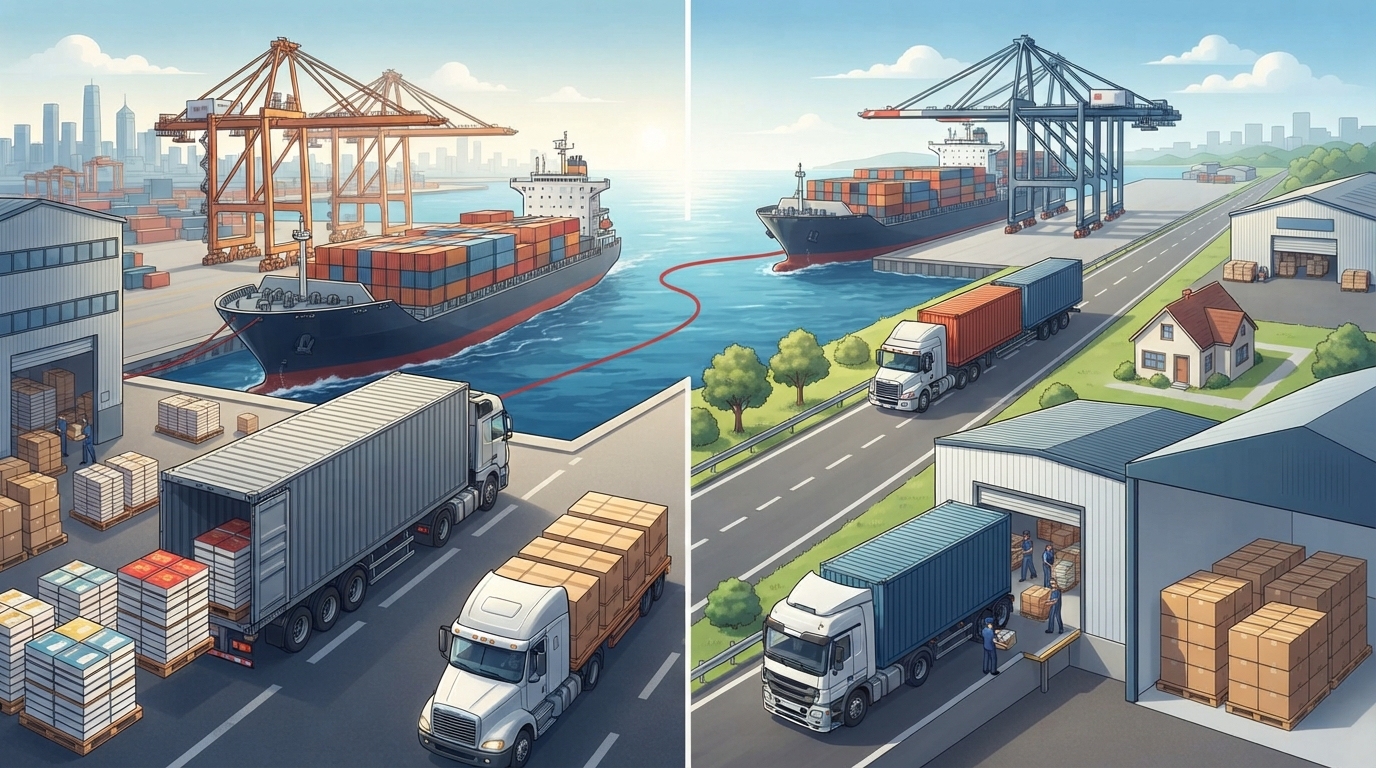
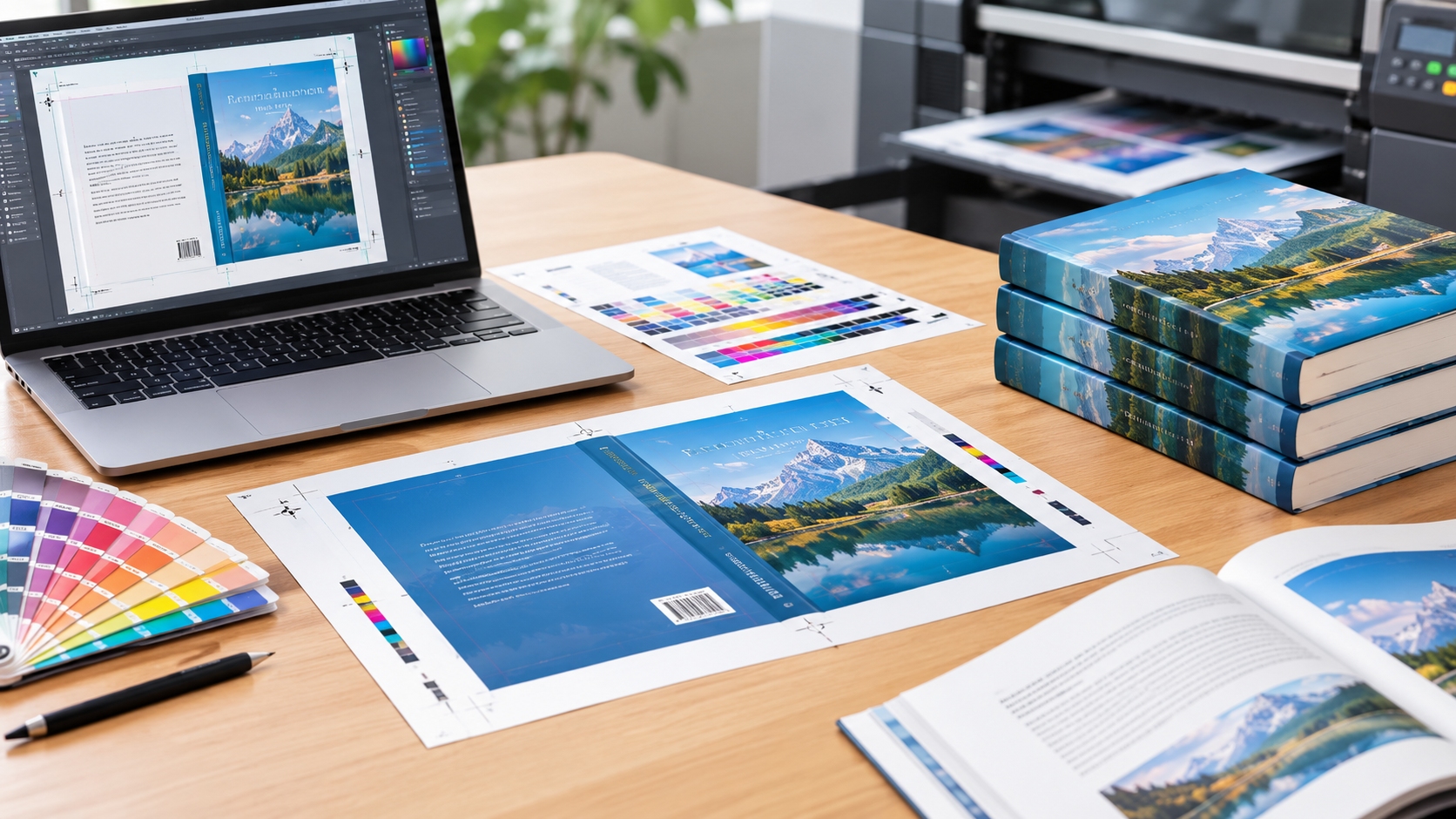

For publishers, authors, education institutions and businesses ordering books in bulk, the choice of the country where the books are to be printed is an important decision. While China and the U.S. provide book printing services, these services differ in printing cost, minimum order quantity, manufacturing capability, shipping time, and communication.
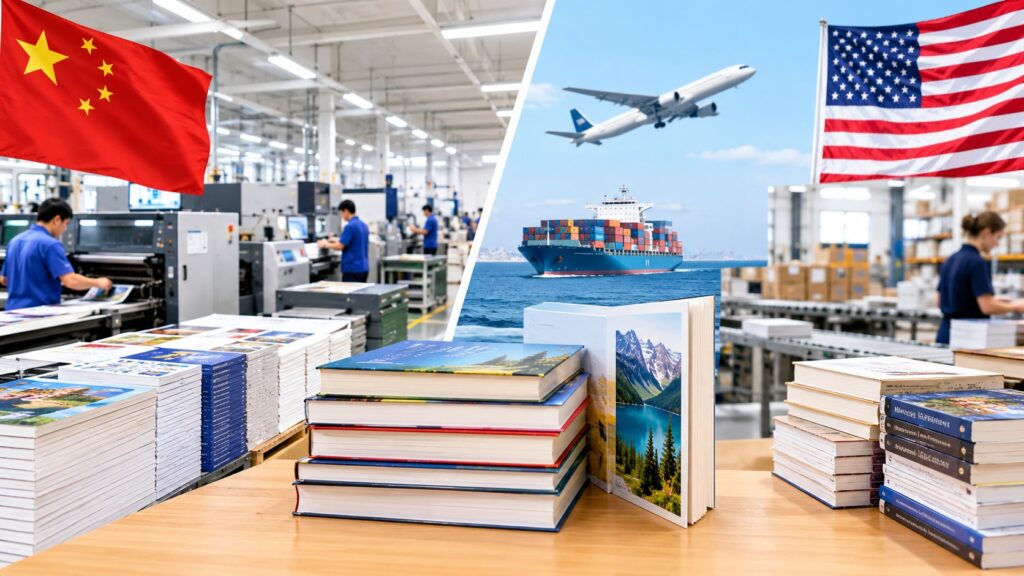
If you are looking for hardcover books and paperback novels for your business, or board books for children, a coffee table book or a custom education book, knowing the difference between printing books in China vs. the USA will help you to save money without sacrificing quality.
Large volumes and very customised book projects are often appealing to China. On the other hand, the USA has the benefits of domestic fulfillment, shorter shipping distances for American customers and easy communication with local printing companies.
This guide will help you decide which place, either China or the USA, is best suited to your budget, timeframe and publishing objectives, by comparing book printing in both countries.
1. Book Printing Costs: China vs. USA
One of the major considerations for book printing in China versus the USA is the cost.
Well-established printing supply chains, scale of printing and the availability of paper, binding and finishing resources often result in competitive pricing for Chinese printing manufacturers for large order quantities. For a publisher buying hundreds or thousands of copies, these benefits may make China a good deal.
Some comparable offset-printing jobs may wind up being more expensive on a per-page basis with U.S. printers if labor and production costs play a big part in the overall price. But in-house printing can help lower overseas shipping costs and make it easier for U.S. companies to stock up their inventories.
The real cost is dependent upon the following factors:
- Book size and page count
- Paper type, weight, and finish
- Hardcover or paperback binding
- Color printing versus black-and-white printing
- Special finishes, such as foil stamping or embossing
- Order quantity and production schedule
- Shipping, customs, and delivery requirements
If you are printing 1,000 hardcover, full color, high quality books, then it might be cheaper to do it in China than in the USA, but if you are printing 100 paperback books for an event happening in the USA then it might be easier and cheaper to do that.
Please note: The landed cost is more important than the printed quote price only. The cost of International freight, import duty (if applicable), customs brokers, inspection and warehousing can vary considerably.
2. Printing Quality and Manufacturing Capabilities
The quality of book printing is not only a function of the country of production, but also of an equipment, material, production management and quality-control measures.
There are professional printing companies in both the USA and China which are able to create quality publications.
Many Chinese book printing manufacturers are specialized in high volume production and custom printing of books. Many provide offset printing, computerized printing, case binding, sewn binding, kids board book printing, and embellishment finishes.
US printing companies also offer many services such as short run digital printing, commercial offset printing, print on demand and high-quality book production.
If you are looking for quality, ask for samples and verify these manufacturing skills:
- Color accuracy: Consistent colors across covers, illustrations, and interior pages.
- Paper quality: Appropriate paper thickness, opacity, texture, and durability.
- Binding strength: Reliable binding that holds pages securely during repeated use.
- Finishing precision: Clean trimming, accurate folding, and well-aligned covers.
- Quality control: Documented inspections for printing defects, damaged pages, and binding problems.
If you are ordering children’s books, board books, or books for book value, request samples of the paper, thickness, lamination, rounded corners, and binding of the books you are considering ordering or purchasing.
3. Minimum Order Quantity and Production Flexibility
A significant difference between printing books in China vs the USA is the minimum order quantity (MOQ).
It is common for Chinese factories to provide the best unit prices for larger orders. However, low volume projects may not be as cost-effective due to setup costs, shipping costs and production requirements by some Chinese manufacturers, who may accept low quantity orders.
When it comes to print on demand and digital printing, authors and small businesses may find more convenient options from U.S. printing companies to make use of for their limited quantity demands.
One of the most general comparisons:
| Factor | China | USA |
|---|---|---|
| Bulk production | Often highly competitive | Competitive for suitable projects |
| Small print runs | Available, but shipping may be costly | Often convenient |
| Print-on-demand | Available through selected providers | Widely used for domestic distribution |
| Custom book formats | Extensive manufacturing options | Extensive, depending on supplier |
| Unit cost at high volumes | Often lower | May be higher for comparable projects |
| Reordering small quantities | May involve international shipping | Usually simpler for US customers |
These are general trends; they are not rules. Actual MOQs and pricing depends on the book specifications, printing method and the manufacturer.
For 500–5,000 prints, ask for quotes from both countries. A thorough comparison will determine whether any advantages of overseas manufacture outweigh the extra logistics.
4. Shipping Time and Delivery Costs
Among the most important differences in practice between books printed in China and books printed in the USA is shipping.
Domestic printing reduces the transportation distances and can make it easier to distribute to bookstores, fulfillment centers, warehouses, and customers for American publishers. This is particularly helpful when inventory is required to be restocked within a short period of time.
Generally, books printed in China need international transportation. Heavy goods may be more cost-effective by air freight but will be more costly, while for large orders, ocean freight is more cost-effective but will necessitate more logistics planning and additional transit time.
The typical project timeline will consist of:
- Artwork preparation and file review.
- Proofing and approval.
- Printing and binding.
- Quality inspection and packing.
- International or domestic transportation.
- Customs clearance, if applicable, and final delivery.
For an overseas order, production time is only one part of the schedule. Allow additional time for shipping, customs procedures, and possible delays.
If your book launch has a fixed date, place the order well in advance and confirm the estimated delivery date in writing. For urgent projects, compare the full delivery schedule rather than relying on production lead time alone.
5. Customization Options for Different Types of Books
Both countries can produce a wide range of book formats, but the best supplier depends on the complexity of the project.
Hardcover books
Hardcover books may include case binding, sewn signatures, printed endpapers, dust jackets, cloth covers, foil stamping, and embossed logos. China can be particularly attractive for large-volume, highly customized hardcover projects.
Paperback books
Paperback books are suitable for novels, workbooks, catalogs, and educational publications. Digital printing in the USA can be practical for small quantities, while offset printing in either country may offer better unit economics for larger runs.
Children’s board books
Board books require thick mounted pages, durable surfaces, and precise assembly. Manufacturers experienced in children’s book production are especially important because these products have different structural requirements from standard paper books.
Art books and premium publications
Photography books, art books, and coffee table books often need accurate color reproduction, coated paper, high-quality image resolution, and specialized finishing. Evaluate actual printed samples before choosing a supplier.
For any custom project, provide the same specifications to each printer so that the quotations are directly comparable.
6. Communication, Quality Control, and Supplier Reliability
Communication can affect the success of a book printing project, particularly when working with an overseas manufacturer.
US printing companies may offer advantages in time-zone alignment, local meetings, domestic customer service, and easier coordination for American clients. This can be helpful for first-time authors or publishers who need frequent consultations.
When working with a Chinese book printing company, clear documentation is especially important. Provide print-ready files, detailed specifications, color references, binding requirements, packaging instructions, and delivery expectations.
To reduce the risk of production errors, follow these steps:
- Request a quotation based on a complete specification sheet.
- Review a digital proof before production.
- Request a physical proof for projects where color, paper, or finishing is critical.
- Approve a signed or documented production sample when appropriate.
- Agree on acceptable defect rates and inspection procedures.
- Confirm packaging standards and responsibility for shipping damage.
A reliable supplier should communicate clearly, explain technical limitations, and provide a transparent production schedule. Do not choose a printing company solely because it offers the lowest quotation.
7. Environmental Considerations and Paper Selection
Sustainability is becoming increasingly important for publishers and brands. Whether you print books in China or the USA, ask suppliers about their paper sourcing, recycled-content options, production waste management, and relevant environmental certifications.
Depending on the project, you may consider FSC-certified paper, recycled paper, responsibly sourced materials, and water-based or other suitable printing inks.
However, certification claims should be verified. Ask which facility and materials are covered, and confirm that the documentation applies to your actual order.
Shipping also affects the environmental footprint of a project. Domestic production may reduce transportation distances for US distribution, while consolidated ocean freight can be an efficient option for transporting large quantities internationally. The overall impact depends on production efficiency, materials, shipping methods, and order volume.
8. Which Is Better for Your Business?
The best choice depends on your printing requirements, distribution strategy, and budget.
Choose China when:
- You need hundreds or thousands of copies.
- Your project requires extensive customization.
- You are producing hardcover books, board books, or premium illustrated books.
- Competitive bulk manufacturing costs are a priority.
- You can plan production and international shipping in advance.
Choose the USA when:
- You need a small quantity or print-on-demand service.
- You require fast domestic replenishment.
- Your books will primarily be distributed within the United States.
- You prefer local communication and simpler logistics.
- You need to test a new title before committing to a large print run.
Some publishers use a hybrid strategy: print a small test batch domestically to validate demand, then move to larger overseas production when order volumes become predictable. This approach can help balance flexibility and unit cost, although the additional setup and coordination should be included in the budget.
9. How to Compare Book Printing Quotes
Before selecting a supplier, prepare a standardized request for quotation (RFQ). Include the following information:
| Specification | Information to provide |
|---|---|
| Book size | Finished width and height |
| Page count | Total pages, including any special inserts |
| Interior printing | Black and white or full color |
| Paper | Paper type, weight, and finish |
| Cover | Hardcover, paperback, or custom construction |
| Binding | Perfect binding, sewn binding, or other method |
| Quantity | Number of copies required |
| Finishing | Lamination, foil stamping, embossing, etc. |
| Packaging | Cartons, palletization, or individual packaging |
| Delivery | Destination ZIP code and required arrival date |
Get a detailed estimate for print, finish, pack, ship, and import fees. Check payment terms, proofing fees, lead time for production, and what will take the place of the books if they don’t turn out as designed.
To make a meaningful comparison, request that both Chinese and US suppliers provide you with a price for the same number of pieces, materials, and finishing specifications. A cheaper unit price isn’t always a good value when freight is costly, if the standard is poor or delivery dates are out of sync with your launch.
Conclusion
Printing books in China vs USA is not just about the prices of the manufacture. For better or worse, China may be more advantageous for bulk orders, more complex customizations, and specialized book manufacturing, while the USA may be more convenient for small print runs, domestic distribution, and projects with tight deadlines.
The correct choice will depend on the type of book you want to produce, how many you need to be printed, the quality you are looking for, where you want it to go, and total landed cost.
For publishers who are thinking of ordering a large quantity of publications, the best way to test the options is to get similar quotes from both experienced publishers, in both countries. When you take the time to assess physical samples, check the quality-control measures, and plan your logistics in advance, you will be able to locate a printing to find the one that fits your budget and that you can count on to produce books that are in line with your brand’s standards.
Share on Social:


