

Top 10 Mistakes to Avoid When Printing Books in China

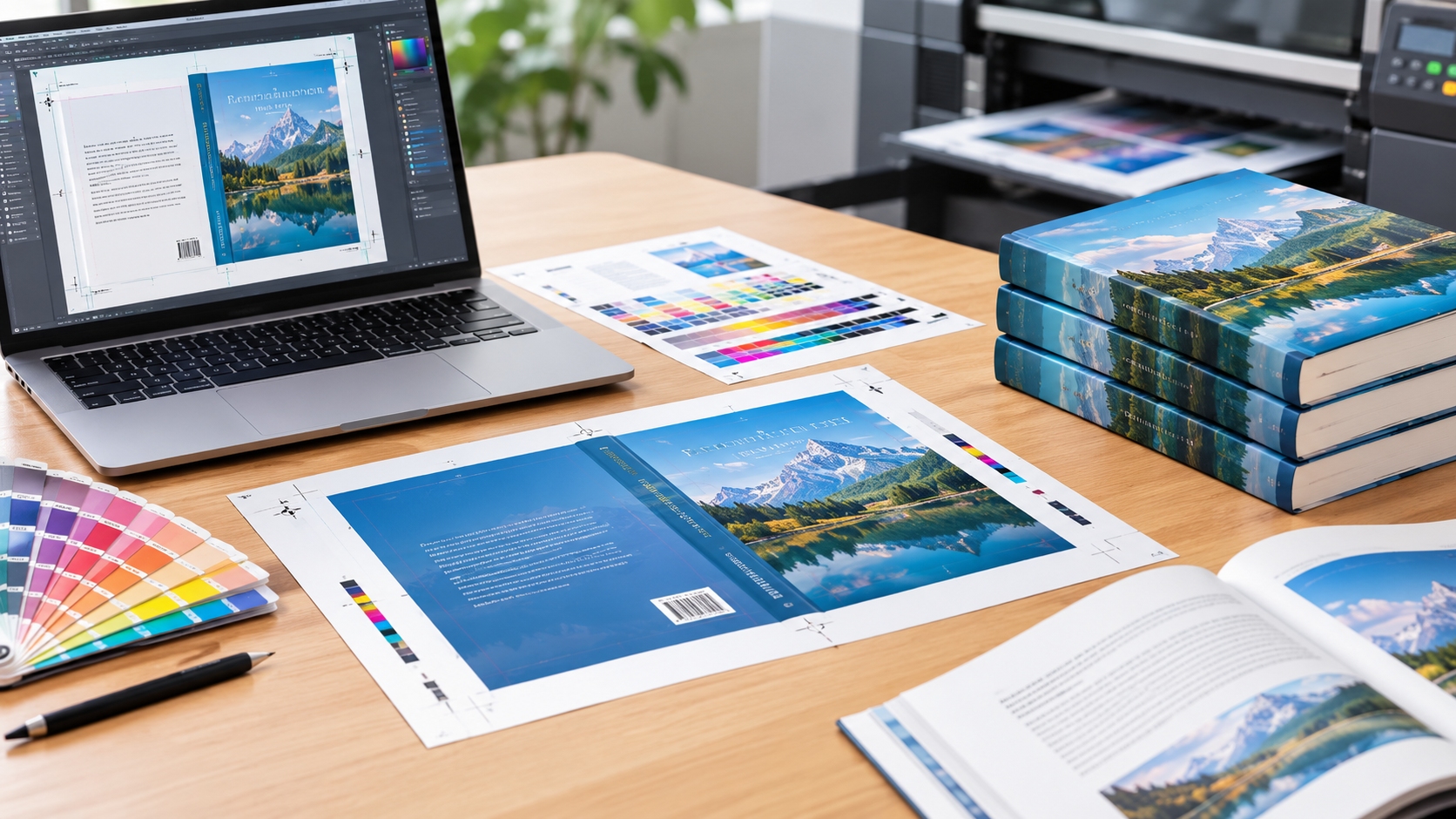

Printing books in China can work well for publishers ordering custom editions, illustrated titles, and bulk print runs. Problems usually begin when specifications, sample approvals, or delivery responsibilities remain unclear.
The most common mistakes include comparing incomplete quotations, choosing paper without testing it, submitting unfinished artwork, and leaving shipping arrangements until production ends. These decisions affect more than price. They influence how the book reads, how consistently it is manufactured, and when it reaches your warehouse.
Before approving an order, work through these ten points.
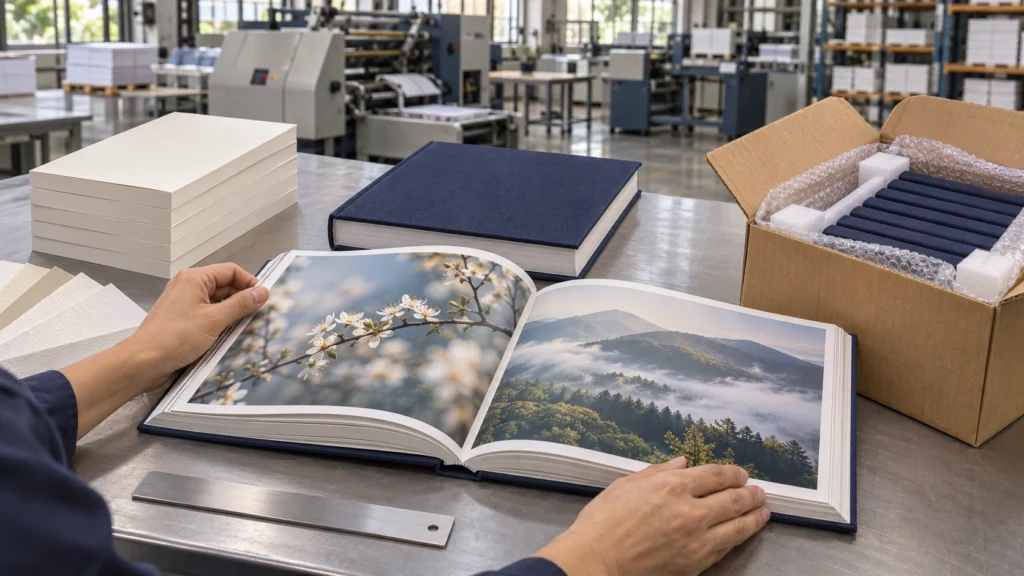
1. Comparing Prices Before Matching Specifications
Two printers can quote the same book title while pricing very different products.
One quotation might include sewn binding, custom endpapers, and protective packing. Another might assume adhesive binding and standard cartons. The cheaper figure tells you little until those differences are resolved.
Send every supplier the same written brief. Request clearly identified alternatives rather than allowing substitutions to disappear inside the total.
| Specification | Details every supplier should receive |
|---|---|
| Quantity | Copies per title, edition, and language |
| Format | Finished dimensions and orientation |
| Interior | Page count, paper, and printing colors |
| Binding | Book-block construction and cover type |
| Finishing | Foil, lamination, edges, and accessories |
| Packing | Individual protection and carton requirements |
| Delivery | Destination, delivery scope, and arrival target |
2. Choosing Paper by GSM Alone
A higher paper weight does not automatically produce a better book.
Opacity, thickness, surface, shade, and grain direction also affect the reading experience. Two papers with the same GSM can produce different spine widths and finished weights.
Ask for actual stock samples. For illustrated books, examine printed images; for novels, check text readability and show-through. If the printer proposes an alternative, approve it before production rather than accepting “similar paper” as a complete description.
3. Treating Hardcover as a Complete Binding Specification
“Hardcover” describes the rigid cover structure. It does not explain how the pages are attached.
A hardcover book block may be sewn or adhesive-bound. Endpapers, hinges, spine construction, and covering materials introduce further differences.
When requesting custom hardcover book printing, specify the complete construction. Handle a comparable sample and open it in several places. A good-looking cover cannot answer questions about page security or reading comfort.
4. Sending Artwork Before the Format Is Final
Changing paper or binding after artwork approval can affect the spine, cover dimensions, and inner margins.
That creates avoidable revisions. A cover prepared for one stock may no longer fit when the finished book thickness changes.
Finalize the production specifications first, then obtain the printer’s cover template. Submit files according to its requirements for bleed, safe areas, image resolution, and color. Confirm whether the interior should be supplied as individual pages or another arrangement.
5. Assuming a Digital Proof Shows Everything
A screen proof can reveal missing content, incorrect pagination, and obvious layout problems. It cannot demonstrate paper feel, binding strength, or finished opening behavior.
Different samples answer different questions.
| Approval item | Useful for checking | Main limitation |
|---|---|---|
| Digital proof | Content, placement, and page sequence | Cannot demonstrate physical construction |
| Paper dummy | Size, thickness, and handling | May contain no printed artwork |
| Color proof | Agreed color reference | May use a different process or stock |
| Finished sample | Materials, binding, and assembly | Confirm any differences from production |
Ask what each sample represents. Keep a written record of the differences you accept.
6. Leaving Color Expectations Unspoken
“Match the PDF” sounds clear, but screens display color differently. Paper and printing conditions also affect appearance.
For photography books or brand-sensitive publications, agree on a suitable color reference before the production run.
Identify the images or colors that matter most. Ask how the printer will assess them and which proof becomes the approved reference. Avoid approving color through an uncalibrated phone photograph alone.
7. Adding Finishes Without Testing the Combination
Foil stamping, embossing, lamination, and decorative edges can work beautifully together. They also create additional approval points.
Fine foil details may need adjustment. A textured covering material may change the appearance of small lettering. Multiple treatments require coordinated placement.
For a hardcover book with a slipcase, check the complete set. The slipcase should fit the agreed finished book, including its covering materials and accessories. Approve appearance and usability together.
8. Planning Around the Press Date Instead of Arrival
Printing is only one part of the schedule.
File checks, samples, revisions, binding, finishing, inspection, packing, and transportation all require time. A production estimate may begin after final approval rather than when you first contact the factory.
Work backward from the warehouse arrival date. Ask which decisions control the schedule, then build in room for revisions. Confirm planned factory closures and material availability before committing to a launch.
9. Discussing Shipping After the Books Are Finished
Books are heavy, and protective packaging takes space. Freight can change the economics of an otherwise attractive quotation.
Request estimated packed weight and carton dimensions early. Clarify who arranges transport, what the quoted delivery scope includes, and which destination charges remain separate.
A perfect-bound paperback edition may have different packing and freight requirements from a hardcover version. Compare the complete delivered cost when evaluating formats.
10. Approving Production Without Written Acceptance Criteria
“Good quality” is too vague to guide inspection or resolve disagreements.
Record the approved artwork revision, materials, construction, finishes, packing, and sample references. Agree on how quantity and quality concerns will be reported and handled.
Before shipment, check representative finished copies against those references. Review page sequence, print appearance, trimming, binding, and accessories. Keep photographs and inspection records connected to the order so repeat production starts from a documented standard.
Frequently Asked Questions
Is printing books in China suitable for small publishers?
It can be, depending on quantity, customization, and delivery needs. Compare complete quotations with realistic alternatives before choosing a production route.
What should I send when requesting a quotation?
Provide quantity, dimensions, page count, paper, printing colors, binding, finishes, packaging, destination, and required arrival date.
Should I always choose the lowest quotation?
Compare the included specifications first. A lower price may reflect different paper, binding, sampling, packing, or delivery assumptions.
Do I need a physical sample?
It is particularly useful for unfamiliar constructions or materials. Confirm which parts represent final production and document any differences.
Who checks the book’s text?
The publisher should approve editorial content and pagination. Printer file checks do not replace proofreading or language review.
Can I change files after production approval?
Ask immediately, but expect possible charges and delays. The impact depends on which materials and production stages are already committed.
How can I make reprints more consistent?
Retain approved files, specifications, and finished samples. Require written approval before materials or construction are changed.
What should I check when the shipment arrives?
Check quantities, carton condition, representative books, and agreement with approved references. Photograph concerns and report them within the agreed reporting period.
Share on Social:


