

Offset Printing vs POD for 500 to 5,000 Books
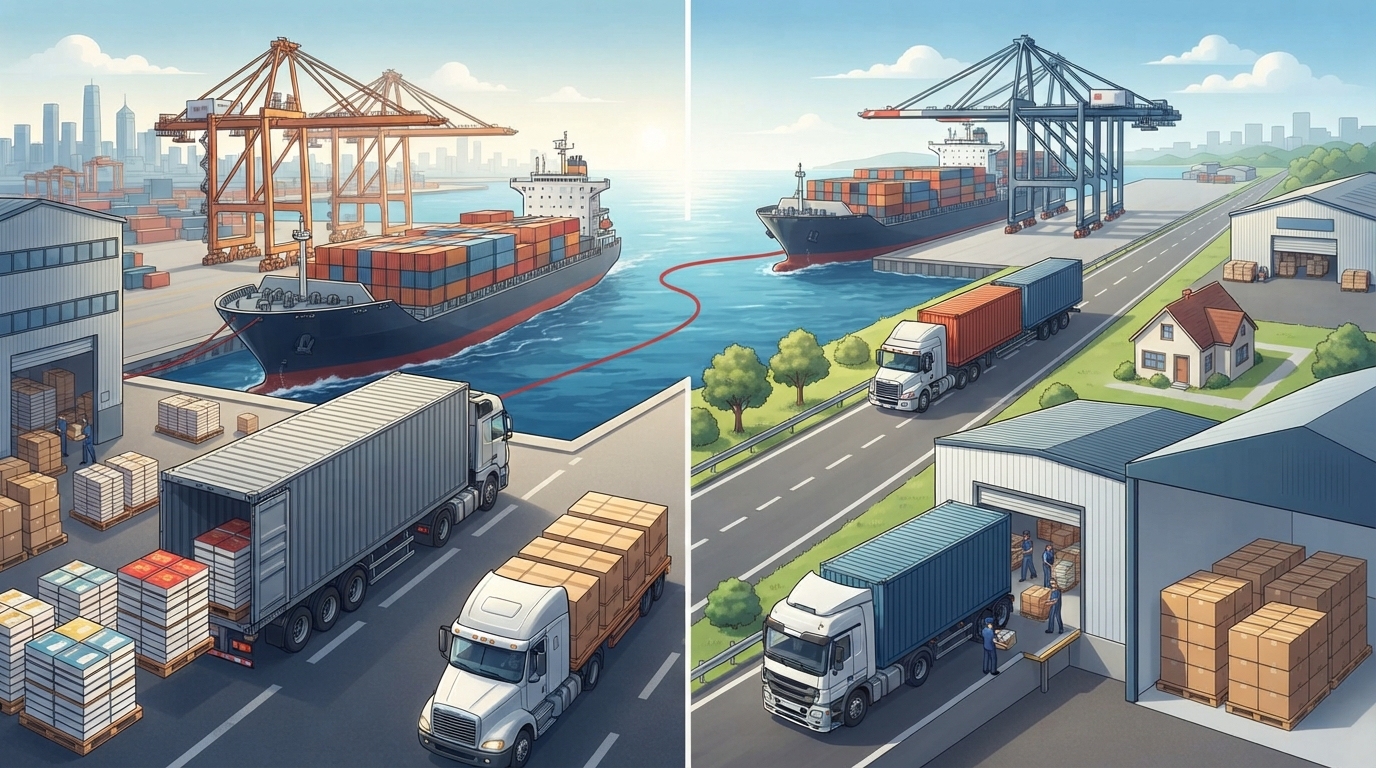
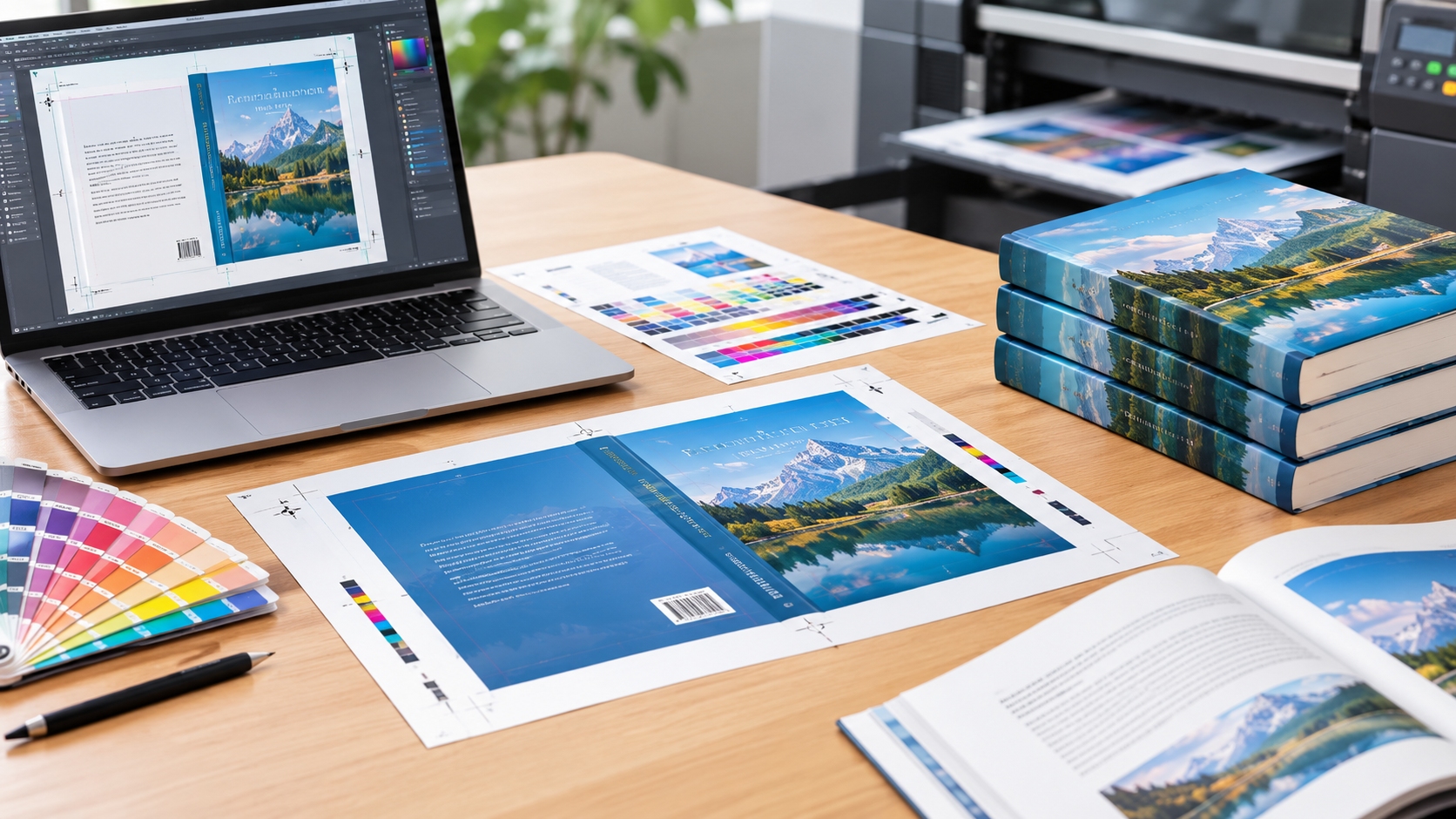

When deciding between offset printing and print on demand, it can be easy to see that it’s just a matter of cost. Then you throw in storage and shipping, paper options and variable sales and the choice becomes more complicated.
Generally, offset printing is used for large orders of books, where customization and the cost per book are significant. Print on demand suits uncertain demand and small sales and availability without any need to keep a lot of stocks on hand. It is up to you to determine which is the best option for your book, based on its intended production, sale and delivery.
Before signing on the dotted line, here’s what publishers and authors should know.
What Is the Difference Between Offset Printing and Print on Demand?
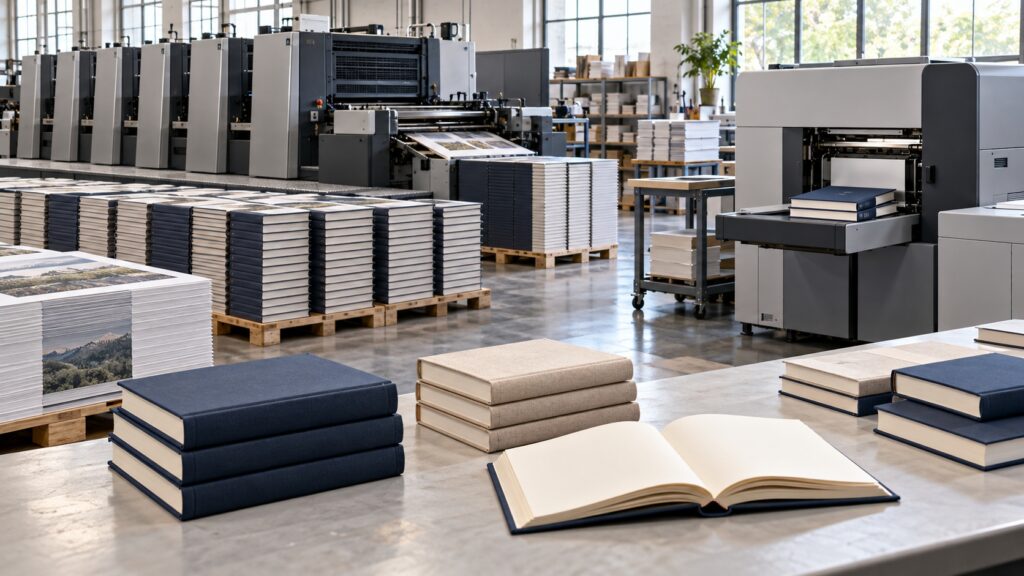
In offset printing the ink is transferred from the printing plates onto a rubber blanket, and finally to the paper. Set-up costs are incurred when the plates and press are set up, and the costs are distributed among the number of production pieces.
Print on demand or POD model of production and fulfillment: Books are printed when orders are placed, typically by digital equipment. This distinction matters. Digital printing doesn’t necessarily have to be POD, it can also be a short batch for inventory.
Ingram’s hints on publishing explain that POD is a method to make books with out a big up front investment in thousands of copies.
| Factor | Offset printing | Print on demand |
|---|---|---|
| Production approach | Planned print runs | Production triggered by orders |
| Initial commitment | Higher upfront spending | Lower inventory commitment |
| Unit cost | Often decreases with volume | Usually less favorable at sustained volume |
| Customization | Broad project-specific options | Limited to the provider’s catalog |
| Inventory | Requires storage and stock planning | Reduces finished-stock requirements |
| Revisions | Existing copies remain unchanged | Future orders can use approved updates |
Which Option Actually Costs Less?
In offset printing the ink is transferred from the printing plates onto a rubber blanket, and finally to the paper. In set-up costs, the plates and the press are set up and the costs are allocated to the number of production pieces.
Print on Demand or POD: Publishing the book on demand, meaning that it is generally printed using digital equipment. This distinction matters. Digital printing doesn’t have to be POD, it can be a short run for stock as well.
Ingram’s hints on publishing explain that POD is a method to make books with out a big up front investment in thousands of copies.
Compare these expenses:
| Cost item | What to check |
|---|---|
| Production | Setup charges, paper, printing, binding, finishing |
| Delivery | Freight, individual shipments, receiving fees |
| Inventory | Warehousing, handling, damaged or obsolete stock |
| Sales channel | Distribution charges, discounts, fulfillment costs |
A useful calculation is:
Effective cost per sold copy = total relevant project costs ÷ copies actually sold.
There’s no universal quantity where offset becomes cheaper. Request comparable quotations using the same specifications and destination.
Quality and Customization: Look Beyond the Printing Method
You can make professional books with offset and with digital. It’s not just the method’s name that determines quality, it’s the equipment, the materials used, file preparation, color management, and binding.
The more significant difference could be the options available.
Typically, standard POD programs have a range of sizes, papers and bindings. Offset printing can also be ordered on an individual job basis, but there is a minimum quantity and finishing requirement.
For instance, a publisher creating a special edition might wish cloth covering, foil stamping, unique endpapers, or endpaper edges. If you’re interested in talking about those specifications, CAIMEI’s hardcover book printing services are a good place to begin.
To create interactive products, additional planning is required. When it comes to custom children’s book printing, look at page construction, elements added to the book and assembly needs in addition to print quality.
Request something physical, such as samples. You can’t tell how the paper feels or how easily the book opens on screen.
Timing, Inventory, and Updates
POD eliminates the need for waiting for a full bulk order to be placed before orders are added to production. Printing and postal sending is still a time consuming process, though. It isn’t an instant delivery.
For offset production, scheduling, proof approval, manufacturing and transport are required. However, once on site in your warehouse, stock can be sent out without having to wait for new printing.
The practical question is: Where do you want the waiting time to happen?
| Publishing situation | Approach worth evaluating |
|---|---|
| New title with uncertain sales | POD or short-run digital |
| Confirmed institutional order | Offset quotation |
| Premium illustrated edition | Custom production with physical proofs |
| Frequently updated manual | POD or smaller replenishment runs |
| Established title with steady demand | Offset, potentially supported by POD |
For revisions, POD offers flexibility because fewer outdated copies may remain in storage. Still, changes need file checks and approval before future production.
Can You Use Both?
Yes. It can be effective to use a combination of approaches.
A publisher may opt to have offset printing used for launch stock and orders that are guaranteed to be sold wholesale, and have POD used for slower sales or in some chosen markets.
Maintain synchronicity of editions. A number of suppliers may have variations in paper, spine width, colour and opening performance. Do not assume that the same version of the file will have the same book – approve each version separately.
Both models are not necessarily “green” either. Environmental comparison is impacted by unsold stock, production waste, materials, shipment distance, and delivery patterns.
Frequently Asked Questions
1. Is offset printing better than print on demand?
It depends on the project. Offset often suits planned volume and extensive customization; POD suits uncertain demand and limited inventory.
2. How many books justify offset printing?
There’s no fixed threshold. Page count, color, paper, binding, freight, and expected sales change the calculation.
3. Is print on demand the same as digital printing?
No. Digital printing is a production technology. POD is an ordering and fulfillment model that commonly uses it.
4. Can POD produce hardcover books?
Yes, some providers offer hardcovers. Check their available sizes, papers, cover styles, and binding specifications.
5. Does offset printing always produce better color?
No. Compare actual samples and agreed color references. Either process needs appropriate files and production controls.
6. Which method suits children’s books?
Standard picture books may suit either option. Board books and interactive formats require suitable specialist manufacturing capabilities.
7. Can I change a POD book after publication?
Usually, updated files can be submitted. Confirm approval procedures, charges, and how pending orders are handled.
8. Is POD faster for a bulk launch?
Not necessarily. Compare the complete quantity and delivery deadline, including production capacity and shipping.
9. What should I include in a printing quotation request?
Provide quantity, trim size, page count, interior color, paper, binding, finishes, delivery location, and required arrival date.
10. Should I approve a physical proof?
Yes, where practical. Check page order, image detail, color, trimming, cover alignment, and binding before proceeding.
Choose Around Your Sales Plan
Begin with realistic requests and specifications. Next, compare production, storage and delivery all together.
If you have a plan for a custom run, you can either see how CAIMEI prints books or give us a call and ask us for a project quotation with your book specifications. An unambiguous brief helps the choice of offset printing vs print on demand.
Share on Social:


