

300gsm vs 350gsm Cardstock

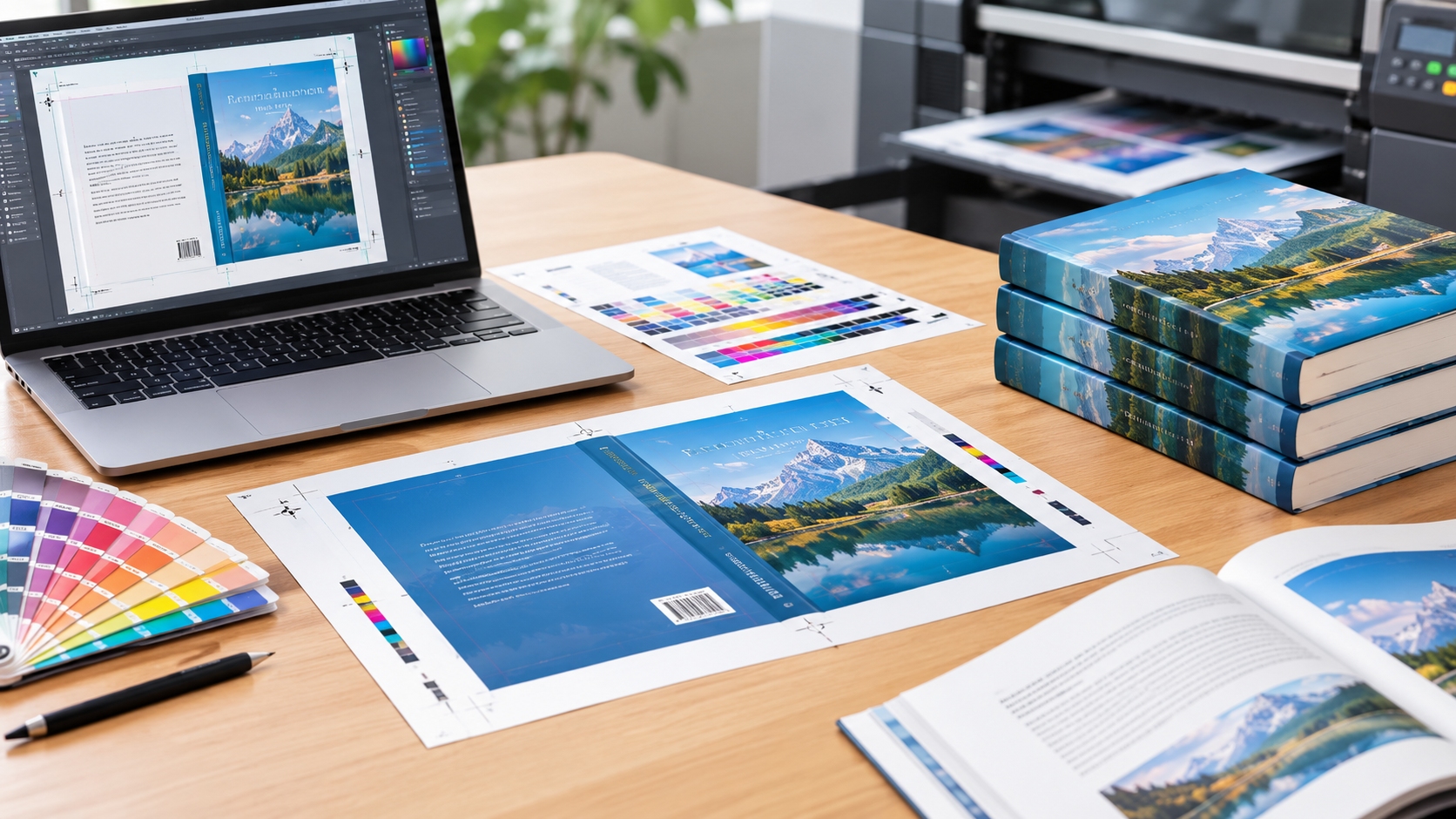

Naturally, if you’re choosing a cardstock sheet, you’d think that 300gsm would be better than 350gsm, as the latter has more mass than the former. Well, sometimes. However, there is a lot more to paper selection than just a number.
The major difference is weight, 350gsm cardstock is about 16.7% heavier than 300gsm cardstock. It will be thicker and sturdier within the same paper range. But you can’t tell thickness, stiffness or printing quality from GSM.
For publishers and print buyers, it will depend on the final product, folding needs, surface finish and the budget.

What Does GSM Mean in Cardstock?
GSM is the term used to denote the weight of 1 square meter of paper. The “gsm” is a measure of how much a sheet of paper weighs for a given size, with a 300gsm sheet being 300 grams per square meter, and a 350gsm sheet being 350 grams per square meter.
It refers to grammage which is the weight of a mass of cards, not of a single card unless it is one square meter in size.
Thickness (also known as caliper) is a different measurement. Fiber composition, coating, and manufacturing process affects the relationship between grammage and thickness, so they are reported separately by paper manufacturers. Holmen’s technical guidance includes specific tests for grammage, thickness and bending resistance.
Hence the thicker feel of a heavy 300gsm stock as compared to a denser 350gsm option.
300gsm vs 350gsm Cardstock: Quick Comparison
The following comparison assumes similar materials from the same paper range.
| Feature | 300gsm cardstock | 350gsm cardstock |
|---|---|---|
| Weight per square meter | 300 grams | 350 grams |
| Typical handling | Firm with some flexibility | Often more substantial |
| Thickness | Depends on paper grade | Often thicker within the same range |
| Folding | Requires appropriate creasing | May need adjusted creasing |
| Material cost | Often lower | Often higher |
| Shipping weight | Lower for equal area | Approximately 16.7% more paper weight |
Notice the qualifications. Comparing different paper brands or coated and uncoated stocks can change the result considerably.
Ask for labeled samples rather than choosing from photographs alone.
Which Cardstock Works Best for Your Product?
Business Cards and Invitations
Both weights will make professional business cards.
300gsm would be appropriate for a promotional run or for a design that can accommodate a little flexibility. For those seeking a sturdier initial impression, 350gsm is a popular choice.
Take the entire design into account for invitations. A flat invitation vs. folded greeting card are very different. Other considerations include envelope, insert and mailing weights.
Paperback Covers and Printed Inserts
These weights will make business cards for the professionals.
300gsm would be appropriate for a promotional run or for a design that can accommodate a little flexibility. If you prefer to give off a more solid first impression then 350gsm is a popular option.
Take the entire design into account for invitations. A flat invitation vs. folded greeting card are very different. Other factors to consider are envelope, insert and mailing weights.
Educational Cards and Children’s Products
Flash cards and activity inserts must be appropriate for repeated use. Think about surface wear, corner shape, cleanliness requirements and the completion of the build.
If the cards are with a larger title, coordinate with the children’s book printing project, don’t mention the individual parts.
| Application | Starting point | What to verify |
|---|---|---|
| Promotional cards | 300gsm | Handling and print appearance |
| Premium flat invitations | 350gsm | Texture, finish, envelope fit |
| Folded cards | Either | Crease quality and closing behavior |
| Paperback covers | Either | Binding compatibility and flexibility |
| Educational cards | Either | Finished stiffness and surface durability |
These are sampling directions, not universal specifications.
Folding and Finishing Can Change the Decision
This is where a minor specification modification can make a big production issue.
Stock should be creased in an appropriate manner prior to folding when thicker. Otherwise fibers or coatings might break, especially at the fold line of dark print areas.
Holmen’s paperboard guidance states that the design of a paperboard’s creasing tool is determined by paper thickness and papermaking material properties, not just grammage.
Request your printer to sample the actual printed and finished paper; you’ll want to do this to be sure the paper is what you want it to be. A blank sample can fold upon ink and lamination that is different from the blank sample that is not.
Surface treatment is important, as well:
Bright, reflective finishes can be achieved with gloss finishes.
Matte finishes have a less reflective surface.
Uncoated stocks feel good to touch, but should be tested for writing.
Lamination alters surface protection, may impact folding and feel.
There is actually no reason why 300gsm or 350gsm could be waterproof.
How Much Difference Does the Extra Weight Make?
For a small card, the difference is modest. Across thousands of copies, it becomes easier to notice.
Consider an A4 sheet measuring 210 × 297mm.
| Quantity | 300gsm | 350gsm |
|---|---|---|
| One unprinted A4 sheet | Approximately 18.71g | Approximately 21.83g |
| 1,000 unprinted A4 sheets | Approximately 18.71kg | Approximately 21.83kg |
| Weight difference | — | Approximately 3.12kg |
These calculations do not include packaging, production tolerances, coatings or ink.
The cost of printing the quotation is not necessarily going to be 16.7% higher. The final price is influenced by the quantity ordered, finishing, waste, paper purchasing and sheet layout.
When ordering compare the same grade of paper at both weights.
Frequently Asked Questions
1. Is 350gsm cardstock better than 300gsm?
It may feel firmer within the same paper range, but better depends on the product. Folding, texture, cost, and handling matter too.
2. Is 350gsm always thicker?
No. Different paper grades have different thickness-to-weight relationships. Request the supplier’s caliper specification.
3. Is 300gsm thick enough for business cards?
It can be. Check the actual stock, finished size, and surface treatment against your preferred feel.
4. Can 350gsm cardstock be folded?
Yes, with suitable material selection and creasing. Test for cracking and whether the finished card closes properly.
5. Can a home printer handle these weights?
Only if its specifications permit the stock’s weight, thickness, coating, and feeding method. Check the equipment documentation.
6. Does heavier cardstock improve color?
Not automatically. Surface quality, whiteness, coating, files, and press conditions influence color reproduction.
7. Can I convert GSM directly to paper points?
No universal conversion applies. Points describe thickness; GSM describes mass per area.
8. Is either weight suitable for hardcover construction?
They may serve particular components, but neither GSM rating alone specifies a complete rigid hardcover case.
9. Which weight costs less to ship?
For the same area and quantity, 300gsm uses less paper weight. Actual freight charges also depend on packaging and shipment dimensions.
10. What should I request before approval?
Ask for paper samples, thickness information, and a finished proof showing printing, folding, and surface treatment.
Choose the Finished Result
The most useful 300gsm vs 350gsm cardstock comparison happens with physical samples in hand. Bend them, compare surfaces, and inspect the finished folds.
Share your dimensions, quantity, intended use, and finishing requirements when you request a printing quotation from CAIMEI. Those details make the paper choice much clearer.
Share on Social:


