

How Long Does It Take to Print 1,000 Books in China?

Printing 1000 books in China is a very efficient and cost-effective solution for publishers, authors, educational institutions and businesses who are seeking high-quality book printing at competitive prices. Printing takes about 15-30 days, depending on the book’s requirements, printing method, papers available, book finishes and shipping destinations, plus extra time for overseas shipping.
By knowing the book printing schedule, you can better plan your book publishing, maintain inventory control, and prevent additional delays. This guide will share you how long it will take to produce 1,000 books in China, the main production process, the factors that affect the time of printing, and what you can do to shorten the printing time.
1. How Many Days Does It Take to Print 1,000 Books in China?
After the final book files and specifications are accepted by the factory, it may take around 15-30 days to get the books printed at a Chinese book printing factory if the order is 1,000 books. Simple paperback books will take a shorter time, hardcover books and children’s books with special finishes and highly customized books may take longer.
The below estimates are only for planning purposes.
| Production Stage | Estimated Time |
|---|---|
| File review and prepress preparation | 1–3 days |
| Proofing and sample approval | 2–5 days |
| Printing and binding | 5–12 days |
| Finishing and quality inspection | 2–5 days |
| Packing and dispatch preparation | 1–3 days |
| Estimated total production time | 15–30 days |
These stages are not necessarily sequential; the overall duration is not necessarily the sum of the longest estimates. The actual time is subject to the factory production and the book specification and approval.
There can be a turnaround of about 7-15 working days for simple paperback books that have print ready files and easily accessible resources. Allocate extra time for more complex projects.
2. What Are the Main Stages of Book Printing in China?
Understanding each production stage makes it easier to estimate delivery dates and communicate with your printing supplier.
Step 1: File Preparation and Prepress
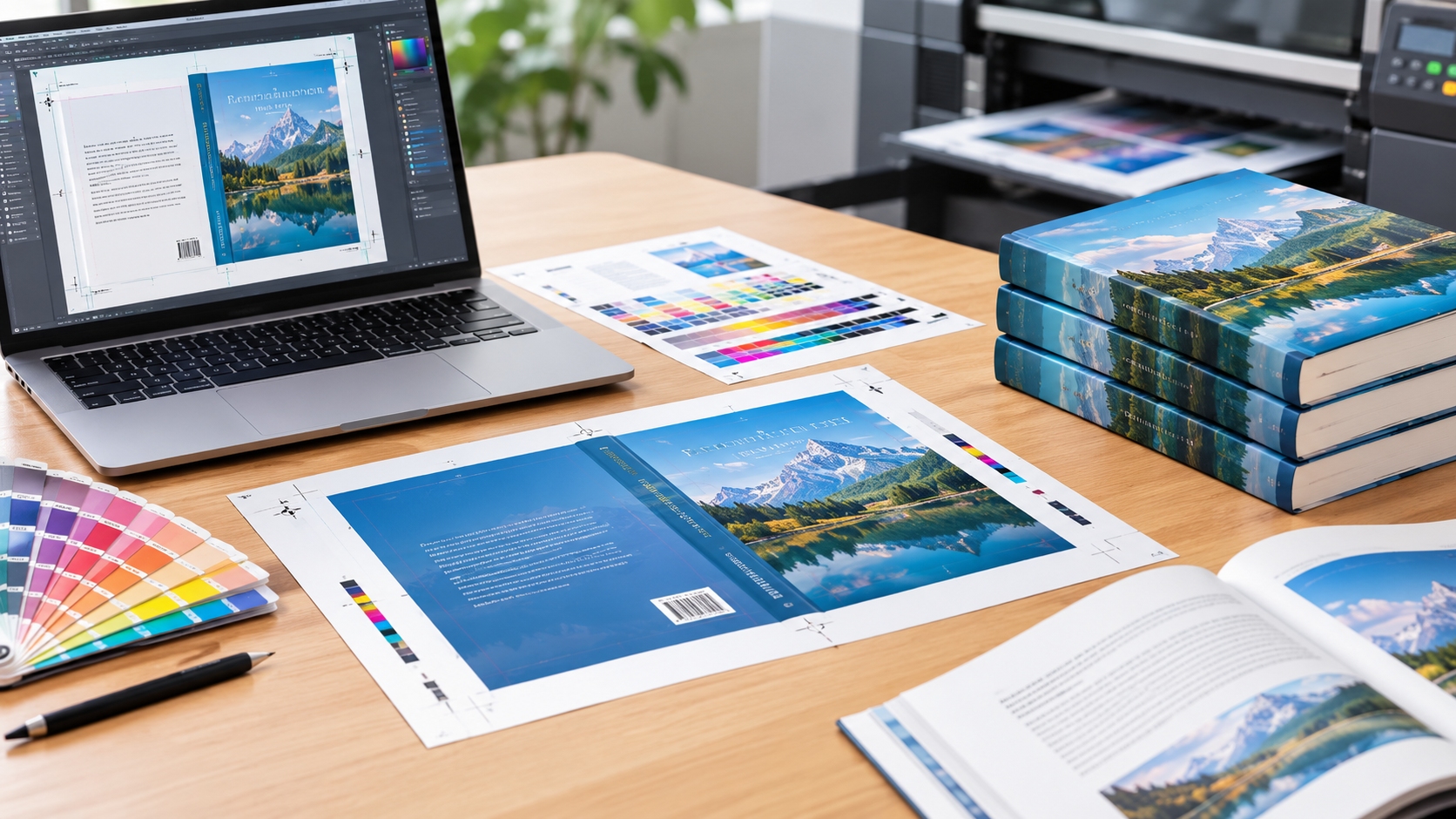
The initial step is to look at the PDF of the book’s pages inside, the art work on the cover, the trim size, the number of pages, the artwork’s color requirements, and the bleed settings.
The printing plant verifies that the files comply with the technical standards of the printing plant. If the files are incorrectly sized, low resolution, missing fonts, have color problems, they may need to be revised.
This stage usually takes 1-3 days and the files need to be prepared properly. If print-ready files are provided from the start, then there will be no need for unnecessary revisions to the project and it will remain on schedule.
Step 2: Proofing and Sample Approval
The factory might develop a digital proof, a printed proof or a physical book sample prior to mass production.
With a proof, you can verify text alignment, image quality, paper appearance, cover colors and layout. When considering hardcover books or customized children’s books, a physical sample is often helpful since it provides a hands-on experience of the materials and binding.
Normally, proofing will take 2-5 days, but for international samples delivery and extra proofing rounds, this may be extended.
It is best to avoid unnecessary delays by creating a detailed checklist and limited feedback to a single revision round where possible. When artwork and sample approvals are complete, mass production is to be considered.
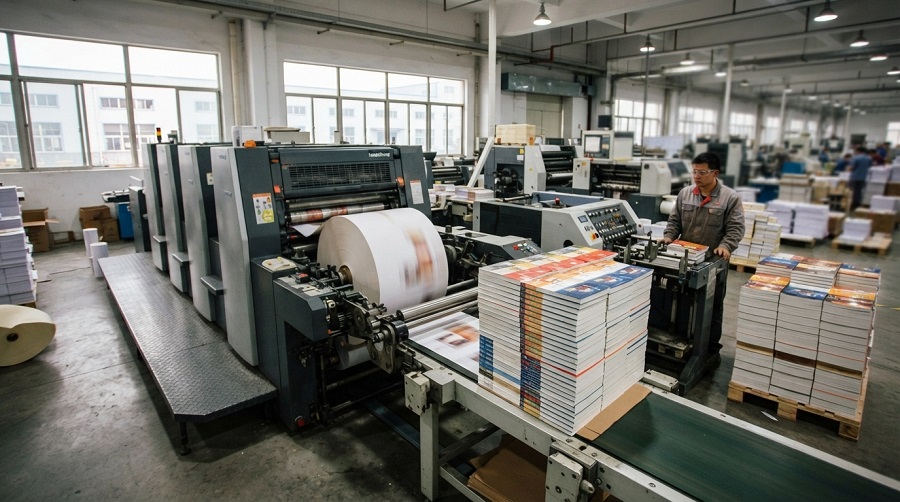
Step 3: Printing the Interior and Cover
Once the files are approved, the factory starts printing the book’s interior pages and cover.
When printing 1,000 or more copies, offset printing may be an option for books that have consistent layouts, such as illustrated books, catalogs, and full-color children’s books. For simpler projects or when a quicker set up is needed, digital printing might be appropriate.
The printing stage lasts typically 3-8 days for a book depending on the page count, color density, paper used, availability of the printing machine and if interior pages and covers can be printed at the same time.
Step 4: Binding and Finishing
Once they are printed, pages are put together and then bound into completed books.
Paperback perfect binding, hardcover case binding, saddle stitching and spiral binding are common binding options. For hardcover books, there are more steps, including cover board preparation, wrapping of the boards, endpaper preparation and book block assembly.
Other finishing processes, such as lamination, stamping with foil, embossing, spot UV coating, and custom packaging, may also add to the processing time.
The binding and finishing process takes about 3-7 days, depending on the complexity of the work and the factory’s production process.
Step 5: Quality Inspection and Packaging
Before shipment, the factory checks the finished books for printing defects, binding strength, trimming accuracy, color consistency, and packaging quality.
The books are then counted, packed into cartons, and prepared for dispatch.
This stage often takes 1–3 days for a standard order. Additional inspection requirements, individual shrink-wrapping, retail packaging, or customized cartons may require more time.
3. What Factors Affect the Printing Time for 1,000 Books?
Several variables can significantly influence the lead time for book printing in China.
Book Size and Page Count
A 64-page paperback is generally faster to produce than a 300-page hardcover. Thicker books require more paper, more printing time, and additional binding work.
Large-format books and unusual dimensions may also require specialized equipment or extra setup.
Printing Method
The choice between offset and digital printing affects both setup and production speed.
Offset printing requires plate preparation but can efficiently produce consistent results across larger print runs. Digital printing has less setup work and may be faster for simpler projects, although machine capacity and finishing requirements still matter.
For 1,000 copies, the best method depends on the book’s specifications rather than quantity alone.
Paper and Material Availability
Standard coated and uncoated papers are often easier to source than specialty papers, textured stocks, colored paper, or unusual board materials.
If your project requires imported paper or custom materials, the supplier may need additional procurement time.
Binding and Custom Finishes
Paperback books with standard lamination are usually less complicated to manufacture than premium hardcover books with cloth covers, foil stamping, ribbon bookmarks, or magnetic gift boxes.
Every additional process can introduce setup time, production queues, or quality checks.
Artwork Changes and Approval Delays
Late changes to text, images, page order, or cover design can interrupt production planning. Reprinting corrected pages or replacing covers can create additional costs and extend the schedule.
Approving the final files and physical sample promptly is one of the simplest ways to reduce delays.
Factory Workload and Seasonal Demand
Printing factories may experience heavier workloads before major holidays, during peak publishing periods, or when many customers place orders simultaneously.
When requesting a quotation, ask whether the factory has available production capacity and whether the quoted lead time includes proofing, finishing, and inspection.
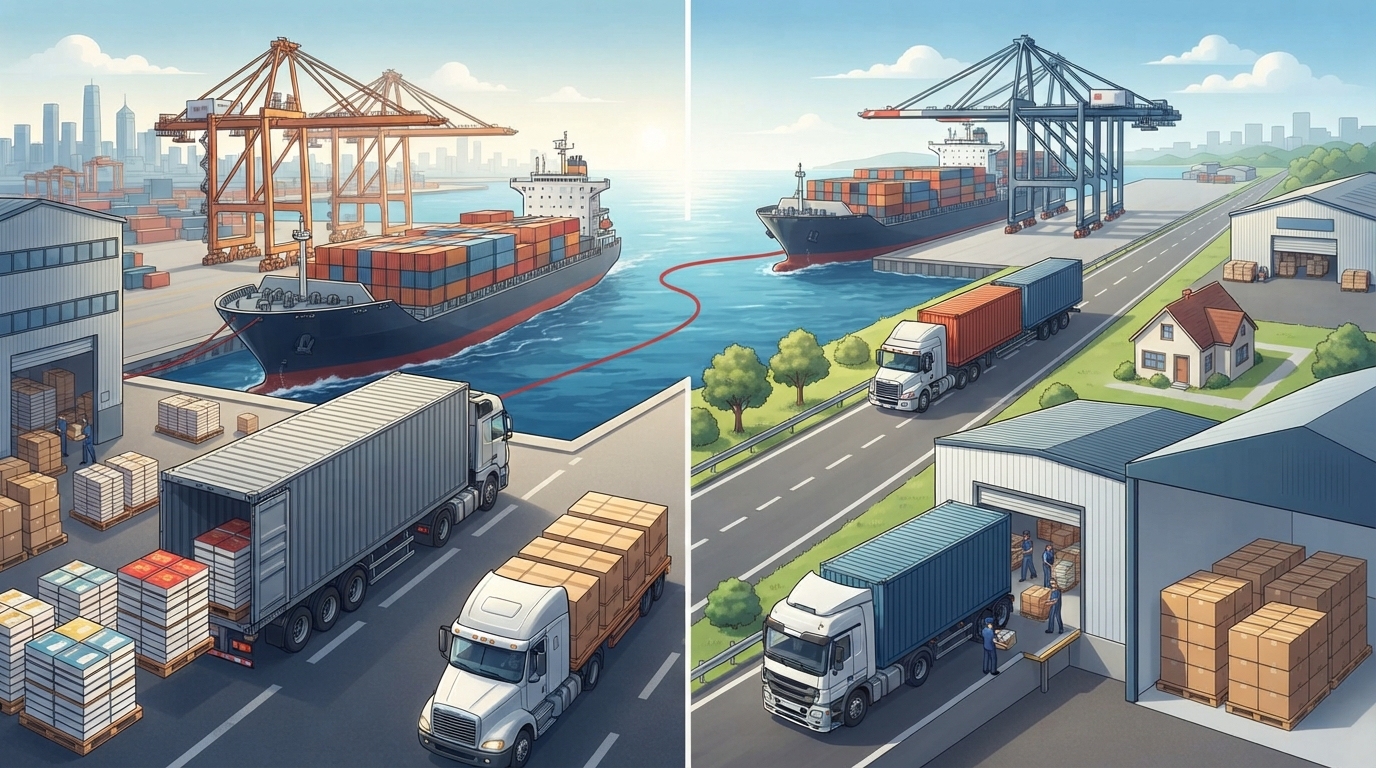
4. How Long Does Shipping Take After Printing in China?
Production time and delivery time are different. After your books are manufactured, they must be transported from the factory to your destination.
Shipping time depends on the destination country, shipping method, customs clearance, and final delivery arrangements.
| Shipping Method | Approximate Transit Time |
|---|---|
| Express courier | 3–7 business days |
| Air freight | 5–12 business days |
| Sea freight | 20–40 days or longer |
These are general planning estimates rather than guaranteed delivery times. Customs processing, port congestion, holidays, and inland transportation can affect the actual schedule.
For example, if 1,000 books require 20 days of production and are shipped to the United States by sea, the overall timeline could reach approximately 40–70 days or more, depending on the route and logistics arrangements.
Air freight or express courier may be preferable when deadlines are tight, while sea freight is often more economical for larger or heavier shipments.
When comparing quotations, confirm whether the quoted shipping period begins at factory dispatch, port departure, or another milestone.
5. How Can You Print 1,000 Books in China Faster?
If you need to meet a launch date, promotional campaign, or retail delivery deadline, the following strategies can help shorten the production schedule.
1. Prepare print-ready artwork. Ensure that the interior and cover files meet the factory’s requirements before submitting the order.
2. Choose standard materials. Common paper types, conventional book sizes, and established binding methods are generally easier to schedule than highly customized specifications.
3. Approve proofs quickly. Assign one person to review and approve the proof to minimize conflicting feedback and repeated revisions.
4. Confirm production capacity in advance. Ask the factory to provide a realistic schedule based on its current workload instead of relying on a generic lead-time estimate.
5. Limit unnecessary custom finishes. If speed is the priority, consider standard lamination and binding rather than multiple decorative processes.
6. Select shipping based on your deadline. Compare air freight, express delivery, and sea freight before production is completed.
7. Build in a time buffer. Allow extra time for unexpected revisions, quality issues, customs clearance, and delivery delays.
A reliable supplier should explain which stages can be shortened and which require sufficient time to maintain print quality.
6. How Much Does It Cost to Print 1,000 Books in China?
The printing cost for 1,000 books varies according to size, page count, paper weight, color requirements, binding, finishing, and packaging.
A simple paperback with a black-and-white interior generally costs less per copy than a full-color hardcover children’s book. Premium paper, special coatings, foil stamping, and custom packaging can increase the unit price.
When requesting a quotation, provide the following information:
- Quantity: 1,000 copies
- Book dimensions and total page count
- Interior printing: black-and-white or full color
- Paper type and paper weight
- Binding method: paperback or hardcover
- Cover finishing requirements
- Packaging specifications
- Shipping destination and preferred delivery method
Ask suppliers to separate printing, finishing, packaging, shipping, and other applicable charges where possible. This helps you compare quotations accurately and estimate the total landed cost.
You should also confirm whether the quotation includes proofing, sample production, quality inspection, and any applicable export or customs-related expenses.
7. How to Choose a Reliable Book Printing Factory in China
Simply selecting the cheapest supplier can lead to issues with quality control, communication and/or delivery planning.
Find a factory that is familiar with the type of book you are looking for. Request samples and understand its binding and finishing qualities, plus set expectations for color matching and known production issues.
A good supplier will send the quote in writing and will offer you a production timetable, sample approval, packaging information and a definite shipping arrangement.
When considering children’s books, educational books and illustrated publications, consider paper quality, color rendition, binding durability and safety considerations for your target audience.
Ask the supplier about what they will do if the copy is defective, if there are delays in delivery and if they will accept a change of requirements after they have accepted the copy.
Conclusion
Typically takes 15-30 days to produce 1000 books in China, and with international shipping, the total time is several weeks to a few months or longer.
Hardcover books, specialty materials, and customized finishes are produced at a slower rate, but simple paperback books can be produced more quickly.
The best way to stay on track is to create precise artwork, timely approvals, use proper materials, verify factory capacity, and verify shipping to meet deadline requirements.
For a print run of 1,000 books or more, ask for a comprehensive quote and schedule, according to your exact requirements. When you start with a clear schedule you’re able to manage the cost, control quality and keep your books on time.
Share on Social:


