

What Are Endpapers in Hardcover Book Printing?
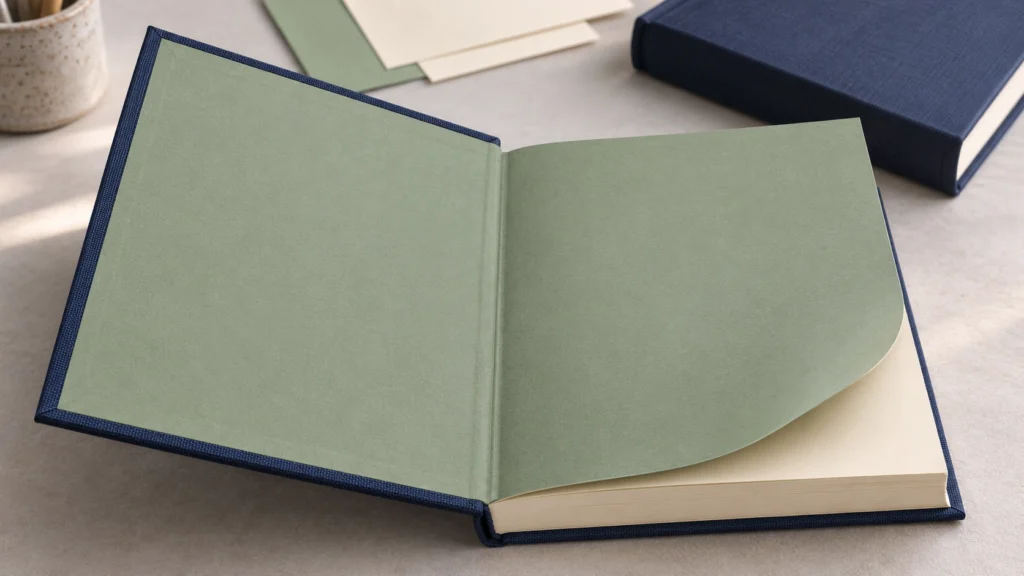
The pages at the beginning and end of a hardcover book, which are used to bind the book block to the cover, are called endpapers. One leaf is glued inside the cover and the other leaf turns freely with the interior pages.
They may seem like a minor detail. Simply open up a good, hardbound copy, however, and you’ll see just how much they add. The endpapers give a beginning and end to the book, hide the inside cover construction and help the rigid boards and flexible pages to connect.
Earlier selection of endpapers can prevent quotations from being misread, artwork changes or disappointing samples.
Understanding the Parts of an Endpaper
In many casebound books, a folded sheet forms the endpaper assembly at each end. Different binding methods may use more complex constructions.
Here are the terms you’ll usually hear.
| Term | What it means | What to check |
|---|---|---|
| Pastedown | The leaf glued to the inside cover board | Smooth adhesion and clean edges |
| Free endpaper | The leaf that turns beside the book block | Easy movement and a clean fold |
| Front endpapers | The assembly before the main content | Correct artwork and orientation |
| Back endpapers | The assembly after the main content | Consistency with the approved design |
The free endpaper is often called a flyleaf. However, “flyleaf” can also describe other blank leaves, so precise terminology helps when discussing specifications.
Why Do Hardcover Books Need Endpapers?
Endpapers perform both a practical and a visual job.
In common casebound construction, they participate in connecting the book block to the case. They also cover the board’s inner surface and the edges of the material wrapped around it.
Visually, they create a pause before the content begins. A cream endpaper can make a novel feel understated. A printed landscape can introduce a children’s story before the first sentence.
That said, attractive endpapers cannot compensate for poor binding. Their performance depends on the complete construction, including the hinges, reinforcement, adhesive, and book block.
When discussing custom hardcover book printing, ask how the proposed endpapers work with your chosen binding.
How to Choose Endpaper Stock
Start with the way the book will be handled.
A compact novel and a heavy photography book place different demands on their bindings. Choosing the thickest available paper isn’t automatically the answer. Excessive stiffness can make an endpaper awkward to turn or fold.
Ask the printer to recommend stock based on book size, weight, construction, and expected use.
| Paper consideration | Why it matters | What to confirm |
|---|---|---|
| Strength and flexibility | Supports repeated opening | Suitability for the binding |
| Grain direction | Influences folding and movement | Orientation for the construction |
| Surface finish | Affects appearance and print results | Compatibility with ink and adhesive |
| Opacity | Limits distracting show-through | Appearance when printed |
| Color | Shapes the transition into the book | Match against physical samples |
Paper weight alone doesn’t tell the whole story. Two stocks with the same grammage can differ in thickness, texture, and stiffness. Handle samples whenever possible.
Plain, Colored, or Printed Endpapers?
Plain white or cream endpapers suit many novels, reference books, and academic titles. They keep the opening quiet and let the content lead.
Colored stock adds character without requiring a printed design. It works particularly well when coordinated with cloth, cover artwork, or a ribbon marker. Check the actual stock color; a screen preview won’t show its texture or exact shade.
Printed endpapers offer more storytelling space. Maps, archival photographs, patterns, and illustrations can all work beautifully.
For a hardcover book with a slipcase, coordinating these elements can make the edition feel carefully considered. There’s no need to repeat the same image everywhere. A shared palette may be enough.
Preparing Endpaper Artwork
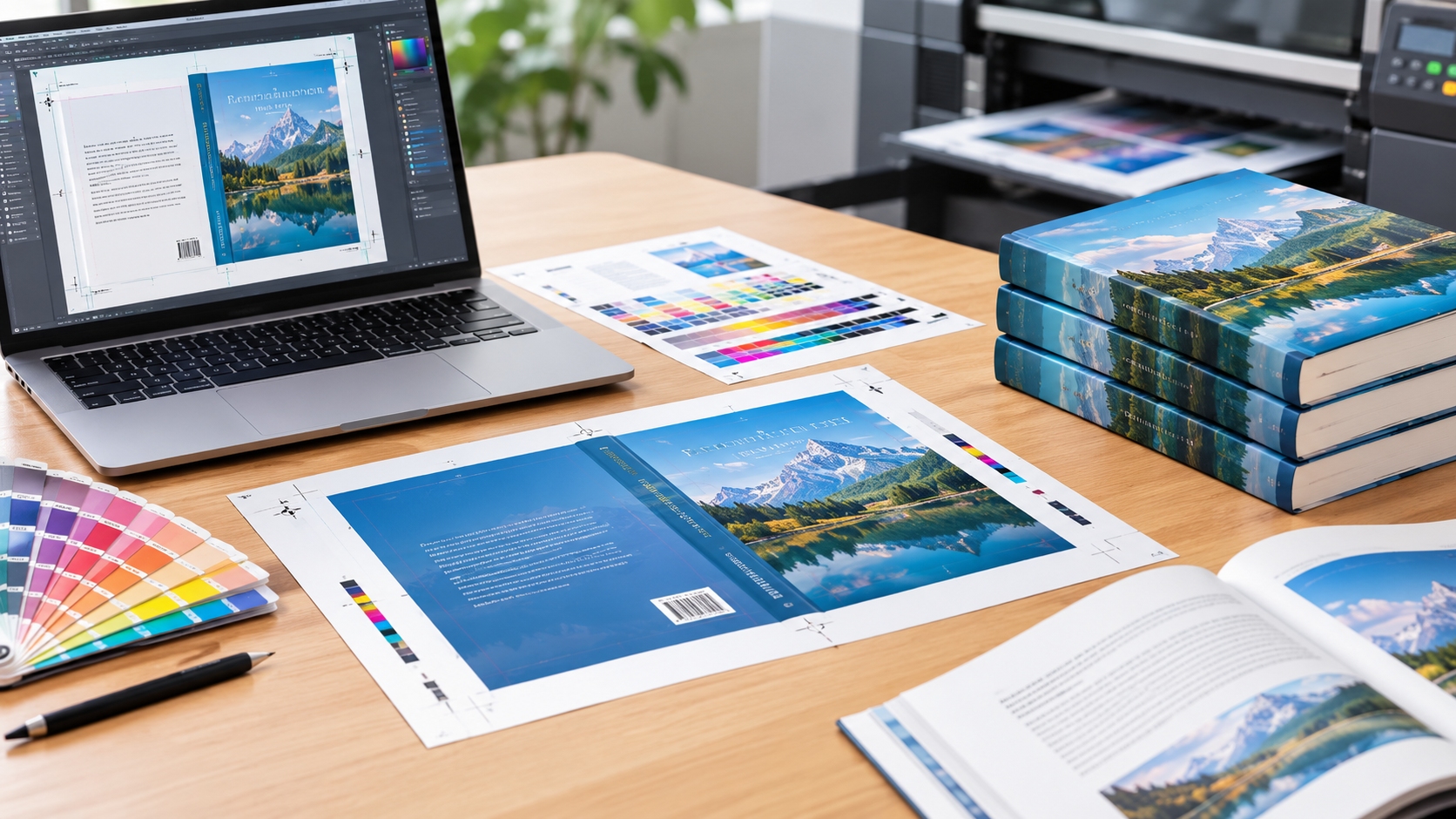
Ask the printer for a template first to design.
Endpapers engage with folds, hinges, glued areas and cover turn-ins. A seamless spread on-screen can be marred at the edges near the binding.
Avoid important text, faces and fine lines in restricted areas. For illustrations that cross the opening, question: What will the consequence be on alignment and visibility?
Check if the front and back endpapers are the same. Various designs may be effective, but it is essential that they have clear file names and positioning instructions.
Don’t just tack on endpaper pages to your interior PDF and let the printer do its job. File requirements vary.
Do Endpapers Count Toward the Page Count?
This is a surprisingly common source of confusion.
Separate endpapers are often quoted independently from the main text pages. However, production systems and file submission rules differ.
A specification such as “192 interior pages plus separate front and back endpapers” is clearer than “200 pages total.”
If you’re comparing the hardcover edition with perfect-bound paperback books, distinguish these components explicitly. Paperbacks generally use a different cover attachment method.
What Affects Endpaper Cost?
Price isn’t the only factor when it comes to printable sheets.
These can include things like stock selection, printed sides, ink coverage, various front and back designs, and assembly requirements. Left blank, a specialty paper will cost more.
Ask for specific alternatives, using the same book specifications. When you are deciding whether the additional expenditure will be worthwhile, comparing plain stock, coloured stock and printed endpapers will give you a valuable guideline.
Check the Bound Sample Before Approval
A PDF proof verifies artwork. It can’t demonstrate the endpapers’ final qualities.
Carefully open the bound sample at each end. Check for wrinkles, bubbles, edges lifting, inaccurate positioning and excessive stress. See if the free leaves move easily and if significant pieces of artwork get lost close to the joint.
Identify the materials and manufacturing techniques used to make the sample. Write down any approved substitutions in advance of the production run.
Frequently Asked Questions
Are endpapers the same as endsheets?
Yes. Printers commonly use both terms. Confirm the construction rather than relying on terminology alone.
Does every hardcover use separate endpapers?
No. Some constructions use self-ends or other arrangements. Ask what is included in your quotation.
What is a pastedown?
It is the endpaper leaf adhered to the inside cover board.
Can endpapers contain illustrations?
Yes. Patterns, maps, and illustrations are common options. Follow the printer’s layout restrictions.
Should endpapers be heavier than interior paper?
They often are, but suitability depends on the stock and binding. Heavier does not always mean better.
Can front and back endpapers be different?
Yes, if the printer supports the specification. Confirm the artwork, printing, and cost separately.
Can I put essential information on endpapers?
You can include content, but avoid areas affected by gluing or binding. Keep essential publication details clearly accessible.
When should publishers choose endpapers?
Choose them during specification and quotation. Finalize the stock, artwork, and construction before approving the production sample.
Share on Social:


