

Printed Case vs Dust Jacket Hardcover Books
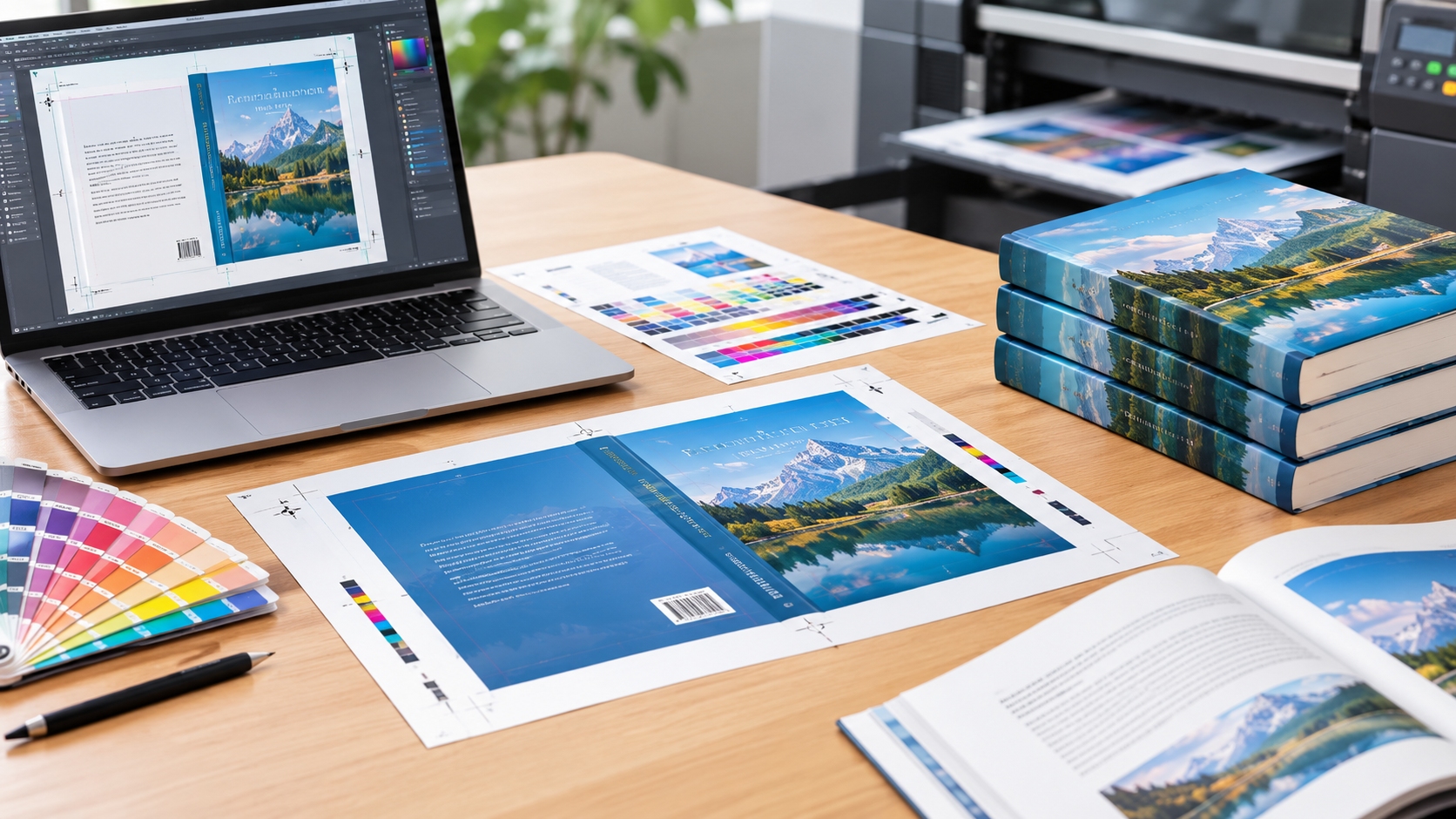

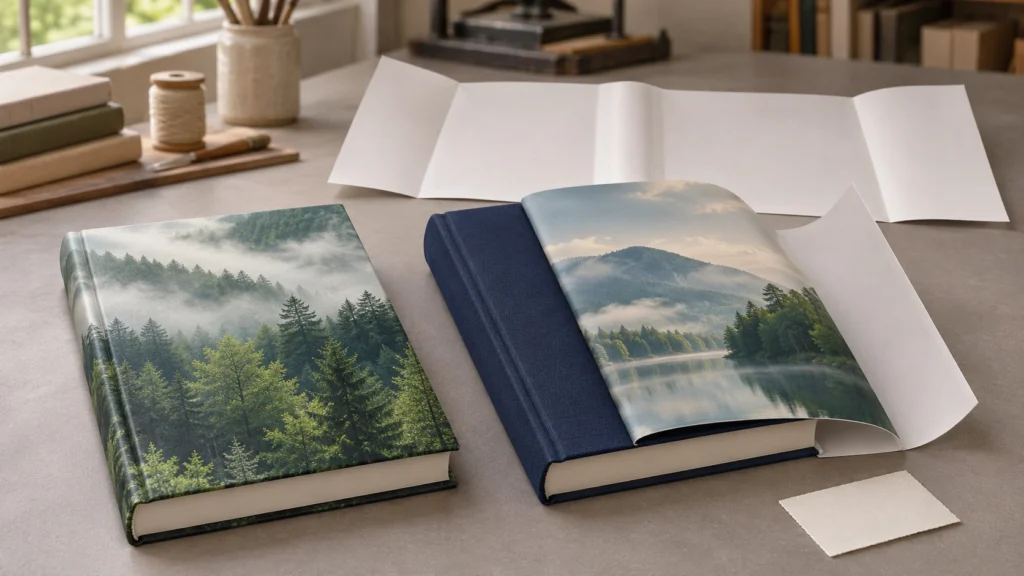
In the printed case hardcover books, artwork is printed on material permanently wrapped around the rigid cover boards. Dust jacket hardcovers are wrapped in a printed wrapper that is removable and typically has flaps folded inside the front and back covers.
The two options can make an appealing publication. The latter one is better depending on the handling, design, budget and what readers should be viewed when the jacket is being taken off.
They are also compatible. Printed case with hardcover will have a printed case underneath the dust jacket, making a printed case with two connected surfaces for the publishers.
What Is a Printed Case Hardcover?
The printed covering material, printed around the boards that make up the hardcover, is used in a printed case. A typical construction is laminated printed paper.
Artwork is permanently associated with the text when reading. No separate jacket to take off, lose or straighten.
This is why it is a good format to use for illustrated books, for helping a practical reference, for publications where the cover image would have to stay visible.
But what the term “printed case” doesn’t say is what’s inside the case. Check if book block is sewn or adhesive-bound separately.
What Is a Dust Jacket Hardcover?
A dust jacket is a cover that is folded around a finished hardcover, and is typically divided into front and back panels, a spine, and inward-folding flaps.
It might be covered in cloth, printed or coated in another substance underneath. May include basic text or another graphic.
The flaps will take the place of a synopsis, author bio, or other publishing details.
A jacket is an extra surface that can be removed and applied on top of the case, to shield it from normal wear and tear. It also may rip or fold along exposed edges which require attention in handling and packing.
Printed Case vs Dust Jacket: Main Differences
| Consideration | Printed case | Dust jacket hardcover |
|---|---|---|
| Artwork location | Permanently attached case covering | Removable jacket, with optional case artwork |
| Reading experience | Cover stays in place | Reader can remove the jacket |
| Additional copy space | Front, back, and spine | Front, back, spine, and flaps |
| Surface damage | Affects the permanent case | May affect the replaceable jacket |
| Production scope | Printed covering and case assembly | Case plus jacket production and fitting |
| Design files | Case template | Jacket template and any case artwork |
For custom hardcover book printing, describe both the case construction and any jacket. “Hardcover with printed cover” leaves room for misunderstanding.
Choose Around How the Book Will Be Used
Consider the reader’s hands, not just the launch photograph.
A cookbook might be open beside the ingredients. A reference manual can be taken between desks. A gift edition might be treated more delicately and appreciated for its packaging.
A printed case is provided with all pieces of artwork firmly secured to it during use. A jacket enables readers to take off the outside art and keep the hardcover inside.
In the case of children’s books, ask yourself if wrapping is necessary to the experience that you want to provide for your child. Don’t think that all hardcover books require a jacket.
Compare the Complete Cost
A dust jacket adds to the paper, printing, finishing, trimming, folding and fitting of the project. That generally adds onto an already unchanged underlying book, thus raising the cost.
However, not all printed case quotations are necessarily cheaper than all jacketed quotation. The comparison could change based on the materials, decoration, quantity, and design under the jacket.
Request alternatives for a standard interior specification.
| Quotation option | What to specify |
|---|---|
| Printed case without jacket | Covering paper, printing, lamination, and decoration |
| Cloth case with jacket | Cloth, case decoration, jacket stock, and finish |
| Printed case with jacket | Separate artwork and finishes for both components |
| Either option with slipcase | Finished dimensions, fit, and protective packing |
Separate optional finishes so you can see where the additional spending goes.
Durability Depends on More Than the Format
Printed cases may develop scratches and abrasions or corners and hinges will wear. They work with the covering material, the finish, their construction and their use.
Dust jackets can cover the surface of the case, but the jacket could get scuffed, folded flaps and damaged edges.
Both are no good for making a book waterproof.
Inspect material samples, particularly for dark surfaces and finishes. Inquire about the protection of the books during packing and transporting.
Handling plan is still needed for a beautiful finish.
Design the Case and Jacket Separately
There are areas on a case template that are associated with wrapping and constructing a case. There are flaps and fold positions in a jacket template.
These files are not compatible with each other.
Check final pagination, interior paper, board thickness and binding before sending for production templates. Finished dimensions and fit may vary due to changes.
Do not place titles, logos or other key information in the printer’s safe areas. An artwork across a hinge or fold must be carefully positioned.
If you’re printing a case underneath a jacket, then remember to use complementary designs rather than simply copying and pasting them.
Add a Slipcase Only When It Serves the Edition
A slipcase can accompany either construction. It provides another presentation surface and introduces additional fitting requirements.
For a hardcover book with a slipcase, tell the manufacturer whether the jacket stays on inside the case.
Check insertion and removal using the complete finished set. A jacket that catches at the opening can become damaged during normal handling.
Also confirm how the slipcase exterior will be protected. It is part of the saleable product, not a substitute for shipping packaging.
Approve the Physical Combination
Request a representative sample when the construction or materials are unfamiliar.
Inspect the case, then fit and remove the jacket. Check flap behavior, spine placement, edge alignment, and opening comfort.
If the sample uses substitute materials, record those differences before approval.
Publishers comparing formats for a wider series can also assess perfect-bound paperback books separately. Keep that edition’s budget and reading purpose distinct from the hardcover cover decision.
Frequently Asked Questions
Is a printed case the same as a dust jacket?
No. The printed case covering is permanently attached to the hardcover boards; a dust jacket is removable.
Can a printed hardcover also have a jacket?
Yes. The case and jacket can use matching or complementary artwork.
Does a dust jacket make the binding stronger?
No. It does not replace the book-block binding, hinges, or case attachment.
Which option is usually cheaper?
With the same underlying book, adding a jacket normally adds cost. Compare complete specifications before deciding.
Can damaged jackets be replaced?
Potentially, if replacements are available and correctly sized. Agree on spare quantities or reprinting arrangements in advance.
Should the case beneath the jacket have a design?
It can. Consider what readers should see when the wrapper is removed and specify that artwork separately.
Do both formats support foil stamping?
Suitable materials and processes can support decorative finishes. Confirm feasibility and sample requirements with the manufacturer.
What should publishers approve before production?
Approve the materials, artwork templates, finishes, jacket fit where applicable, and the complete packaging arrangement.
Share on Social:


