

What Paper Is Best for Fountain Pen Journals?


Generally, smooth, well sized writing paper of 80-100 gsm is used in most fountain pen journals. The 90 gsm sheet is a good first sample to try for regular journaling. If you write on both sides and don’t want the writing of the opposite side to show through, check the writing transparency of a higher opacity stock. If you have one of the wet nibs, and/or close your journal when you’re done, make sure to check drying time as well.
What good is the number on the label? Both of the two sheets can be 100 gsm, and both can react differently to the same pen. The easiest method of choosing would be to use pen and ink for each sample on both sides.
What Makes Paper Fountain Pen Friendly?
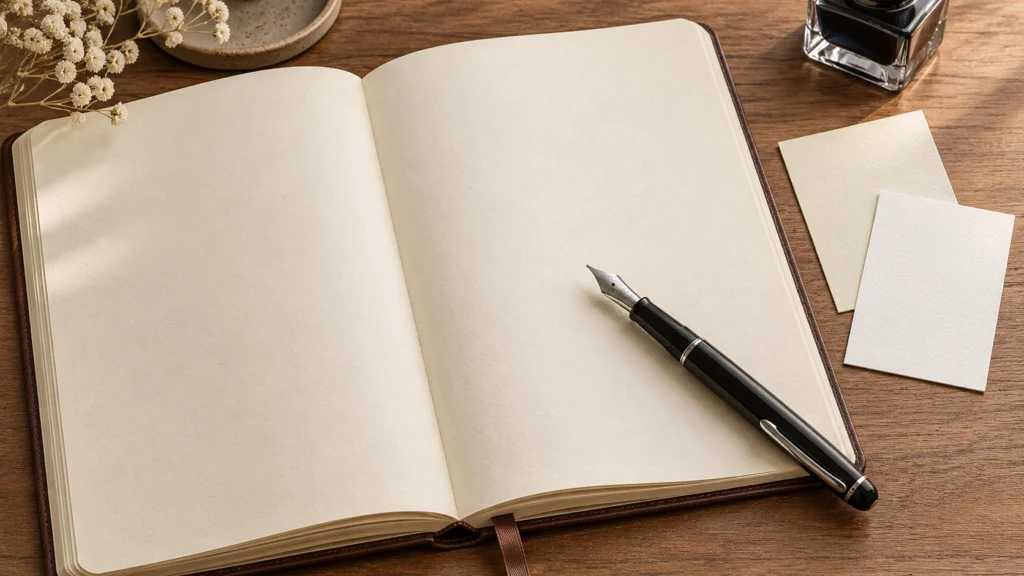
Good fountain pen paper keeps the edges of your handwriting crisp, prevents wet ink from soaking through, and feels comfortable under the nib. For a journal, the back of the sheet matters almost as much as the front. You might love how an ink looks on the first page and still find the reverse too busy to write on.
| What to check | What it looks like | Why it matters |
|---|---|---|
| Feathering | Fine, fuzzy branches spread out from the ink line | Small handwriting and fine lines lose definition |
| Bleed-through | Ink leaves dots or patches on the reverse side | The back of the page becomes harder to use |
| Ghosting | Writing shows through as a shadow | Heavy ghosting can distract when you write on both sides |
| Drying time | Fresh writing smears or transfers to the facing page | It affects quick note-taking and how soon you can close the journal |
A useful test is to turn the sheet over and write across the area where your first paragraph shows through. A faint shadow might be fine. If you keep losing your place in the new line, try a more opaque sheet.
What GSM Should You Choose for a Fountain Pen Journal?
GSM stands for grams per square meter. It tells you how much the paper weighs per unit of area. Surface treatment, opacity, and how the paper takes up ink still need checking separately.
The ranges below are starting points for sampling. The best choice depends on your nib, ink, page count, and how much show-through you’re comfortable with.
| Journal type | Paper weight to sample | What to compare |
|---|---|---|
| Slim travel journal | 60–80 gsm | Weight, ghosting, and whether the paper stays usable on both sides |
| Everyday writing journal | 80–100 gsm | Line clarity, dry time, and writing feel |
| Two-sided planner or bullet journal | 90–120 gsm | Opacity, bleed-through, and the thickness of the finished journal |
| Journal for wet nibs or ink swatches | Start with 90–120 gsm and compare several stocks | How the paper handles heavy ink, how long it takes to dry, and whether it shows the ink effects you want |
For a custom A5 spiral journal, try the paper in a bound sample. A thicker sheet may look better on its own, but a full stack changes how the journal feels in your hand and how easily the pages turn around the spiral.
Smooth, Textured, White, or Cream?
Smooth paper is a good starting point if you use an extra-fine nib or write in small letters. A lightly textured sheet gives more feedback, which some writers prefer. Try your usual quick strokes and the occasional cross-out. That tells you more about the writing feel than drawing a single slow line.
White paper is worth sampling if you want to compare ink colors against a neutral-looking background. Cream or ivory paper gives the page a warmer look and can change how lighter inks appear. If you’re planning a custom PU leather notebook, put white and cream samples next to the cover. Then write on both, since the stock you like best visually may feel different under your nib.
How to Test Fountain Pen Paper Before a Bulk Order
If you’re sourcing a journal for a stationery brand or publisher, ask for a few candidate stocks and a finished sample of the preferred option. Include the actual printed lines, dots, or planner layout. A blank sheet can tell you how the ink behaves, while a printed, bound sample shows how the finished journal will work.
- Use two pen and ink combinations. Try an everyday fine or medium nib and a wetter pen that makes paper problems easier to see.
- Write a paragraph, then add a small swatch. Normal handwriting gives you a realistic baseline. The swatch shows what happens where more ink collects.
- Check drying and the reverse side. Try a light swipe at intervals that match how you use the journal. Then write on the back and check whether earlier lines interfere.
- Write near the binding. Check the inner margin on both left- and right-hand pages. Make sure the cover and binding let your hand reach the space you paid to print.
- Keep the approved sample. Record the stock reference, weight, shade, and finish, and ask to review any proposed paper substitution before production.
For a custom journal or notebook project, share your trim size, page count, binding, layout, and intended writing instruments with CAIMEI. That gives the production team a basis for comparing samples and checking the finished thickness before you approve the order.
Frequently Asked Questions
Is 80 gsm paper good enough for fountain pens?
Yes, a well-sized 80 gsm sheet can work well for everyday writing. Test it with your own ink, especially if you use a wet nib or plan to write on both sides.
Is 120 gsm paper always better than 90 gsm?
Paper weight alone is a poor predictor of ink performance. A 120 gsm stock may feel firmer and reduce ghosting, but compare both sheets for feathering and drying time.
Why does my fountain pen ink smear on smooth paper?
The ink may still be wet on the surface. Try your usual pen and ink on another smooth stock and see whether it dries before you turn the page.
Is cream paper suitable for fountain pens?
Yes. Cream is a paper shade. Judge the specific stock by how it handles ink and whether the shade works with the colors you use.
Can recycled paper work in a fountain pen journal?
Yes. Test the exact recycled stock you plan to order. Check line edges, writing feel, and the reverse side with your usual nib and ink.
Share on Social:


