

How to Make a Lay-Flat Hardcover Journal


For a lay-flat hardcover journal, use a sewn book block, use paper that is flexible, and add enough flexibility to the spine and cover joints to allow the pages to open easily. Then test a full size, bound sample near the front, middle and back. For example, a journal that appears completely level in a photo of the inside of the center spread can be difficult to write in on page five.
First, for a stationery company or publisher, lay-flat refers to what? If the journal is left open for someone to write notes while it is not being held open, does that violate its purpose? If a weekly planner sheet contains visible information on the gutter, can it be read across the gutter? Include that requirement in your short before selecting the cover or ordering a sample.
1. Choose a Binding That Opens Easily
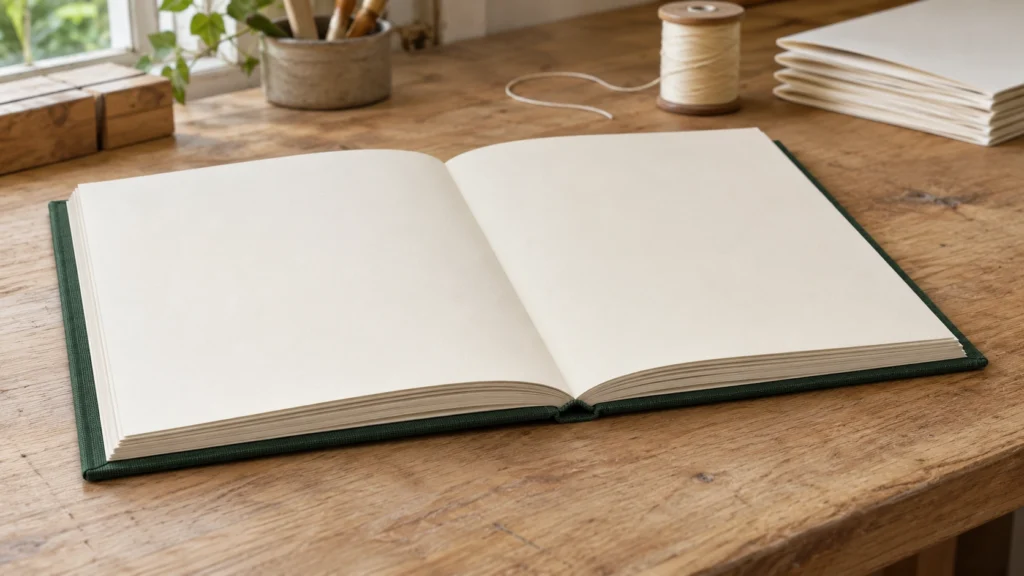
Thread-sewn case binding is a good starting point for a traditional hardcover journal. The interior pages are folded into groups called signatures, and the signatures are sewn together. The sewn block is then fitted into a rigid cover, called the case. The paper, spine lining, adhesive, endpapers, and cover joints all affect how freely the finished journal opens.
Ask for a sample close to your proposed page count. A slim notebook can feel quite different from a thick daily planner, even when both use the same binding method.
| Binding option | Best suited to | What to check in the sample |
|---|---|---|
| Thread-sewn case binding | Hardcover journals, guided notebooks, and premium planners | How easily the first and last sections open and how much writing space is usable near the gutter |
| Exposed sewn binding with rigid covers | Design-led journals with visible stitching | Whether the exposed spine feels durable enough for daily carrying |
| Hardcover Wire-O binding | Desk planners and workbooks that need to stay open | Whether the wire size lets pages turn freely at the final page count |
If you’re planning a range of custom journals and notebooks, compare samples using the same trim size, page count, and interior paper. That makes it easier to tell how much of the difference comes from the binding itself.
2. Match the Paper to the Journal’s Page Count
Begin by considering how people are going to use the journal. A pocket notebook ought to be portable. We need hundreds of pages for a daily planner. For a fountain pen journal, paper must be crisp, and usable on both sides.
Request that the paper grain be across the spine to the inner/back.Request the grain of the interior paper to be across the spine to the inside/back. It is also easier for the pages to fold and turn in a folded signature. Check on paper thickness (also known as caliper). Two stocks of the same gsm may make book blocks of different thicknesses, thus influencing how the journal will feel and how the cover fits.
Before you decide, give it a try and write on the proposed stock. Use ballpoint for regular notes; if included in the product brief, use a ballpoint and fountain pen. On the paper selected, retest in the bound sample. When a loose sheet is in a book block, it feels different than when it’s not.
3. Design the Cover, Hinges, and Gutter Together
A hardcover journal needs rigid boards for protection and enough movement at the joints to open comfortably. The joints are the flexible areas between the spine and the cover boards. If they feel stiff, the cover may pull against the book block every time someone opens the journal.
The gutter is the area where the left and right pages meet. Give dates, checkbox columns, and writing prompts enough breathing room here. A habit tracker that looks fine in a PDF can be frustrating if the first column sits where the pen or your hand can’t comfortably reach.
Wait for the printer’s cover template before finalizing the cover artwork. The actual book block thickness, board thickness, and binding construction all affect the cover dimensions. If you’re comparing writing access with a coil format, a custom A5 spiral journal gives you a useful physical reference for how easily pages turn and how much space you can use near the binding.
4. Test a Bound Sample on a Desk
Request a sample of the proposed paper, page count, cover boards, endpapers and binding that is representative of the finished product. Place on a workbench and use as a customer would. Now open it up, remove both hands and observe if the pages lift, or if the cover pulls the pages up. Then, write a couple of lines near the gutter.
| Where to test | What to do | What to record |
|---|---|---|
| Near the front | Open to the first writing spread and release both covers | Whether the spread stays usable without holding it down |
| Near the middle | Write on both pages close to the gutter | How much of the printed writing area you can comfortably reach |
| Near the back | Turn to the last writing spread and let it settle | Whether page lift makes writing harder |
| Cover joints and endpapers | Open and close the sample repeatedly during normal handling | Any splitting, lifting, or changes in how the covers move |
Keep the approved sample as your production reference. When requesting a custom printing quote, include the trim size, page count, paper preference, artwork, quantity, and the opening behavior you expect. “Stays open on a desk at the first, middle, and last writing spreads” gives the production team a specific requirement they can check.
Frequently Asked Questions
Does thread sewing guarantee that a journal will lay flat?
Thread sewing helps pages open more freely, but the finished result also depends on paper stiffness, spine construction, and cover joints. Approve the complete journal through a bound sample.
Can a thick hardcover planner still lay flat?
Yes, with the right combination of paper and binding. Ask for a sample at the final page count, since a short mockup may open more easily than the finished planner.
How much space should I leave at the gutter?
Use the printer’s template as your starting point. Then check the printed sample with a pen in hand and move any dates, labels, or writing lines that are awkward to reach.
Can I use thicker paper for a fountain pen journal?
Yes. Test ink performance and opening comfort on the same sample. A heavier sheet can add bulk, and the way the full book opens matters just as much as the feel of one page.
Can a lay-flat hardcover journal have foil stamping or an elastic closure?
Yes. Include decorative and functional details in the sample so you can check how they affect daily use. For example, see whether the elastic or its attachment creates a bump under the last few writing pages.
Share on Social:


