

80gsm vs 100gsm Paper for Notebooks


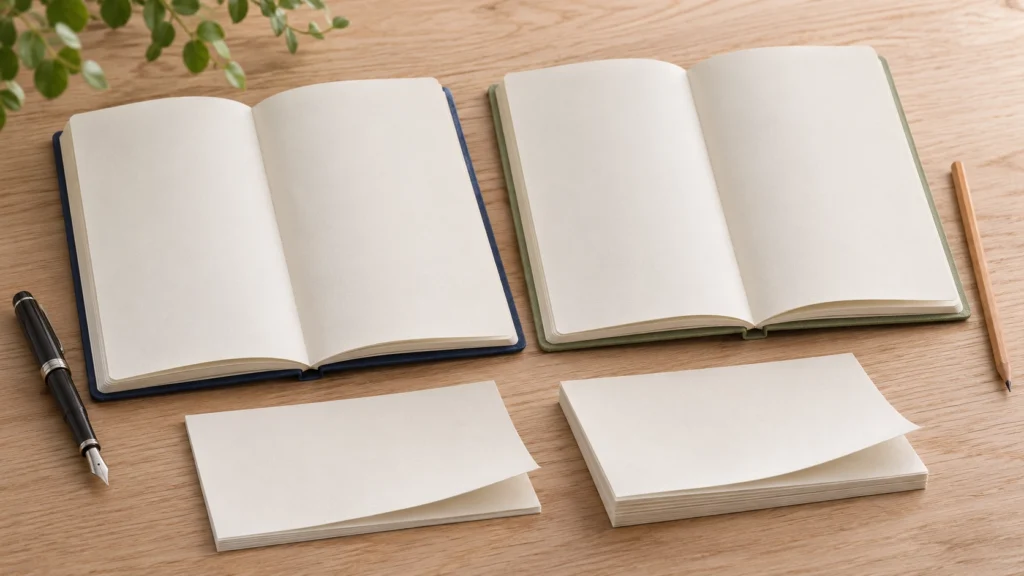
The selection of notebook paper may seem a simple one: the heavier the better, right? Sometimes it may seem easier, but writing is more complex than what’s on a specification sheet.
80gsm paper makes for a good beginning for everyday, lightweight notepads. Paper with a higher 100gsm can be thicker, and can offer better opacity at a comparable grade. There is no such thing as a weight that will ensure that there is no bleed-through or feathering.
The ideal option for a publisher and a stationery brand would take into account the types of customer pens used, page count, selling price, and the frequency of the notebook’s use in a bag.
What Do 80gsm and 100gsm Actually Mean?
Gsm stands for grams per meter squared. The 80gsm paper will weigh 80 grams per square meter, and the 100gsm paper will weigh 100 grams.
That would mean that 100gsm paper is 25% heavier than 75gsm paper for the same size of paper. It does not necessarily make it 25% thicker, stronger or more costly.
Thickness or caliper varies according to density and production of the paper. Two gsm papers can have a vastly different feel.
| Comparison | 80gsm paper | 100gsm paper |
|---|---|---|
| Weight at equal size and page count | Lighter | 25% more interior paper mass |
| Page feel | Often lighter and more flexible | Often more substantial |
| Opacity | Depends on the grade | May improve within a comparable grade |
| Finished thickness | Requires caliper data | Requires caliper data |
| Ink handling | Must be tested | Must be tested |
| Useful starting point | Portable everyday notebooks | Journals emphasizing page feel |
Treat gsm as one specification among several, rather than a quality score.
Which Paper Works Better With Different Pens?
Start with the writing tools your customers actually use.
Ballpoint Pens and Pencils
Both weights can work well for everyday notes. Surface texture affects pencil feedback, while smoothness influences how a ballpoint moves across the page.
For office notebooks, meeting journals, and promotional stationery, a suitable 80gsm grade may deliver everything users need.
Gel Pens and Fountain Pens
In this case it’s paper treatment that counts.
By controlling the size of the liquid it helps to control the absorption of the liquid. The fountain pen ink will work better on a well-suited lighter paper, than on a heavier paper, made for another purpose. They exist as well on 40gsm paper, and Rhodia describes some 80gsm papers as fountain-pen friendly, a testament to the fact that the heavier the paper, the less it is required.
Try the specific pen and ink setup.Experiment with the pen and ink combination. Use a broad nib, slow writing and repeat strokes may be different to quick writing with a fine nib.
Highlighters and Markers
Don’t automatically assume that 80gsm is marker-proof or that 100gsm is marker-proof.
Highlighting test over the printed text and handwritten notes. Wait until original writing has dried before testing for smearing, reverse writing and penetration. Use of alcohol-based markers should be especially careful as regular notebook paper may not have the ink.
Understand Ghosting, Bleed-Through, and Feathering
These problems are often grouped together, but they need different checks.
| Issue | What it looks like | What to evaluate |
|---|---|---|
| Ghosting | Writing remains visible through the reverse side | Opacity and visual distraction |
| Bleed-through | Ink penetrates to the reverse side | Paper treatment and ink compatibility |
| Feathering | Fine ink lines spread into surrounding fibers | Surface behavior and line definition |
| Smearing | Ink transfers when touched | Drying time and writing method |
| Indentation | Writing pressure marks later pages | Pressure, paper, and underlying support |
A notebook can show ghosting without bleeding. That distinction matters when writing product descriptions: “reduced show-through” and “no ink penetration” are different claims.
How Much Weight Does 100gsm Add?
Consider an A5 notebook measuring 148 × 210 mm with 160 interior pages.
That is 80 leaves, assuming both sides count as pages.
The approximate interior paper mass is:
Leaf count × sheet width in meters × sheet height in meters × gsm
At 80gsm, the interior weighs approximately 199 grams. At 100gsm, it weighs approximately 249 grams.
The difference is about 50 grams per notebook, excluding covers, endpapers, adhesive, and accessories. Across 500 notebooks, that adds roughly 25 kilograms of interior paper before packaging.
That extra mass may affect freight, although the actual charge also depends on shipment volume and the carrier’s pricing method.
How Does Paper Weight Affect Binding?
Changing paper can change the book block’s thickness and opening behavior.
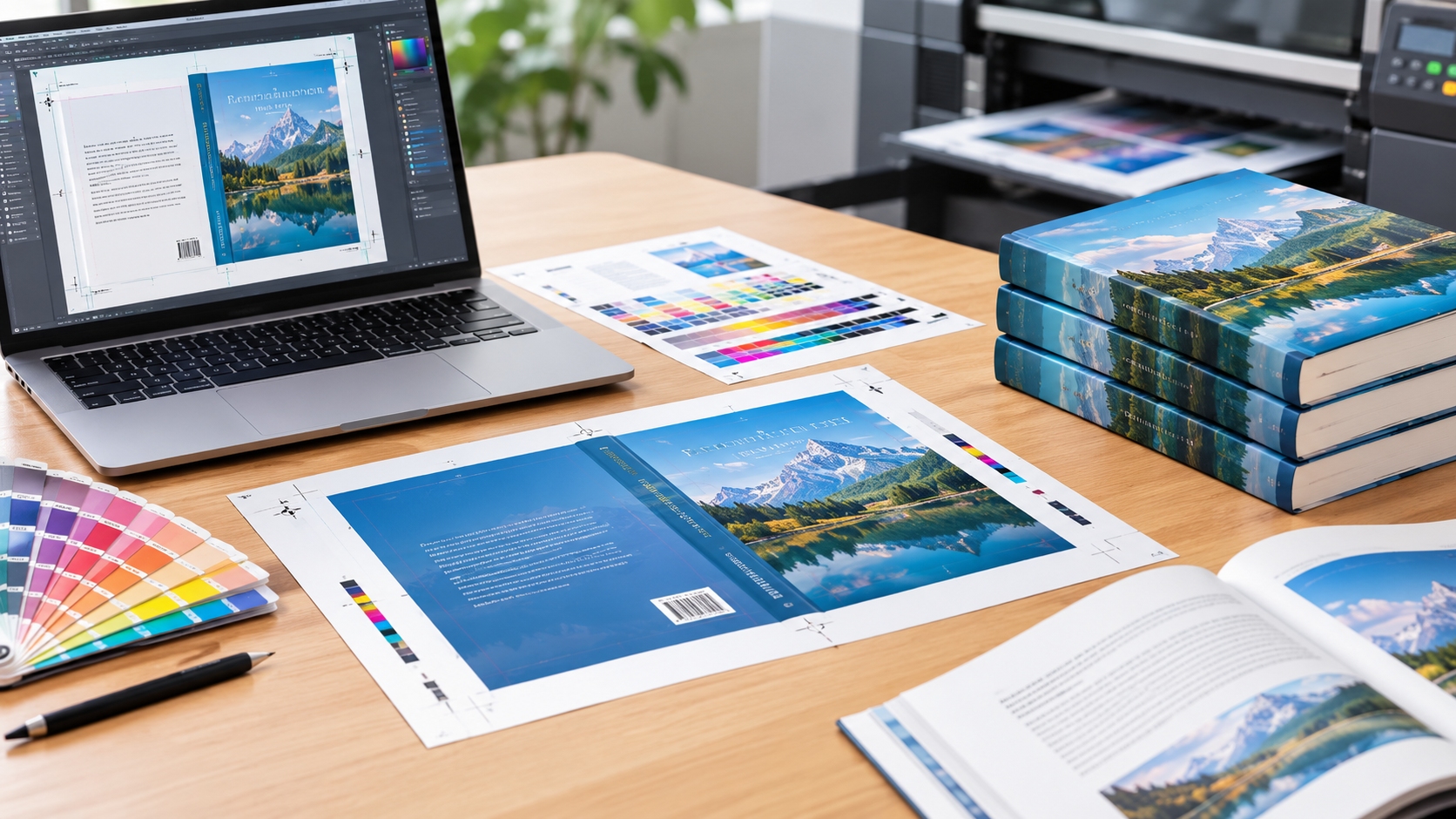
For custom hardcover book printing, approve the interior stock before finalizing the spine and cover template. The printer needs actual caliper data and a representative construction sample.
For perfect-bound notebook formats, check writing comfort near the gutter. A heavier page may feel appealing but still resist comfortable opening.
If a journal comes with a custom hardcover slipcase, confirm its dimensions against the finished notebook. A paper substitution can affect the fit.
Which Paper Makes More Commercial Sense?
Choose according to the product’s purpose.
| Notebook application | Sensible starting point | Main approval priority |
|---|---|---|
| Conference giveaway | 80gsm | Clear writing and controlled weight |
| Everyday office notebook | Compare both | Pen performance and price |
| Travel journal | 80gsm | Portability and usable page count |
| Premium retail journal | 100gsm | Page feel and two-sided usability |
| Fountain pen notebook | Tested writing grade at either weight | Actual ink performance |
Thicker stock can be used for a premium position, but it needs to prove itself based on user experience.
25% increase in finished notebook price does not necessarily mean a 25% increase from 80gsm to 100gsm. The difference is affected by paper pricing, production waste, binding and freight.
Request that CAIMEI provide you with both quotes with the same size, binding, pages, and printing. Then compare the samples together with the price difference.
Frequently Asked Questions
Is 100gsm always better than 80gsm?
No. It offers more paper mass, but the better choice depends on writing performance, portability, and budget.
Is 80gsm too thin for a quality notebook?
No. A carefully selected 80gsm writing paper can suit a high-quality everyday notebook.
Does 100gsm stop fountain pen bleed-through?
Not necessarily. Paper treatment, ink, nib width, and writing style also matter.
Can both weights support double-sided writing?
Yes, provided the selected grade performs acceptably with the intended pens. Check both sides of actual writing samples.
Will 100gsm make the notebook thicker?
It may, particularly within the same paper family. Confirm measured caliper rather than assuming a fixed increase.
Is cream paper better than white paper?
That is partly a reader preference. Compare shade together with contrast, opacity, and writing comfort under normal lighting.
Should I reduce page count when upgrading paper?
Only if it supports your product goals. Compare finished thickness and weight before removing useful writing space.
What sample should I approve before production?
Approve a bound notebook using the proposed paper, printing, and construction. Test your intended pens, opening behavior, reverse-side readability, and handling before confirming the order.
Share on Social:


