

How Does Page Count Affect Offset Book Printing Cost?
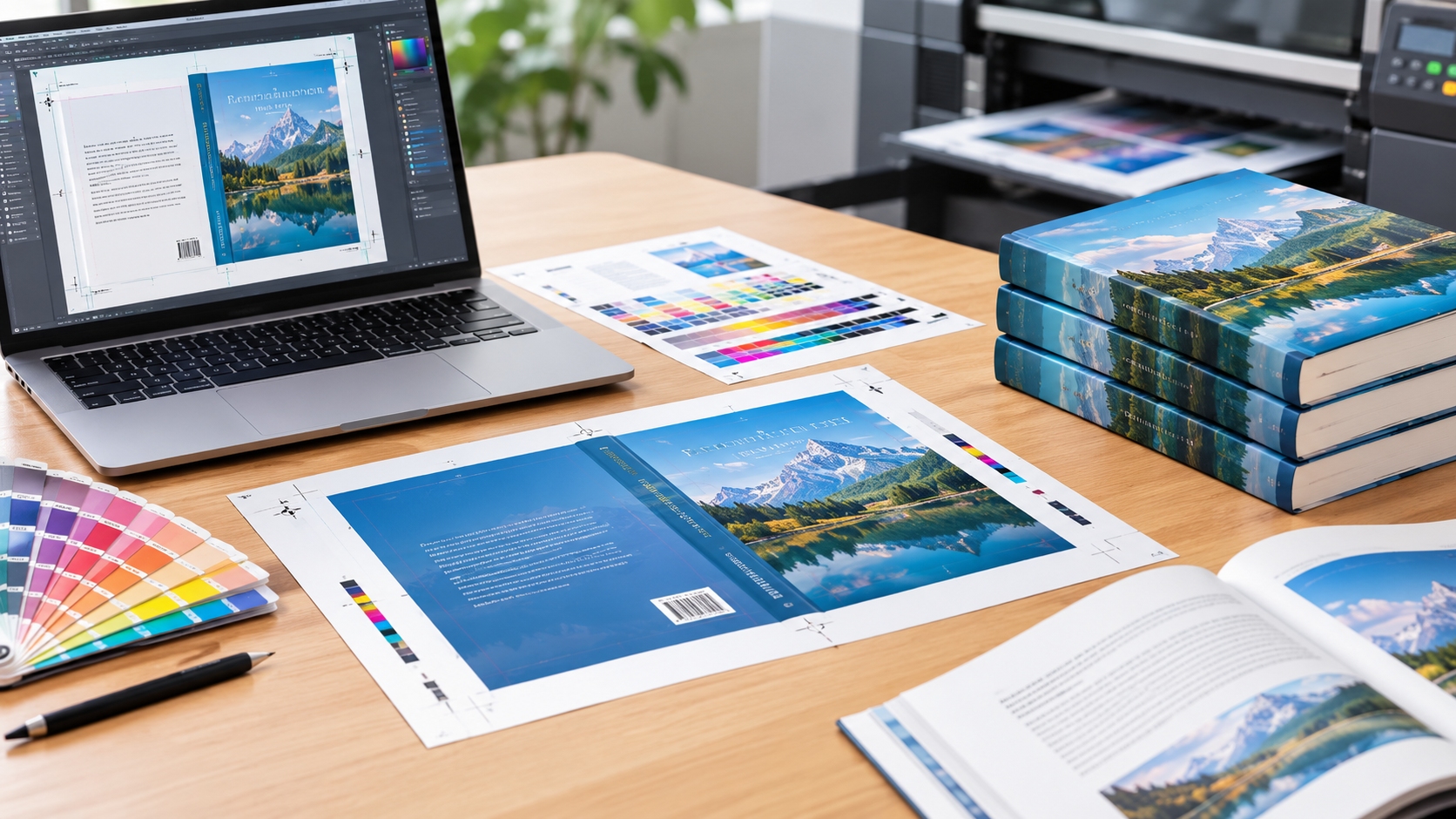

The number of pages impacts offset book printing cost in various ways, such as paper usage, print quantities, folding, binding, finished weight, and packaging. The more pages you have, the more total price you’ll pay, but the price doesn’t always increase by the number of pages.
The number of pages added does not always affect the cost increase of every book. The size of the trim, the type of paper, color distribution, quantities, the production order of the printer are all factors that affect the outcome.
The helpful comparison for publishers is between fully functional specifications. If the new arrangement and build of the book are still readable to the reader, then a shorter book isn’t going to save you money.
Start by Counting Pages Correctly
There are two sides to every leaf, one page. The inside of a book is usually made of paper, with two pages on each side.
Do not include the number of interior pages on the cover. Label endpapers, inserts and any special sections separately so the printer can be sure of the additions.
Blank pages count, too. They still take up paper and are still part of the completed book.
| Component | How to describe it in a quotation request |
|---|---|
| Main interior | Total pages, including intentional blanks |
| Paperback cover | Separate cover specification |
| Hardcover endpapers | Separate stock and printing requirements |
| Color insert section | Page count, position, paper, and colors |
| Foldouts | Finished dimensions and construction |
| Loose inserts | Quantity and packing or insertion requirements |
A clear page breakdown prevents quotations from using different assumptions.
More Pages Usually Mean More Paper
The most direct cost/pagination relationship is that of paper.
If the other dimensions: quantity, trim size and stock remain the same, then the interior dimension of length has to have more paper. However, there are further important factors to consider in the actual purchase and consumption of the product, such as press-sheet layout, production allowances and waste.
If necessary, to get an early comparison, multiply copies by page count to determine the scale of a change. The order adds 48,000 printed page surfaces from the 16 pages added to 3,000 copies.
This number does not represent a paper-order calculation. The printer needs to convert it into appropriate sheets, forms and quantities of production.
Folded Sections Create Cost Steps
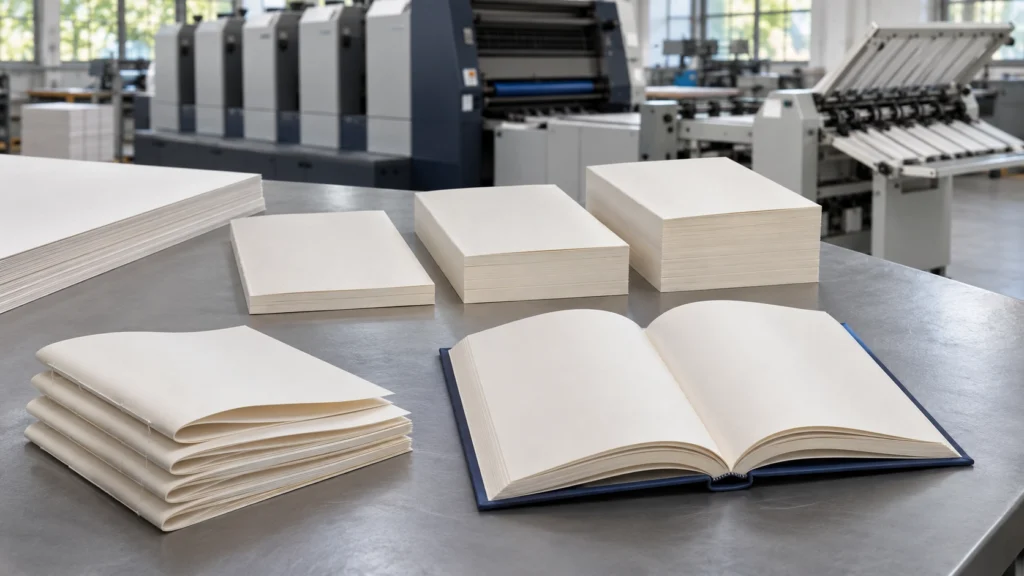
Folded sections or signatures are often used for offset book production. They vary in number of pages depending on format, equipment, paper, and binder.
This is why a quotation can be varied in increments, and not a set fee per page.
A different number of pages may be compatible with an existing production setup, need a smaller additional section, or allow for a different setup to be more efficient. The actual job needs to be measured by the manufacturer.
Don’t think that all offset books have to be printed at 16 or 32 pages. Inquire about the page decomposability of the nearby pages for your given specification.
Page Count Can Change Press Preparation
Other pages might need other printing forms, plates, press set-up and running time.
Imprinting and printing the pages will affect the effect. The production requirements for a black only interior and a full colour interior vary, and so a typical “price per extra page” is of limited use.
Request alternative quotes with reasonable pagination. Maintain all other requirements the same.
| Pagination decision | Potential production effect | What to confirm |
|---|---|---|
| Add a complete section | More paper, printing, and binding work | Section plan and added cost |
| Add a short section | Different imposition or assembly requirements | Available production options |
| Remove several pages | May or may not eliminate a printing form | Actual saving |
| Add separate color pages | Additional color-production requirements | Placement and section arrangement |
| Change interior stock | Different thickness and handling | Updated binding and spine dimensions |
Color Placement Matters Alongside Page Count
Two books may have the same number of pages, but may be different prices because of two different print runs.
It’s not a job for a black-text book with a separate colour section. Some printed pages may appear coloured in random places as well.
Indicate where the color is on the article before you ask for a quote. If it is editorially feasible, ask if the price changes if there are illustrations grouped.
Don’t arrange material around a (supposed) saving. Combine the manufacturer’s suggested production plan with the reader’s requirement for finding images close to the text.
Longer Books Affect Binding and Spine Width
More pages usually create a thicker book block when the paper remains unchanged.
For perfect-bound paperback books, the printer must confirm that the finished thickness suits the proposed binding equipment and construction.
For custom hardcover book printing, pagination can affect sewing, spine preparation, case dimensions, and assembly.
Paper thickness matters as much as page count when calculating the spine. Never reuse an old cover template after changing pagination without checking the dimensions.
Reducing Pages Can Create Other Costs
It’s helpful to cut pages when it eliminates repetition or makes the publication better. Shaping the book structure can result in a less usable book.
Small text, tight margins, crowded charts and smaller images can make for poor readability. Paper usage and cover requirements may also be affected by trim size changes for content.
Do not consider a lower number of pages as the final page count until the designer has created an acceptable revised layout.
If the book is illustrated, compare printouts of the size of the book. If a spread is nice to look at on a large screen, it will look cramped in the book.
Freight and Packaging Follow the Finished Book
Additional pages add weight and may change carton quantities or dimensions.
For bulk orders, those changes can affect transport, warehouse handling, and storage requirements. Request updated packed weight and carton information when pagination changes materially.
A hardcover book with a slipcase needs particular coordination: a thicker book block can require a revised slipcase fit.
Compare the complete delivered cost. A manufacturing adjustment that appears small per copy can become meaningful across thousands of books.
Request Pagination Alternatives Before Final Approval
Give the printer your preferred page count and 1 or 2 page counts that are editorially acceptable.
If all three versions could accommodate the content, then compare 240, 248 and 256 pages. These are not recommended production multiples but rather are quotation options.
Request that the manufacturer explain any cost differences, and construction changes. Finally, complete pagination before approving the production cover template, structural sample and print files.
Frequently Asked Questions
Does doubling the page count double the printing price?
Not necessarily. Some costs increase with pages, while others relate to setup, covers, quantity, or the overall production arrangement.
Do blank pages increase manufacturing cost?
They count toward the finished pagination. Removing them only saves money if the revised construction and production plan use fewer resources.
Must offset books have page counts divisible by 16?
No universal rule applies. Confirm the suitable section arrangement with the manufacturer.
Is there a standard cost per additional page?
No. Paper, trim size, printing colors, quantity, and production requirements determine the change.
Can thinner paper offset the cost of more pages?
Possibly. Compare paper prices, opacity, durability, thickness, and reading experience before selecting it.
Should endpapers be included in the interior count?
Describe them separately and confirm the printer’s counting convention, including whether they are printed.
When should pagination be finalized?
Before approving final cover dimensions, production files, and any sample intended to demonstrate finished thickness.
What is the best way to compare page-count options?
Request complete quotations using consistent materials, quantity, binding, finishes, and delivery scope.
Share on Social:


