

How to Calculate Landed Cost for Books Imported from China
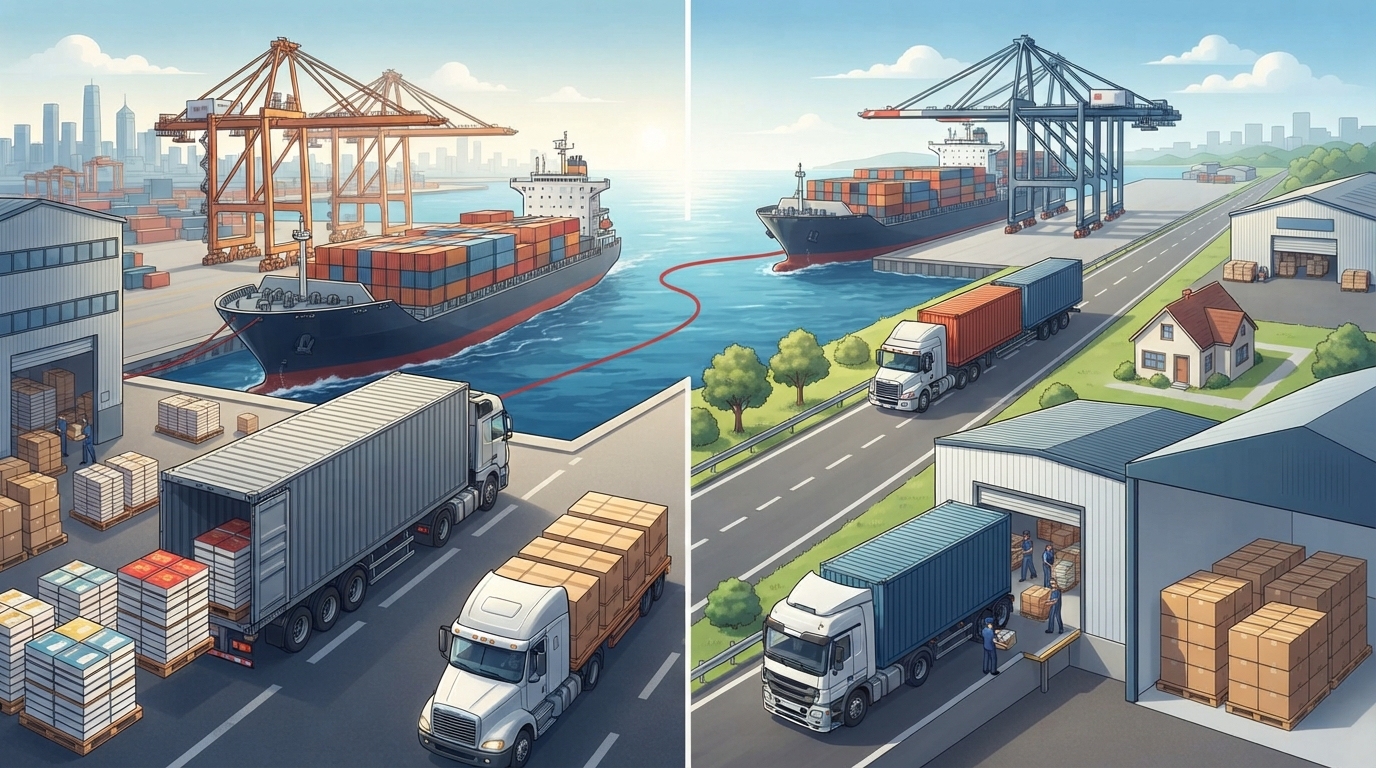


To calculate the landed cost of books imported from China, add manufacturing, preparation, packaging, transportation, insurance, applicable import charges, and delivery to your chosen destination. Then divide the total by the number of copies received.
For publishers, the factory price is only the starting point. A book quoted at $3.00 per copy will cost more once the expenses of getting it into your warehouse are included.
The useful question is straightforward: how much will each book cost when it is available for sale?
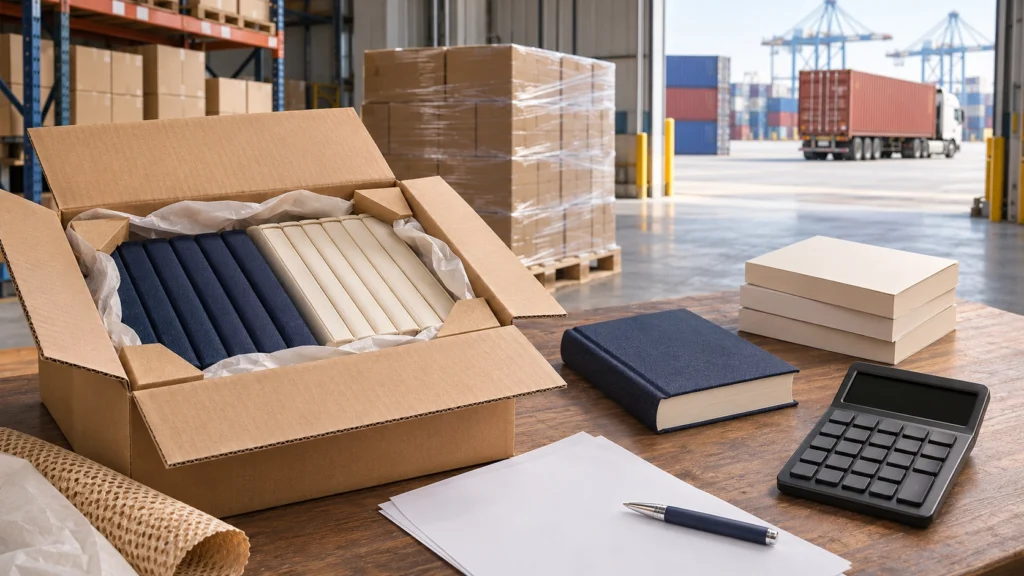
Define Where Your Calculation Ends
Prior to data collection, determine the definition of “landed” for your project.
In this guide, the destination is when the item has been received in your warehouse. That’s transportation and receiving charges that are required to get there, not the continuous storage, marketing and shipping of individual customer orders.
Compare suppliers at the same end point. It is not possible to directly compare “port arrived quotation” with “warehouse delivered quotation”.
Separate the cost of your purchases from the official inventory records. Certain costs of the project may also be applied to other accounting matters.
Build a Complete Cost Worksheet
Use one worksheet to combine supplier, freight forwarder, broker, and warehouse estimates.
| Cost category | Items to investigate |
|---|---|
| Manufacturing | Paper, printing, binding, covers, and finishes |
| Project preparation | Proofs, samples, tooling, and file corrections |
| Export packaging | Wrapping, cartons, protective inserts, and pallets |
| Origin services | Collection, handling, and export-related services |
| International transport | Ocean, air, or courier freight |
| Insurance | Agreed cargo coverage and charges |
| Import costs | Applicable duties, taxes, brokerage, and entry fees |
| Destination services | Terminal handling, collection, and local delivery |
| Receiving | Unloading or appointment charges where applicable |
Enter each expense once. If the supplier’s price already includes packing or freight, identify it as included rather than adding it again.
Start with the Agreed Manufacturing Specification
Use the final production quotation, including approved accessories and finishing.
For custom hardcover book printing, confirm the book-block construction, covering material, endpapers, and decorative treatments. Changes to these specifications can affect both manufacturing and shipping.
Record separately charged samples or tooling in your purchasing budget. If a sampling payment will be credited against the order, subtract that credit once.
Keep the calculation connected to a dated specification so later revisions remain traceable.
Request Packed Weight and Dimensions
Freight estimates need shipment information, not just the book’s trim size.
Ask the manufacturer for estimated gross weight, carton dimensions, carton count, and pallet details where relevant. Packaging adds weight and volume beyond the books themselves.
A hardcover book with a slipcase may occupy more shipping space than the same book without one.
Send the same packing information to each transport provider. Ask how it determines chargeable weight or volume and which handling services its quotation includes.
Check the Delivery Term Before Adding Freight
The term for delivery helps to determine where the expenses lie.
Generally, DAP allows the buyer to clear the importation and pay the import duties as well. DDP passes those duties on to the seller. These both must have a named destination and delivery arrangements should be verified.
Don’t take anything for granted when it comes to shipping; request an itemized explanation. Ensure destination handling, final delivery, unloading and any fees excluded are confirmed.
The Incoterms do not give the money amounts on your worksheet.
Verify Import Charges for the Actual Shipment
Do not assume every publication or destination receives identical treatment.
Classification, origin, customs value, and the rules applicable when goods enter the destination affect the calculation. A published general duty rate may not describe every additional charge. For example, a CBP ruling on a particular hardcover book explicitly separates its general rate from potentially applicable additional duties and fees.
Give your broker an accurate product description and supporting specifications. Ask it to confirm the classification, valuation basis, applicable charges, and estimated clearance costs.
Avoid calculating duty from the supplier invoice alone unless the correct valuation basis has been established.
Calculate the Total and Per-Copy Cost
The following example demonstrates the arithmetic. These figures are hypothetical, not freight quotations or tariff estimates. The import-charge allowance is a placeholder requiring shipment-specific verification.
| Illustrative expense | Amount |
|---|---|
| Manufacturing: 2,000 copies | $6,000 |
| Separately charged proofs and setup | $250 |
| Export packaging | $300 |
| Origin services | $250 |
| International freight | $1,100 |
| Cargo insurance | $75 |
| Verified import charges and clearance allowance | $425 |
| Destination handling and warehouse delivery | $600 |
| Total purchasing budget | $9,000 |
Budgeted cost per copy = $9,000 ÷ 2,000 = $4.50
If the order arrives with fewer saleable copies, calculate a separate usable-copy figure. For example, $9,000 divided by 1,980 usable books is approximately $4.55, before any subsequent credit or recovery.
Separate Cash Requirements from Recoverable Taxes
Import taxes can affect cash requirements differently from final economic cost.
Where recovery is legally available, track recoverable tax separately and confirm eligibility and documentation. For example, UK guidance allows qualifying businesses to recover import VAT subject to the normal rules; recovery is not automatic for every importer.
Maintain a cash-budget column and a cost column when necessary. Also record payment currency, conversion assumptions, and bank charges so estimates use a consistent basis.
For mixed shipments, dividing every shared expense equally by copy count may distort individual title costs.
A heavy art book and a slim paperback use different amounts of transport capacity. Allocate shared freight using an appropriate weight, volume, or chargeable measure. Assign title-specific expenses directly.
When comparing perfect-bound paperback books with hardcover editions, consider both production price and packed shipment requirements.
After delivery, replace estimates with actual invoices. Keep a separate contingency allowance during planning rather than presenting uncertain expenses as confirmed costs.
Frequently Asked Questions
Does landed cost include printing?
Yes. Manufacturing forms the base, with the additional expenses required to reach your defined destination added once.
Are books imported from China always duty-free?
Do not assume so. Confirm classification and all applicable measures for the destination and entry date.
Should I include samples?
Include them in the project purchasing budget. Ask your accountant how to treat them in inventory records.
Is ocean freight always cheaper?
Compare complete quotations, including handling and final delivery. Shipment size and timing affect the practical choice.
Does DDP eliminate the need to check costs?
No. Confirm the named destination, included services, exclusions, and import arrangements before accepting the quotation.
How should I handle damaged books?
Record saleable quantities and calculate their effective cost. Track any supplier credit or insurance recovery separately.
Should ongoing storage be included?
Keep ongoing storage separate when your calculation ends at warehouse receipt.
When should I update the estimate?
Update it after specification changes, packing confirmation, transport booking, and receipt of final invoices.
Share on Social:


