

DDP vs FOB vs EXW for Book Printing Orders
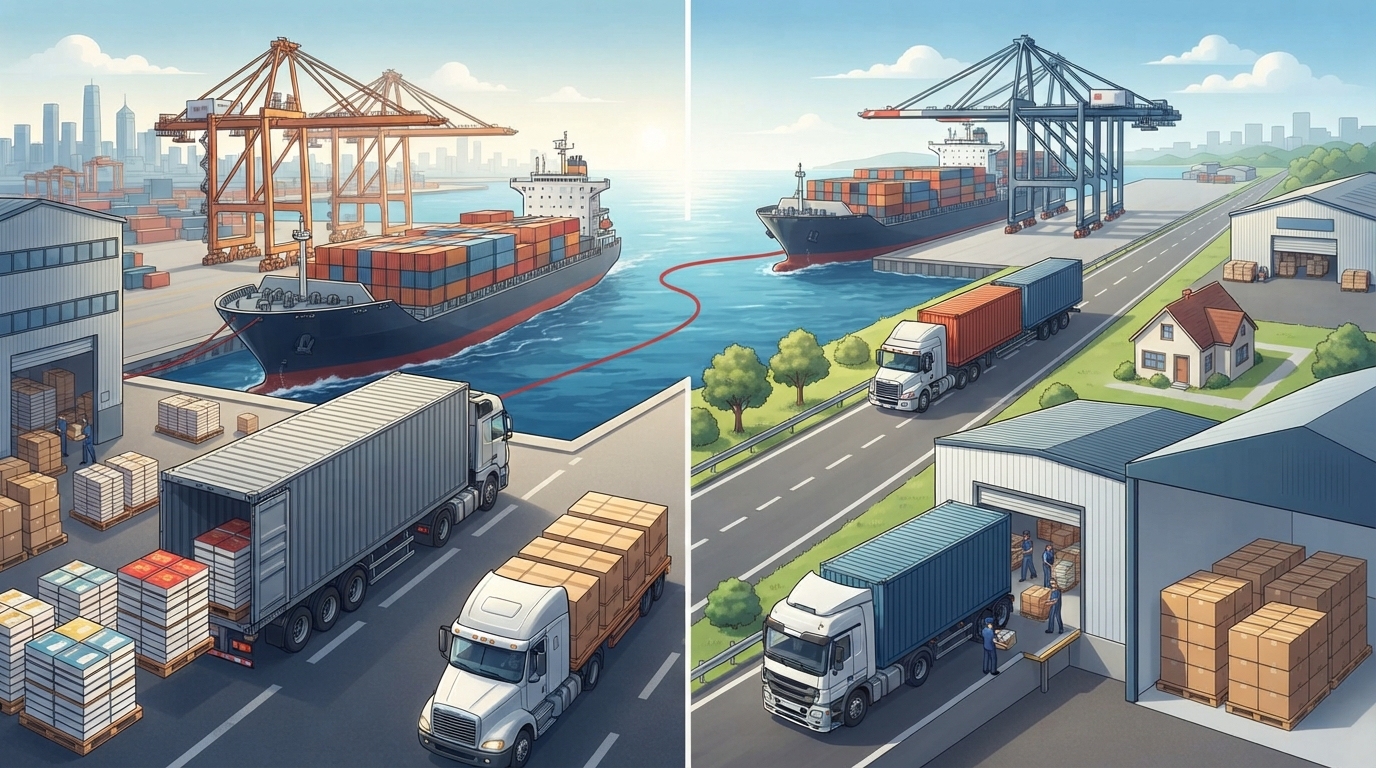


Different possibilities of delivery responsibility for book printing orders are given by DDP, FOB and EXW. EXW places the buyer’s responsibility early, typically at the printer’s location. FOB means that the seller ships the books on board the nominated ship. In DDP, the seller makes all the arrangements to deliver and imports to a determined destination.
The selection has impact on freight arrangements, customs, transport risk and cost outside the printing quotation for the publishers.
Note: Lower EXW does not necessarily equate to lower shipment. The first step is to know what’s in each quotation.
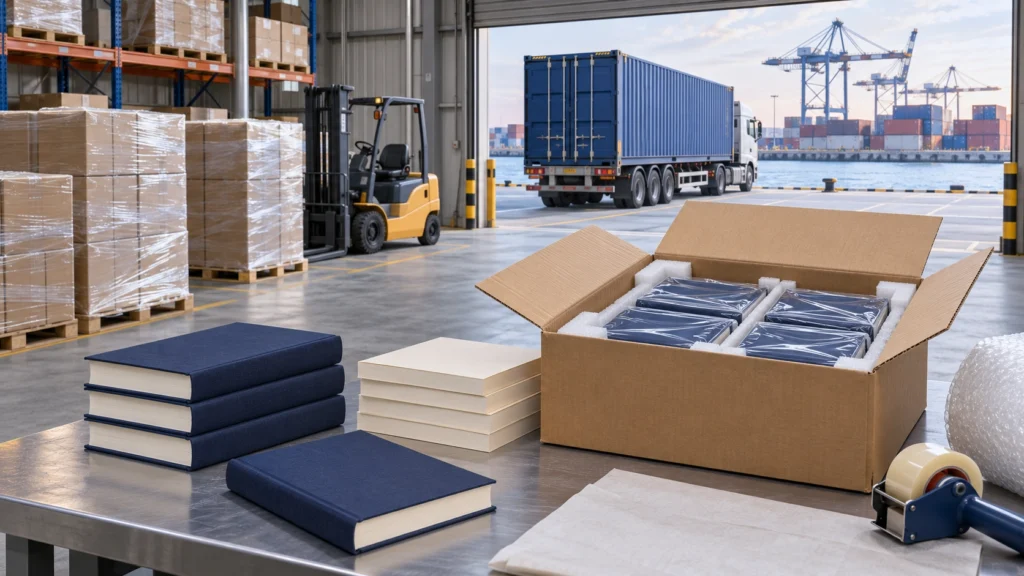
DDP vs FOB vs EXW at a Glance
The following comparison summarizes the standard allocation under Incoterms® 2020. Always specify the named place or port and document any agreed changes.
| Responsibility | EXW | FOB | DDP |
|---|---|---|---|
| Delivery point | Goods available at named place, not loaded | On board nominated vessel at shipment port | Named destination, ready for unloading |
| Export clearance | Buyer | Seller | Seller |
| Main transportation | Buyer arranges | Buyer arranges | Seller arranges |
| Import clearance | Buyer | Buyer | Seller |
| Applicable import duties and taxes | Buyer | Buyer | Seller |
| Transport modes | Any mode | Sea or inland waterway | Any mode |
| Final unloading | Buyer arranges | Buyer arranges onward handling | Buyer responsible |
EXW and DDP apply across transport modes, while FOB belongs to the sea and inland-waterway rules.
EXW: More Logistics Responsibility for the Publisher
EXW means Ex Works. The books agreed are available at the named location in the printer. The EXW service does not involve loading the collecting vehicle or export clearance by the seller.
That’s important when your forwarder gets to the factory. Who gives you loading equipment? Who will be at risk for loading? Who is responsible for export procedures?
Clear those up before you collect. If the seller loading and clearing the goods for export, then, the description of FCA is more appropriate.
When EXW May Fit
EXW can be considered by publishers with capable logistics partners managing collection and export arrangements.
For smaller buyers, coordinating those services remotely may outweigh an attractive factory price. Request a complete forwarder estimate before deciding.
FOB: The Seller Delivers On Board
FOB means Free on Board. The seller handles export clearance and delivers the goods on board the buyer-nominated vessel at the named shipment port. Risk transfers at that delivery point; the buyer arranges the main carriage and subsequent import journey.
For example, “FOB Shenzhen” needs a clearly identified port and agreed shipment arrangements.
There is another important detail: containerized books are commonly handed to a carrier at a terminal before vessel loading. ICC guidance recommends considering FCA for container or multimodal movements rather than automatically using FOB.
When Publishers Consider FOB
Publishers with their own freight partners may want control over international transport while the printer handles origin delivery and export formalities.
Confirm whether FOB actually matches the physical handover. Do not use it for air or courier shipments.
DDP: Seller-Managed Delivery and Import Clearance
DDP means Delivered Duty Paid. The seller arranges transport to the named destination and handles export and import formalities, including applicable import duties and taxes.
Delivery occurs with the goods ready for unloading from the arriving vehicle. The buyer remains responsible for unloading, although unloading costs may already be included in the transport contract.
What to Confirm Before Accepting DDP
Give the complete delivery address and warehouse requirements. Ask how import clearance will be completed and what information you must supply.
DDP can be difficult where a foreign seller cannot readily complete destination customs or tax procedures. In those circumstances, discuss DAP with qualified logistics support instead of accepting an unclear “tax included” promise.
Compare Identical Books Before Comparing Delivery Terms
Keep the manufacturing specification constant.
For custom hardcover book printing, confirm the binding, boards, cover material, endpapers, and finishes. Otherwise, a quotation difference may reflect a different product rather than transportation.
Ask for packed weight, carton dimensions, carton count, and pallet details where relevant.
A hardcover book with a slipcase generally requires different packing calculations from the same title without a slipcase. Use the actual proposed configuration when requesting freight prices.
Calculate the Same Warehouse-Arrival Total
Convert every quotation to the same endpoint before comparing it.
The example below is hypothetical. It demonstrates the method, not current freight prices, tax rates, or a guaranteed saving.
| Cost category | EXW example | FOB example | DDP example |
|---|---|---|---|
| Supplier quotation | $6,000 | $6,500 | $8,800 |
| Additional origin services | $600 | Included within agreed FOB scope | Included |
| Main freight and chosen insurance | $1,200 | $1,200 | Included or separately confirmed |
| Import charges and destination services | $1,000 | $1,000 | Included within agreed DDP scope |
| Comparable total | $8,800 | $8,700 | $8,800 |
For 2,000 copies, the illustrative totals equal $4.40, $4.35, and $4.40 per copy.
None of these three terms itself obliges a party to purchase cargo insurance. Confirm coverage separately, including any policy protecting a DDP shipment.
Put the Delivery Agreement in Writing
Use the term, precise location, and edition together—for example, “DDP [full warehouse address], Incoterms® 2020.”
Then record practical requirements: appointments, unloading facilities, receiving hours, carton identification, and responsibility for additional services.
For perfect-bound paperback books, ask for a fresh packing estimate when quantity, paper, or page count changes.
Keep print-quality approvals and payment conditions in the purchase agreement as well. Delivery terminology cannot replace a complete production brief.
Frequently Asked Questions
Which term is cheapest for book printing orders?
There is no universal cheapest option. Compare the same books delivered to the same endpoint, including every remaining buyer-paid expense.
Does EXW include factory loading?
Not under the standard rule. Agree on loading responsibilities explicitly or consider FCA where appropriate.
Can FOB be used for air freight?
No. FOB applies to sea and inland-waterway transport. Select a rule suitable for the actual transport arrangement.
Is FOB ideal for containerized books?
Not automatically. FCA often matches terminal handover more closely, so discuss it with the printer and forwarder.
Does DDP include unloading at my warehouse?
Unloading is the buyer’s responsibility. Confirm whether its cost is already covered by the seller’s transport contract.
Does DDP mean I provide no import information?
No. The seller may still need your assistance and accurate business or shipment information to complete the agreed arrangements.
Does an Incoterm guarantee the arrival date?
No. Specify production milestones, booking expectations, and delivery commitments separately.
What should I request with each quotation?
Request the named delivery point, Incoterms edition, packing estimates, included services, exclusions, and a clear explanation of remaining responsibilities.


