

What Should Be Included in a Book Printing RFQ?

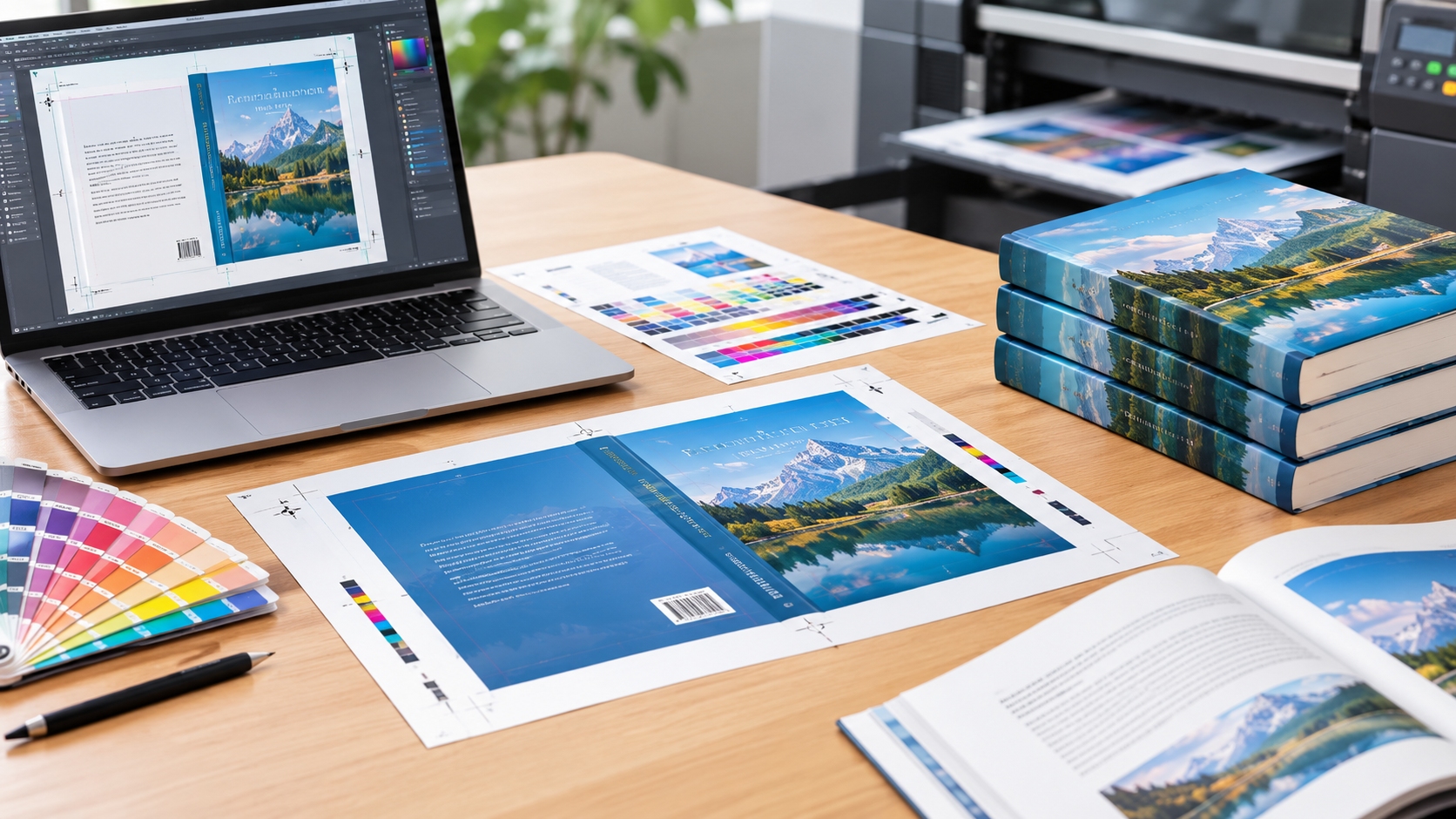

The number of pages, paper, printing colors, binding, cover materials, finishing, packaging, and delivery requirements are all parts of a book printing RFQ. It should also provide information on which proof is required and specify what is still to be confirmed.
RFQ stands for request for quotation. It provides manufacturers with a common brief for pricing and production options for publishers.
Don’t have to have all the technical answers before you call a printer. But it’s important to know the difference between requirements and advice areas. This simplifies comparisons of the responses.
Begin with the Publication and Order Quantity
Provide a few sentences to introduce the project. Describe it as a novel, illustrated book, workbook, or some other type of book.
Outline the purpose of the reader using it. A reference book is very different to a short promotional book that will be opened every day.
Indicate the number per title, edition. If you have multiple versions in different languages, list them separately and say if they share covers or other aspects.
Only ask for other quantities if they are compatible with your buying plan.
Specify Finished Size and Page Count
Provide the final size of the trim (width x height) in the same units. Identify the book format (portrait, landscape or square).
Separate interior pages from the cover. In the case of hardcovers, be sure to mark the endpapers separately as they are counted differently than the rest of the book.
If the pagination is not completed, give an approximate number and clearly mark it as such. Request a second estimate when the final bill comes in.
| RFQ item | Example entry |
|---|---|
| Publication | Illustrated nonfiction book |
| Quantity | 2,000 copies of one edition |
| Finished size | 210 × 280 mm, portrait |
| Interior | 160 pages, excluding endpapers |
| Endpapers | Separate stock; printing quoted separately |
| Alternative quantity | Price for 3,000 copies using identical specifications |
These are illustrative specifications, not a recommended format for every project.
Describe Paper Beyond “Premium Quality”
“Premium paper” is not enough information to allow a manufacturer to price accurately.
When you know the stock, describe the kind of stock, weight, shade, etc. Coated or uncoated paper, for instance, and a need for a certain surface.
If needed, describe what you want: clear text, minimal show-through, good photos or a writing experience.
Make specific requests for alternatives. Do not substitute without notification, ask for the supplier to explain variations in thickness, appearance, availability, and price.
Identify Interior and Cover Printing Separately
Indicate if all pages are black only, full color or a mixture.
Describe the use of color in mixed interiors. Production plans will vary depending on a separate color section versus scattered color pages.
Explain cover printing on its own. Use an inside cover, endpapers, jacket or slipcase for printing if necessary.
If certain colors have to be monitored closely, mark them and discuss with the manufacturer their preferred method of proofing. Don’t use a screen preview as your sole reference during production.
Define Binding and Cover Construction
Your RFQ should explain both how pages are joined and what surrounds the book block.
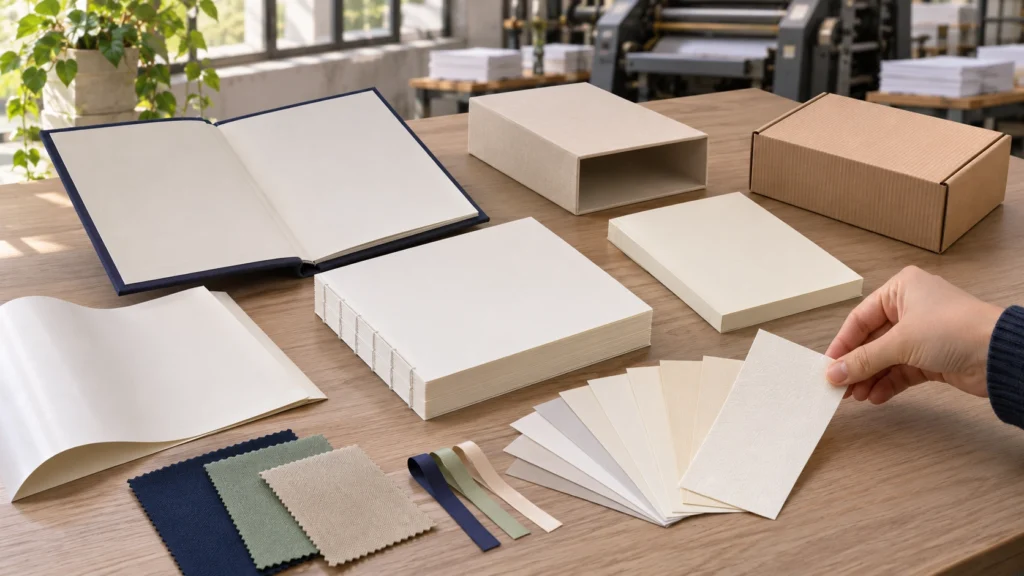
For custom hardcover book printing, identify sewn or adhesive-bound construction, covering material, board requirements, and any preferred spine shape. If undecided, request separately priced options.
For perfect-bound paperback books, include cover stock and finish, then ask the printer to recommend an adhesive suitable for the interior paper.
Explain opening expectations through intended use and representative samples.
List Finishes and Accessories Individually
Put each additional feature on its own line in the RFQ.
Foil stamping needs details about placement and artwork. Embossing, spot UV, decorative edges, ribbons, and dust jackets also require defined scope.
For a hardcover book with a slipcase, describe the slipcase as a separate component. Include covering material, printing, decoration, and packing requirements.
Request optional prices where necessary. This lets you assess individual upgrades without repeatedly changing the complete quotation.
Explain Artwork Status and Sample Requirements
Inform the manufacturer if artwork has been completed, is still in the process of being developed or is still being paged.
Request on file instructions and cover template of agreed construction. Designate those who will correct technical problems if there are any.
Specify the approvals you are looking for. There are several different types of proof: A digital proof, paper dummy, color proof, and finished sample.
| Approval requirement | What to clarify |
|---|---|
| Digital proof | Final page sequence and artwork version |
| Structural dummy | Materials, dimensions, and finished thickness |
| Color reference | Proofing method and production comparison |
| Finished sample | Binding, finishes, accessories, and assembly |
| Revisions | Included rounds and additional charges |
| Approval record | Who authorizes production and how |
Ask suppliers to identify sample features that will differ from the bulk order.
Include Packaging and Delivery Requirements
Provide delivery address and delivery date. Come up with any warehouse instructions that you already have or know of, like carton labelling or pallet requirements.
Discuss if individual wrapping, retail boxes, protective inserts or other packing is required for books.
If available, request cost estimates and carton size, as well as copies per carton.
State the delivery scope you wish to have priced. If there is more than one arrangement offered by suppliers, ask for a breakdown so it’s easy to see where the manufacturing and transport dollars went.
Request a Structured Commercial Response
Instruct manufacturers on the way you want to be quoted.
Request unit price, manufacturing price, sampling charges, tooling, packaging and delivery costs (if applicable). Ask for the quotation currency, time frame, payment terms and quantity restrictions.
Be sure to inquire about the start of the production schedule as well. There may be multiple milestones that include final artwork approval, sample approval, and material confirmation.
Complete the RFQ with a list of questions not answered. A helpful supplier reply would include assumptions, exclusions, alternatives suggested and information missing prior to order confirmation.
Frequently Asked Questions
Can I send an RFQ before finishing the design?
Yes. Mark estimated specifications clearly and request an updated quotation after size, pagination, materials, and finishing are finalized.
Should I attach a reference book photograph?
Yes, but explain which features matter. Photographs cannot establish every material or construction detail.
Do I need to specify an exact paper brand?
Only when it is a firm requirement. Otherwise, describe the required performance and request identifiable stock recommendations.
Should cover pages be included in the interior count?
List the interior and cover separately. Identify endpapers and inserts explicitly to avoid counting differences.
How many quantity options should an RFQ include?
Two or three realistic quantities usually provide a useful comparison without creating unnecessary variations.
Should I include a target budget?
You can. Explain which specifications are fixed and where the manufacturer may suggest alternatives within that budget.
What if I do not know the best binding method?
Describe the intended use, page count, paper preference, and opening expectations. Request recommendations with representative samples.
What should I check when quotations arrive?
Check that every supplier priced the same brief, then review assumptions, exclusions, samples, timing, and complete delivery scope.
Share on Social:


