

Bible Paper vs Offset Paper
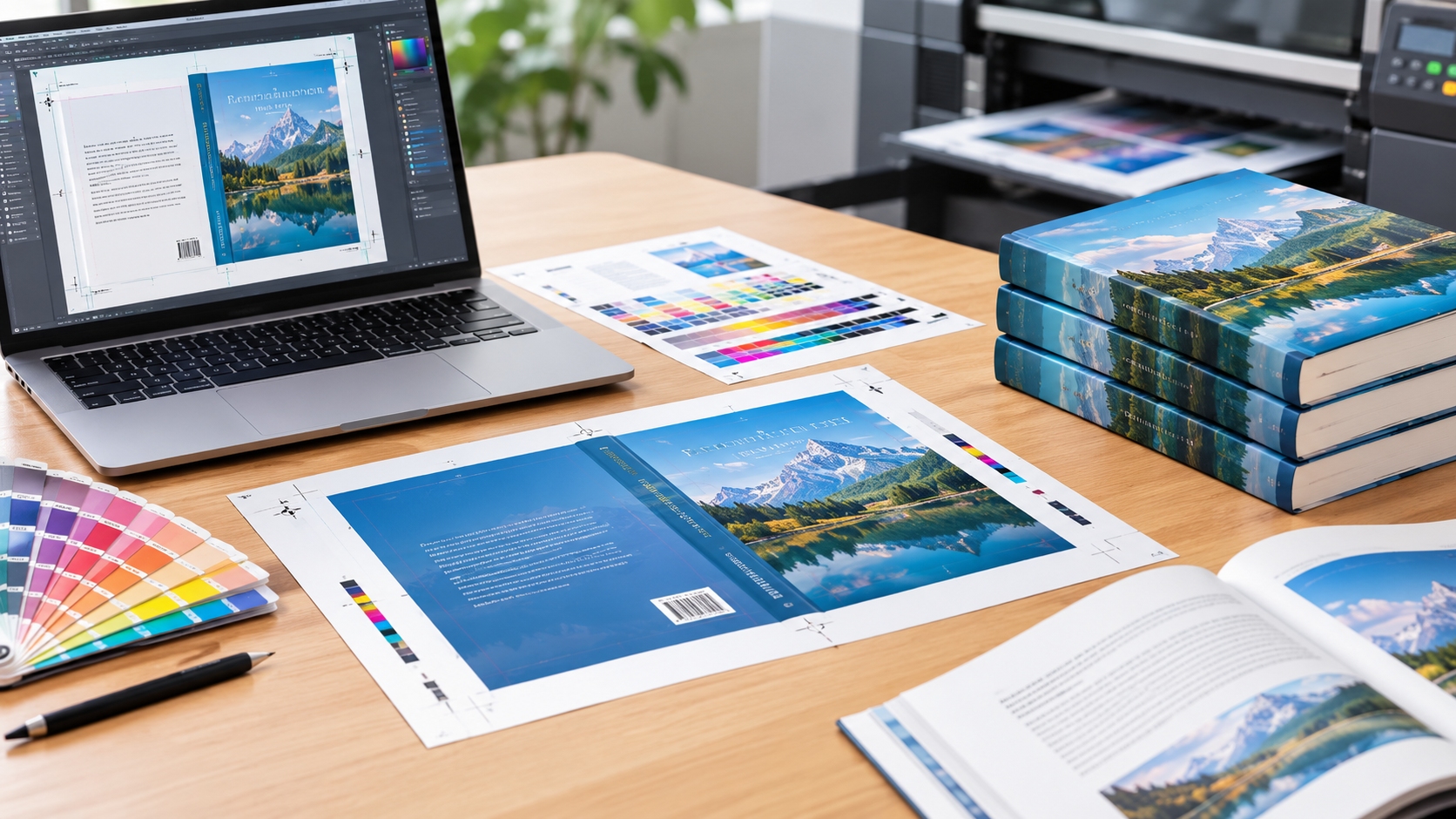
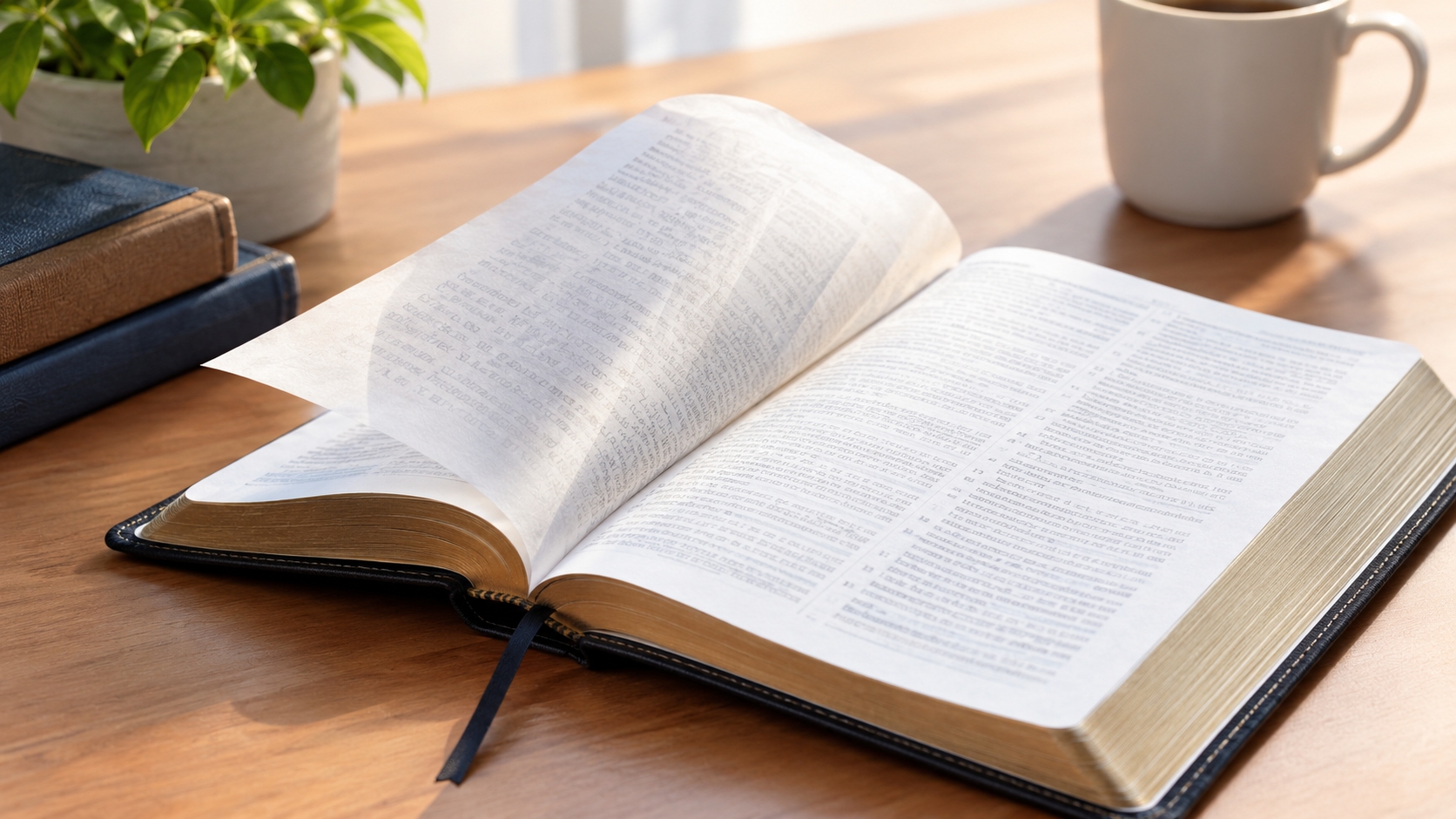
It sounds simple enough to pick up a paper Bible, but when you take a look at the two completed samples, you’ll see that it’s not. The size is compact and easy to carry around. The other is sturdier on the pages but has thicker spine. They can be printed well, but they are for different audiences.
For those that use a short, high page count Bible, Bible paper is normally the better choice. Ordinary uncoated offset paper is suitable for shorter religious books, workbooks and editions where the writing space is more important than minimum bulk. This is based on the entire book with layout, binding and intended use.
The one more naming point to clarify is Bible paper can be offset litho printed. In this context, it is not a printing process, but rather the printing paper itself that is offset.
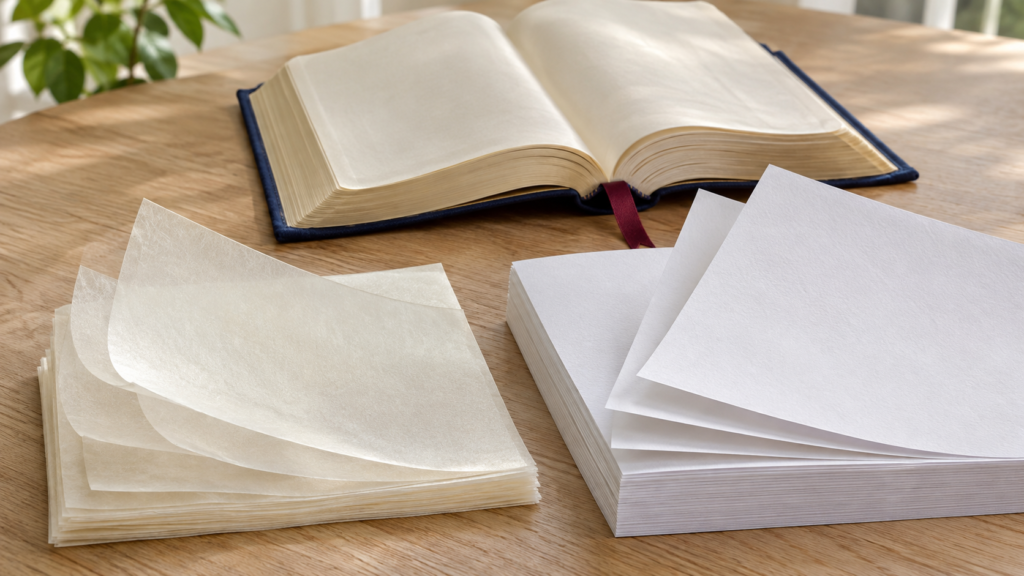
What Is the Difference Between Bible Paper and Offset Paper?
The Bible paper is a type of paper that is used to make books that have a large number of pages. Its purpose is to provide balance of thinness, opacity, strength and print quality.
Uncoated offset paper is used in textbooks, manuals, notebooks and most publications. It has many properties that differ with grade.
| Comparison | Bible paper | Conventional uncoated offset paper |
|---|---|---|
| Main purpose | Reduce bulk in lengthy books | Support general printing applications |
| Weight | Often available in very lightweight grades | Commonly specified at heavier weights |
| Opacity | Engineered for readability at low weight | Depends on the selected grade and weight |
| Handling | Thin pages need careful production control | Heavier sheets may feel easier to handle |
| Typical applications | Bibles, dictionaries, reference books | Workbooks, manuals, study guides |
Neither category guarantees quality on its own. Ask for the actual paper specification and a printed sample.
Why Paper Weight Matters So Much
Paper weight is measured in grams per square metre (gsm). It measures mass per area, rather than thickness.
There are some specialty Bible papers that can be found in the range of 28-40 gsm, which varies depending on the manufacturer. For one project, an ordinary offset paper may be utilized at 60, 70 or 80 gsm.
That gap adds up in a long Bible.
Suppose that you have an imaginary book that has 1200 pages and is 150 mm × 220 mm. It contains 600 leaves. It comes close to being about this much lighter than a sheet of paper, when weighed in the interior:
600 × 0.15 × 0.22 × paper gsm
The inside weighs around 693 grams at the density of 35 gsm. It weighs around 1,386 grams at 70 gsm. These numbers do not cover endpapers, adhesive or covers.
It’s a significant difference for anyone who reads it every day.
Opacity Matters More Than a Heavy Feel
The thicker the page, the more comforting it can be, but this should be assessed for its readability.
Opacity is the ability of paper to block material placed behind the paper. Sometimes, the reverse side may be difficult to read because of the low opacity of the text.
Show through and ink penetration, however, is another matter. With show-through you can actually see the printing on the backside of the sheet. Ink penetration is the flow of ink into or through paper.
When examining samples, look for:
When the reading light is normal, small text will appear below it.
Printed passages with a high density on both sides.
Black text next to red text.
Fine Rules, Footnotes and Cross-references.
Consistency throughout the multiple sheets.
You won’t be able to see what your real layout will read to the reader because the blank swatch will not help.
Thickness Changes the Binding Specification
Two papers with the same gsm can have different thicknesses. Ask for caliper, meaning measured sheet thickness, before estimating the book block.
For example, 600 leaves at a hypothetical 0.04 mm per leaf produce a basic paper stack of 24 mm. At 0.08 mm, that becomes 48 mm. These are illustrative calculations; folding, sewing, compression, and construction affect the finished result.
For custom hardcover book printing, confirm the paper before approving the cover template. A late substitution can change the spine, joints, and opening behavior.
Which Paper Suits Your Edition?
Start with what readers will actually do with the book.
| Project | Paper direction to explore | Main approval check |
|---|---|---|
| Compact complete Bible | Lightweight Bible paper | Readability within target size and weight |
| Large-print complete Bible | High-opacity lightweight paper | Overall bulk and comfortable handling |
| Short devotional | Conventional offset paper | Feel, readability, and production cost |
| Bible study workbook | Writing-friendly uncoated paper | Performance with intended writing tools |
| Illustrated religious book | Grade matched to image requirements | Color reproduction and show-through |
A journaling edition needs special attention. Leaving wider margins helps, but it doesn’t make thin paper suitable for every pen. Test the pens and highlighters your readers are likely to use.
Compare Finished Costs, Not Paper Prices Alone
Bible paper will be more expensive per tonne than general grade. This doesn’t necessarily make the final book more costly.
A lighter specification will have a lower mass for the same size page. The total may be influenced by specialist handling, sourcing, waste and/or production requirements.
| Quote item | What to confirm |
|---|---|
| Paper | Manufacturer, grade, gsm, caliper, shade, and opacity |
| Printing | Colors, ink coverage, and representative proof |
| Binding | Signature plan, sewing, reinforcement, and cover |
| Packaging | Finished dimensions, carton weight, and protection |
| Delivery | Availability, production schedule, and freight basis |
Compare quotes using identical specifications. Otherwise, an apparent saving may simply reflect a different product.
If you are ordering a hardcover book with a slipcase, finalize the paper and binding first. The slipcase must fit the finished book.
Approve a Representative Sample
Before mass production, request a bound dummy using the proposed paper and a printed sample showing demanding pages.
Open the book near the beginning, middle, and end. Turn individual pages. Check the gutter, text visibility, and cover movement.
For a shorter companion title, perfect-bound paperback books may offer a practical alternative. Its paper specification can differ from the main Bible because the page count and reader expectations differ.
The useful question is simple: does this paper work in this book?
Frequently Asked Questions
Is Bible paper always better than offset paper?
No. It is particularly useful when reducing bulk matters. Conventional offset paper can work well for shorter publications or writing-focused formats.
Can Bible paper be used on an offset press?
Yes, suitable grades can be offset printed. Confirm compatibility with the printer’s equipment and the specific paper grade.
Does higher gsm always mean better opacity?
No. Weight influences opacity, but fiber composition, fillers, and manufacturing also matter. Compare technical data and printed samples.
Is 35 gsm suitable for every Bible?
No. Layout, page count, ink coverage, handling, and available grades all affect the decision.
Will Bible paper prevent highlighter bleed-through?
Not necessarily. Test the exact paper with intended markers. Drying time, ink chemistry, and repeated strokes can change the result.
Does cream paper improve readability?
Some readers prefer its appearance. Evaluate shade alongside contrast, opacity, type size, and lighting rather than treating color as a guarantee.
Can the paper change after proof approval?
It can, but the replacement needs review. Changes may affect printing, spine width, weight, and binding behavior.
What should publishers send with a paper inquiry?
Provide trim size, page count, quantity, printing colors, binding, target weight, and intended use. Include sample layouts and any writing requirements.
Share on Social:


