

What Is the Best Paper for Bible Printing?
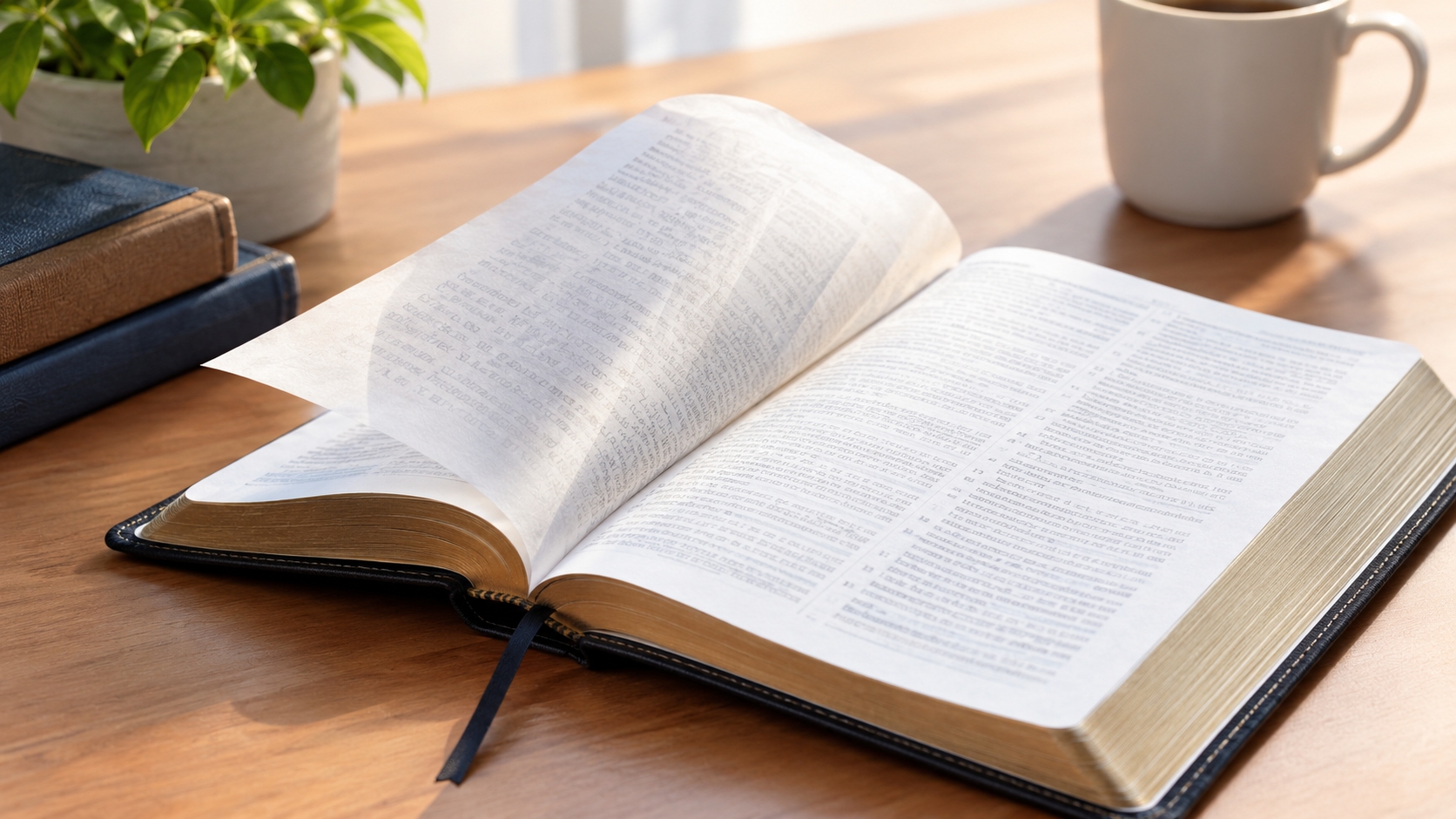
You need to select the optimal paper for Bible printing to ensure that the book you’re printing will be light, easy to read, durable and able to be used for a long time. Bibles typically have thousands of pages, a lot of cross-references, footnotes, and short text. The paper should be thin enough to allow the finished Bible to be portable, yet be sufficiently sturdy to endure frequent reading and handling.
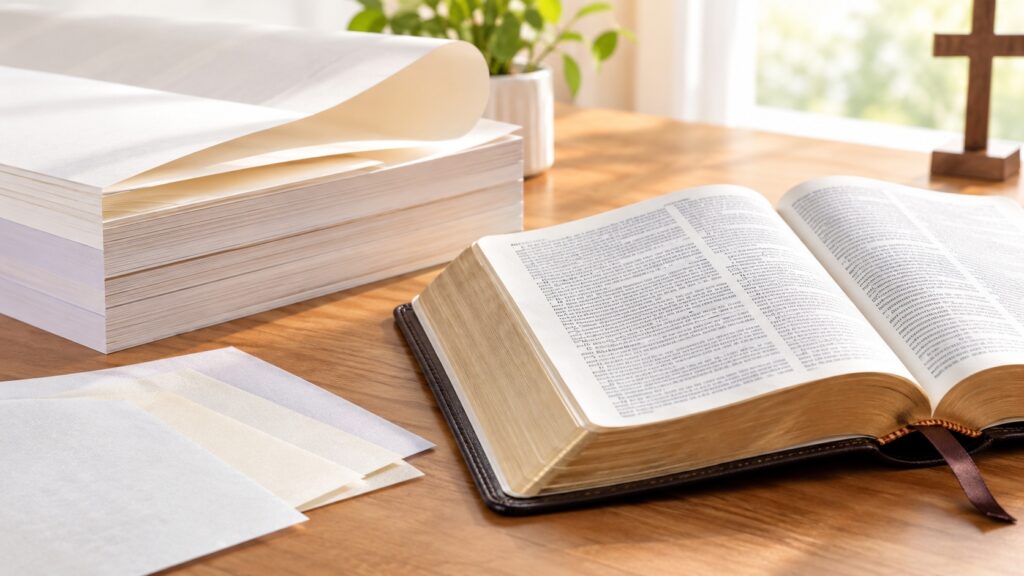
Ideal Bible printing paper is thin, lightweight Bible paper with good opacity, sturdy enough to hold up to printing, with a smooth surface, and minimal show-through. For the size and binding of your Bible, the type of printing it uses and the audience you are selling it to, there are several different options available: Lightweight uncoated Bible paper, premium thin printing paper, or specially manufactured opaque paper.
This guide covers the best paper types for Bible printing, the most important specifications to take into account, and how Bible printers can select the best paper for custom Bible printing projects.
1. What Is Bible Paper?
Bible paper is a particular type of paper used for printing books that are so thick that they require a large amount of paper for printing but must be compact and lightweight. It is generally thinner than regular book paper and is designed to achieve an optimum combination of opacity, printability, flexibility and durability.
The paper used in traditional Bible is generally uncoated paper that is used to make it to read naturally and allows the ink to be absorbed into the fibers of the paper. The relatively thin thickness is helpful for publishers to create Bible books of hundreds or even thousands of pages without the book becoming too thick.
Bible paper has the following characteristics:
- Low grammage: Often approximately 25–50 gsm, depending on the application and paper grade.
- High opacity: Helps minimize text showing through from the opposite side.
- Good tensile strength: Reduces the risk of tearing during printing, binding, and everyday use.
- Smooth surface: Supports clear printing of small text and fine details.
- Flexible texture: Allows pages to turn easily and accommodates different binding styles.
Specifications are dependent on the manufacturer. Paper quality is important for Bible printing; the best way to determine is to look at samples, not grammar.
2. What Is the Best Paper for Bible Printing?
No one size fits all when it comes to paper size, it is a personal preference. The best option will depend on the balance of portability, readability, durability and production cost that is desired.
Lightweight Uncoated Bible Paper
One of the most used types of Bible paper is a lightweight, uncoated Bible paper. The thin construction allows it to be used in thin books such as Compact Edition, Study Bible or Reference Bible.
The benefits are the natural feel and the flexibility, as well as being compatible with controlled printing processes. It also has the advantage of being easy to read on because uncoated, rather than coated, which is what produces that shiny, coated look.
Lightweight paper can be more susceptible to tension, penetration of the ink and mechanical stresses during printing, however, so care must be used when handling the paper for printing.
High-Opacity Thin Paper
Thin paper is engineered to be less opaque, but has a relatively lower basis weight so that it can be used to minimize show through. It is especially important for Bibles with small print, a lot of footnotes, or a lot of information put in.
Opacity is related to several factors such as fibre composition, fillers, paper formation and thickness. Use of a well made paper that will give a high opacity will help to make the Bible easier to read without adding too much weight to the finished book.
This is a good choice for high-end publications and print Bibles where having to see the printed words on both sides of each page is important.
Premium Lightweight Printing Paper
Special printing paper is used in some Bible printing projects that is lightweight, smooth and strong. These papers can deliver uniform ink printing and a smooth page feel.
They might be suitable for large print bibles, devotional or custom religious books where readability is paramount over minimising book size.
The selected grade must be able to withstand the intended printing process and the selected system of inks.
3. What GSM Is Best for Bible Paper?
GSM (grams per square meter) is a measure of paper weight per unit are. It is one of the important specifications to take into account when choosing the paper for Bible printing, but should not be taken out of the context of thickness and opacity.
Here are some suggested ranges to get you started:
| Paper weight | Typical consideration |
|---|---|
| 25–30 gsm | Very lightweight editions requiring strict control of show-through and paper strength |
| 30–40 gsm | A potential balance between compactness, handling, and readability |
| 40–50 gsm | Greater substance and potentially improved handling, with increased book thickness |
| Above 50 gsm | May suit selected large-print or less compact religious publications |
These ranges are not necessarily industry standards. The opacity and thickness of paper grades may vary widely depending on the grade.
If you are looking for a smaller Bible that has a lot of pages you might want to start sampling at 30-40 gsm. Final specification to be determined by printing and binding tests.
4. Why Opacity Matters in Bible Printing
Because Bible pages are typically printed on both sides of the paper, one of the most critical features of Bible paper is opacity.
If the text on the back is too easy to see, it can hinder comprehension, especially if the letters are tiny and there are lots of cross-references on the page.
Thickness, fiber structure, fillers, color and manufacturing processes all affect the opacity of paper. The problem is not just heavier papers, as using these heavier papers is not always the best solution because too much show-through is not desired without solid additional weight.
For measuring opacity, it is best for publishers to ask for samples using same font size, ink density and page layout. A paper that hasn’t been printed yet does not necessarily reflect the actual reading experience.
A blend of opacity, good paper formation and ink absorbency is a better choice than paper thickness when it comes to the best Bible printing.
5. Choosing the Right Paper Color
Paper color affects visual comfort, perceived quality, and contrast between the text and the page.
Cream or Off-White Paper
Cream paper is a popular option for traditional and premium Bibles. Its warm appearance can create a softer visual presentation while maintaining sufficient contrast for black text.
It is particularly suitable for devotional Bibles, gift editions, and products designed for extended reading.
Natural White Paper
Natural white paper provides a brighter background and strong visual contrast. It may be appropriate for contemporary Bible editions, study references, and publications with detailed diagrams.
However, excessive brightness may not suit every reader or design. Publishers should compare samples under different lighting conditions before making a final selection.
Considerations for Large-Print Bibles
Large-print Bibles prioritize legibility. Paper color, opacity, smoothness, and ink contrast should work together to create a clear reading experience.
Because larger text may require additional pages, publishers should calculate the finished book’s thickness before choosing a paper grade.
6. Which Paper Is Best for Different Bible Types?
Different Bible formats have different paper requirements.
Pocket Bibles: Lightweight, high-opacity paper is usually preferred because the book must remain small and portable.
Study Bibles: High-opacity paper is especially valuable because these editions often contain footnotes, maps, commentary, and cross-references.
Large-Print Bibles: Paper with good opacity and consistent print quality is important because larger text can increase page count and finished thickness.
Premium and Gift Bibles: Paper with a refined texture, consistent color, and reliable strength can enhance the overall reading experience.
Children’s Bibles: Depending on the design, somewhat heavier paper may be appropriate, particularly when illustrations are prominent. However, the paper must still suit the printing method and binding structure.
Mass-Market Bibles: Cost-effective lightweight paper can help control material costs, provided it meets the required standards for readability and durability.
7. How Printing Technology Affects Paper Selection
The best Bible paper also depends on the printing technology used.
Offset printing is widely used for large-volume book production because it can deliver consistent text reproduction and competitive unit costs at scale. For Bible printing, the paper must be compatible with the press, ink, and drying process.
Digital printing may be useful for short runs, customized editions, or proof copies. However, not every ultra-thin Bible paper is compatible with every digital printing system. Paper feeding, static electricity, toner or ink adhesion, and drying behavior should be tested in advance.
Regardless of the printing method, printers should verify registration accuracy, ink density, show-through, sheet handling, and finished-page quality before proceeding with full production.
8. How to Choose Paper for Custom Bible Printing
When sourcing paper for a custom Bible printing project, publishers should evaluate several factors.
First, determine the finished size, total page count, font size, and intended use. These details help establish the required balance between paper thickness and readability.
Second, request samples from qualified paper manufacturers or printing suppliers. Compare grammage, caliper, opacity, surface smoothness, brightness, and tensile strength.
Third, conduct a print test using the actual interior layout. Examine small text, fine lines, cross-references, and reverse-side show-through.
Fourth, complete a binding test. Thin paper must withstand folding, gathering, sewing or other binding processes, trimming, and repeated page turning.
Finally, assess total production cost. The lowest-cost paper may not provide the best overall value if it increases production difficulties, causes waste, or reduces the finished Bible’s quality.
For large-volume orders, it is also important to confirm consistent paper availability, batch-to-batch color stability, and reliable delivery schedules.
9. Frequently Asked Questions
Is 30 gsm paper good for Bible printing?
Yes, 30 gsm paper can be suitable for certain Bible printing projects, particularly compact editions. However, suitability depends on opacity, thickness, strength, print quality, and binding performance. A sample test is essential.
Is coated or uncoated paper better for Bibles?
Uncoated paper is generally preferred for traditional Bible interiors because it provides a natural reading surface and works well for text-heavy layouts. Specialized coated or treated papers may be appropriate for certain applications, but compatibility must be tested.
How can printers reduce show-through on Bible pages?
Printers can select high-opacity paper, optimize ink density, avoid excessive ink penetration, and test suitable paper and ink combinations. Font design and page layout also influence perceived readability.
Does thinner paper always make a better Bible?
No. Thin paper reduces weight and thickness, but excessive thinness can compromise opacity, strength, and handling. The best paper achieves an appropriate balance between portability and reading comfort.
What information should I provide when requesting a Bible printing quotation?
Provide the Bible’s finished dimensions, estimated page count, paper preferences, printing method, binding style, cover specifications, quantity, and delivery requirements. If the paper grade is not yet determined, ask the printer to recommend suitable options and provide printed samples.
Conclusion
The ideal paper for Bible printing is light in weight, high opaqueness, durable and suitable for the printing and binding methods used. Traditional Bible editions would be well suited to lightweight uncoated Bible paper, and for study Bibles and other texts, you may want to consider a high opacity grade.
Testing paper with an approximate value of 30–40 gsm is often a convenient first step for many projects. But the selection should be based on the actual performance, not GSM.
Paper samples can be compared to establish a compact format, assessment of print clarity, binding strength considerations and determination of finished book thickness.Publishers can use paper samples to choose a paper that provides a compact format, ease of reading, and a reliable print life. An experienced Bible printing manufacturer can also ensure optimal paper selection, production efficiency and printing costs.
Share on Social:


