

Wire-O vs Saddle Stitch Wall Calendar Binding

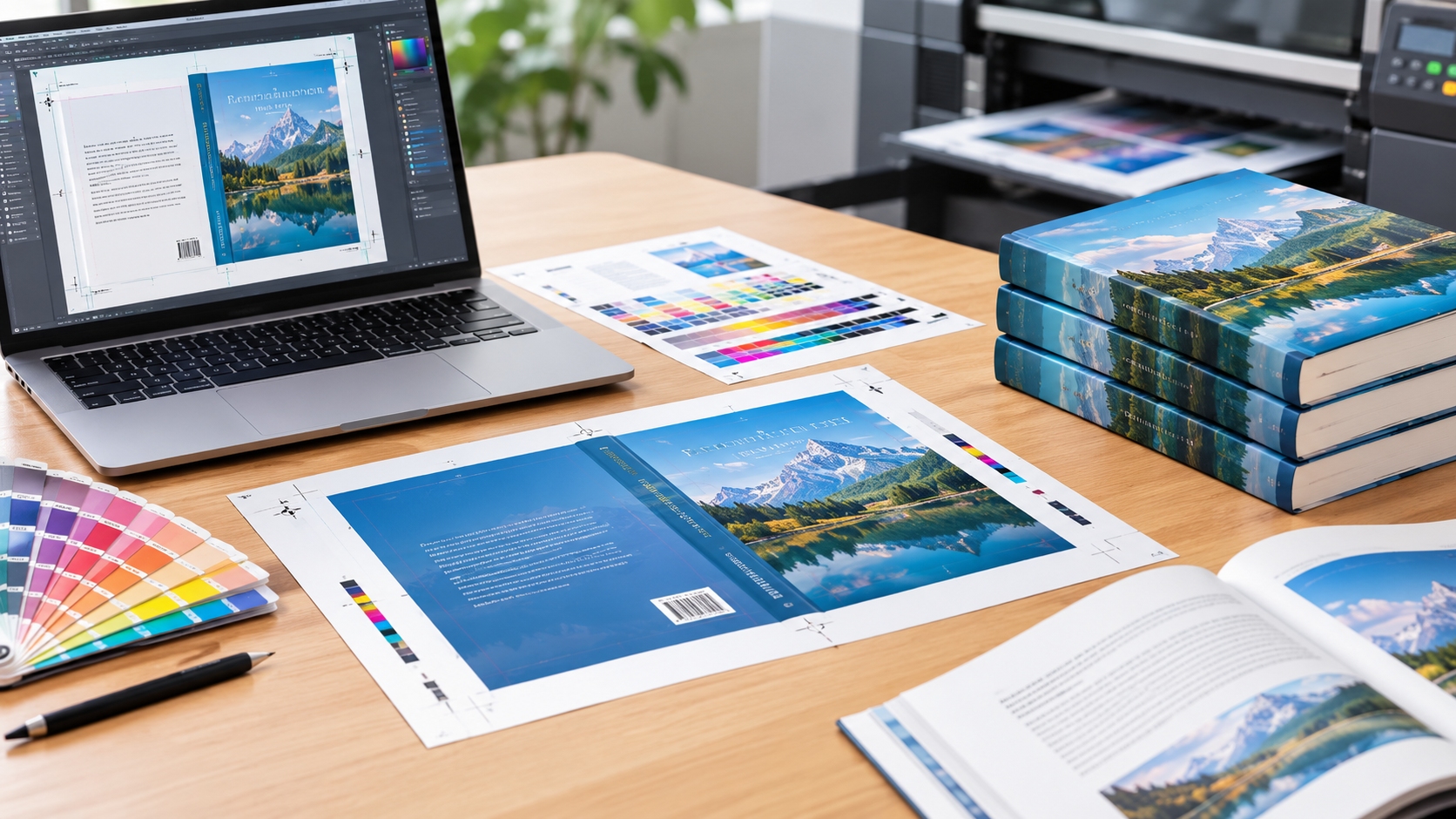

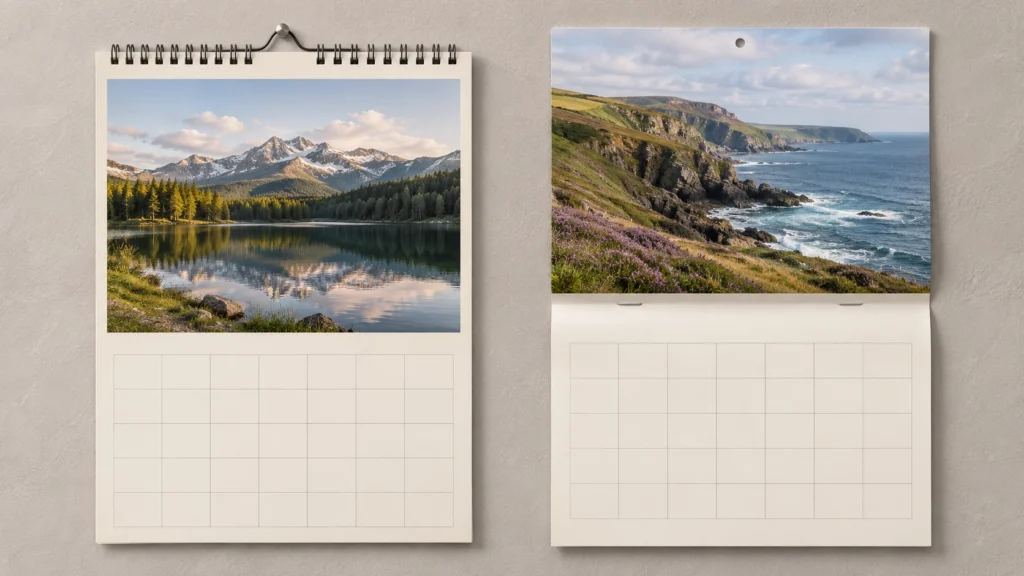
If you want a wall calendar with stiff pages, a separate backing board or a cover which flips over the top, you should opt for Wire-O. Use saddle stitch when the calendar is thin and folded back to back—typically with a picture on top and the calendar dates on the bottom. Wire-O is a good choice for high quality photo calendars and corporate gifts. Saddle stitch is frequently a better option for lightweight promotional calendars/direct mail.
The simplest way to make the decision is to create the month of January at life size and hang it up on a wall. View it from the perspective of another person that it would be placed to face, put an appointment in one of the boxes, and move to February. The three checks tell you more than a close-up photo of the binding.
Wire-O vs Saddle Stitch at a Glance
| Feature | Wire-O wall calendar | Saddle stitch wall calendar |
|---|---|---|
| Construction | Twin-loop wire runs through punched holes | Folded sheets are stapled along the center fold |
| What you see on the wall | Usually one hanging page at a time with top binding | Usually a two-page spread with a horizontal fold across the middle |
| How pages turn | Sheets flip over the wire | Pages turn at the center fold |
| Hanging method | A hanger can be fitted into the top wire binding | A hole is typically punched near the outer edge of the pages |
| Paper considerations | Can accommodate stiffer sheets and a separate backing board when properly sized | Paper must fold cleanly, and total thickness must suit the stitch |
| Best starting point | Photo calendars, art editions, and corporate gifts | Slim giveaways, mail campaigns, and image-over-grid layouts |
When Wire-O Is the Better Choice
Wire-O gives the calendar a defined top edge and lets individual sheets flip over the binding. It works well when each month needs to read as a single composition, with the photograph, logo, and dates all on the same visible page. A backing board can give the assembled calendar more support, particularly if the sheets are large.
When specifying a spiral bound wall calendar, name the hardware in your brief. Wire-O means twin-loop metal wire. The word spiral is often used broadly, so ask the printer to confirm the wire type and show you the hanger arrangement on a sample.
Page weight matters here. A thicker stock may give a photo calendar the feel you want, but the wire has to accommodate the whole stack, including the cover and backboard. On the sample, flip several sheets together, check whether they catch near the hanger, and make sure the calendar hangs straight with most of the pages on either side of the binding.
If the same campaign includes a stand up flip desk calendar, use the same artwork style across both formats and check the hardware separately. The desk version needs a stable stand. The wall version needs a hanger that works with the finished sheet stack.
When Saddle Stitch Makes More Sense
A wall calendar that is saddle stitched is created by folding the paper together and stapling it through the folds. Hung open, it provides a long, wide frame to dedicate to an image, then the bottom half to a huge monthly grid. When closed, it takes up only the width of one page and will be helpful if you specify a mailer or pack multiple calendars into a campaign kit.
One of the first things that people usually go for is a 28 page calendar. That equates to 12 monthly spreads, 24 pages, 4 of which can be used for covers and supporting material. Check to see if your printer includes the cover as part of the 28 page count, particularly if it’s going to be a different stock. Request for a page map before the design is completed.
Have the printer mark the fold and hanging hole on the template. Avoid placing faces, logos, dates and details in those areas. A logo which is centered in the perfect position in the artwork file can be centered exactly where the hanging hole requires.
What to Check Before Approving a Bulk Order
Send the same quantity, artwork requirements, and delivery destination when requesting quotes for both formats. Specify the closed size and displayed size so each quote reflects the calendar your recipients will see on the wall.
| Sample check | Wire-O | Saddle stitch |
|---|---|---|
| Hang it at eye level | Check balance and clearance around the hanger | Check that the hole lines up through the pages and the spread hangs evenly |
| Turn from January to February | Check for catching at the loops or hanger | Check that the fold opens cleanly and the next spread sits correctly |
| Review the printed grid | Check the top punch margin and writing space | Check that staples, the fold, and the hanging hole stay clear of important content |
| Pack one unit | Check protection for the exposed wire and hanger | Check the folded calendar’s fit and weight in its mailer |
If you’re also ordering a spiral bound desk calendar, check the date grid on both proofs. The artwork may come from the same campaign file, but a smaller desk layout may need larger date numbers or fewer notes per box.
Frequently Asked Questions
Is Wire-O or saddle stitch cheaper for wall calendars?
Saddle stitch can be more economical for a slim calendar with straightforward materials. Compare the full quote, including the paper, hanger or punched hole, backing board, packaging, and delivery.
Can saddle-stitch calendars use thick paper?
They can use a heavier cover in some designs. The printer needs to check whether the cover folds cleanly and whether the complete stack sits comfortably at the staples.
Does a Wire-O calendar need a backing board?
That depends on the size, paper stiffness, and hanging design. Compare bound samples with and without the proposed board if you’re trying to balance rigidity and mailing weight.
What is the best binding for a calendar people will write on?
Either binding can work. A saddle-stitched spread can give you a large grid below the photo. A top-bound Wire-O calendar can also leave plenty of writing room if the page is designed around it. Test the paper and grid together with a pen.
Can I use the same artwork for both binding styles?
You can reuse images, branding, and date information. Set up separate print files for the punch margin, fold, hanging hole, and page order required by each format.
Share on Social:


