

What Paper Weight Is Best for Wall Calendars?


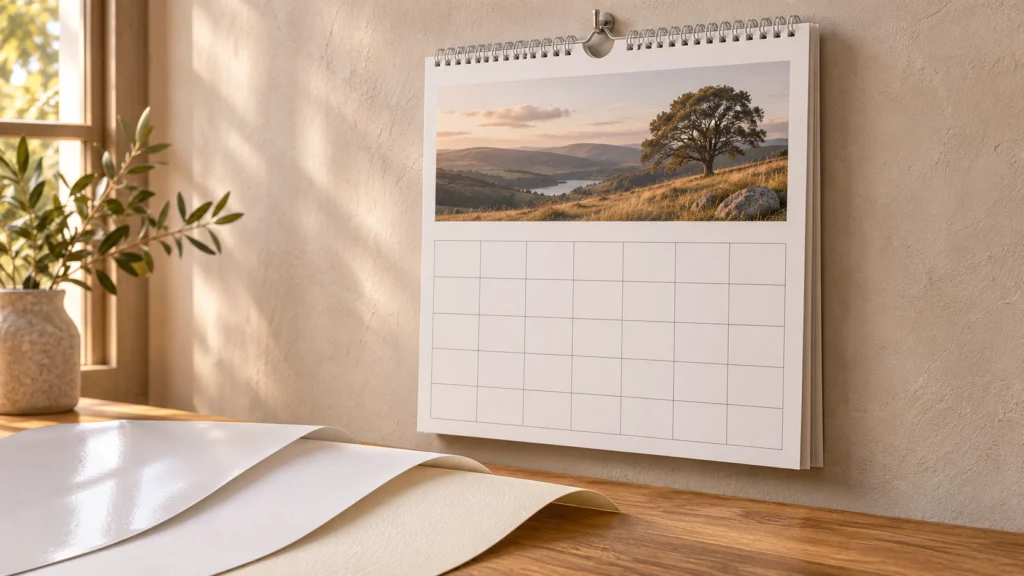
A good point to start with for most wall calendars is the 170 gsm interior pages. For a compact calendar or for one which must remain light for mailing use sample 150 gsm. Let’s compare 200 gsm with 250 gsm if it is a large photo calendar or a value-added corporate gift. If the calendar is likely to be used many times, use an uncoated sheet and try out the various pens that will be used.
The most suitable paper weight will rely on the way the calendar will be hung, twisted and used. A staff room calendar must be readable and have a writing area. A calendar of full page photos requires space for the pages to hang. Even if the two calendars are all the same size, you may want to select other papers for those jobs.
Recommended Paper Weights for Wall Calendars
GSM means grams per square meter. It measures how much a sheet weighs for its area. Two papers with the same gsm can differ in thickness and stiffness, so use the ranges below to shortlist samples.
| Wall calendar type | Interior paper to sample | What to check before ordering |
|---|---|---|
| Compact promotional calendar | 150–170 gsm | Finished mailing weight and whether the pages hang neatly |
| Standard monthly corporate calendar | 170–200 gsm | Page turning, legibility, and show-through on double-sided sheets |
| Write-on office or family calendar | 150–200 gsm uncoated | Writing feel, ink drying, and whether notes show through |
| Large photo or art calendar | 200–250 gsm coated | Page stiffness, glare, and how the full calendar hangs |
| Premium gift calendar with a separate cover | 170–200 gsm inside, 250–300 gsm cover to sample | Whether the cover and interior turn freely on the proposed binding |
For custom spiral-bound wall calendars, ask to see an assembled sample in the final size. A loose 200 gsm swatch might feel sturdy in your hand, but the real test is how twelve months, a cover, and a backing board behave together on the hanger.
When Is 150, 170, or 200 GSM the Better Choice?
Choose 150 gsm for compact or mailed calendars
Sample 150 gsm for a compact calendar with straightforward graphics, clear date grids, and a modest page count. It can also make sense when you’re mailing calendars individually. Get the weight of a fully packed sample, including the envelope or mailer. That’s the figure you’ll use when comparing mailing options.
Start with 170 gsm for everyday corporate calendars
For a typical 12-month corporate calendar, 170 gsm is the first weight I’d sample. It gives you a useful baseline for checking page feel and print appearance. If your layout prints on both sides, hold a proof against a light-colored wall and check whether a dark image on the reverse distracts from the dates.
Compare 200 and 250 gsm for large or photo-heavy calendars
A larger sheet has more room to flex, so it’s worth comparing heavier stocks at the finished size. Put the same image on both samples. Hang them where the calendar would normally be viewed, then flip a few pages. If both hang neatly and show the artwork well, the lighter stock may give you the result you want with less bulk.
Matte, Gloss, or Uncoated Paper?
Finish can change how the calendar works just as much as weight. For a calendar near a window, take a proof over to the window. For one that will hang under bright office lights, see if you can read the dates from across the room. Small details like reflections are easy to miss at a proofing desk.
| Paper finish | Best suited to | What to test |
|---|---|---|
| Uncoated | Appointment grids, staff schedules, and calendars people write on | Pen marks, ink drying, and show-through |
| Matte or silk coated | Corporate calendars that mix photography with date grids | Glare under room lighting and pen performance if users will add notes |
| Gloss coated | Photo-led calendars intended mainly for viewing | Reflections and readability from the intended viewing angle |
If your campaign includes both a wall calendar and a custom spiral-bound desk calendar, proof the same artwork on both stocks. You can keep the campaign visually consistent while choosing paper for the way each format gets used.
Check the Cover, Backing, and Binding Together
A wall calendar can be made in 3 different paper sizes. Interiors determine the feeling of each month and the month’s turn. If a gift calendar doesn’t have a separate front cover, it has a tendency to become overcrowded. The backing board holds the calendar when it is hanging. When asking for a quote, make sure to make it clear which parts you’d like to add extra stiffness to.
If you’re comparing formats, a stand-up flip desk calendar gives you another way to use the same monthly artwork. The desk version relies on its stand, while the wall version hangs from the top. Check how the stock behaves in each format before specifying the same weight for both.
For a bulk order, give a sample and the number of papers, sheets, binding, hangers, backing, etc. (papers, sheets, and binding are subject to change). Flip the pages from front to back, look for holes around the binding and ensure that the calendar hangs straight. If it’s going to be mailed, weigh it in its final packaging. These checks provide you with reasons to sell a stock or ask for another sample.
Frequently Asked Questions
Is 150 gsm too thin for a wall calendar?
It can work well for compact wall calendars and lightweight mailings. Check a bound sample for curling, show-through, and how neatly it hangs.
Is 250 gsm too thick for calendar pages?
It can suit a large or premium photo calendar. Test the full stack, since thicker sheets add weight and may need a different binding size to turn comfortably.
What paper is best for a calendar you write on?
Start with uncoated paper and test a ballpoint or gel pen in the printed date boxes. If you expect users to write with markers, try those on the sample too.
Should the cover and inside pages use the same gsm?
They can. A heavier separate cover is worth sampling if you want a firmer front for a gift edition. Approve it with the complete binding so you can check page turning.
How do I compare two papers with the same gsm?
Print the same spread on both. Compare stiffness, show-through, glare, and writing feel, then hang the samples at the intended size. Choose the sheet that works best in the finished calendar.
Share on Social:


- PREV: When to Order Corporate Calendars for 2027
- NEXT: Null


