

Bulk Journal Printing Quality Control: Binding Strength, Page Order and Trim Accuracy
Related Posts

Bulk Custom Book Printing in China for Publishers and Brands
September 30, 2026
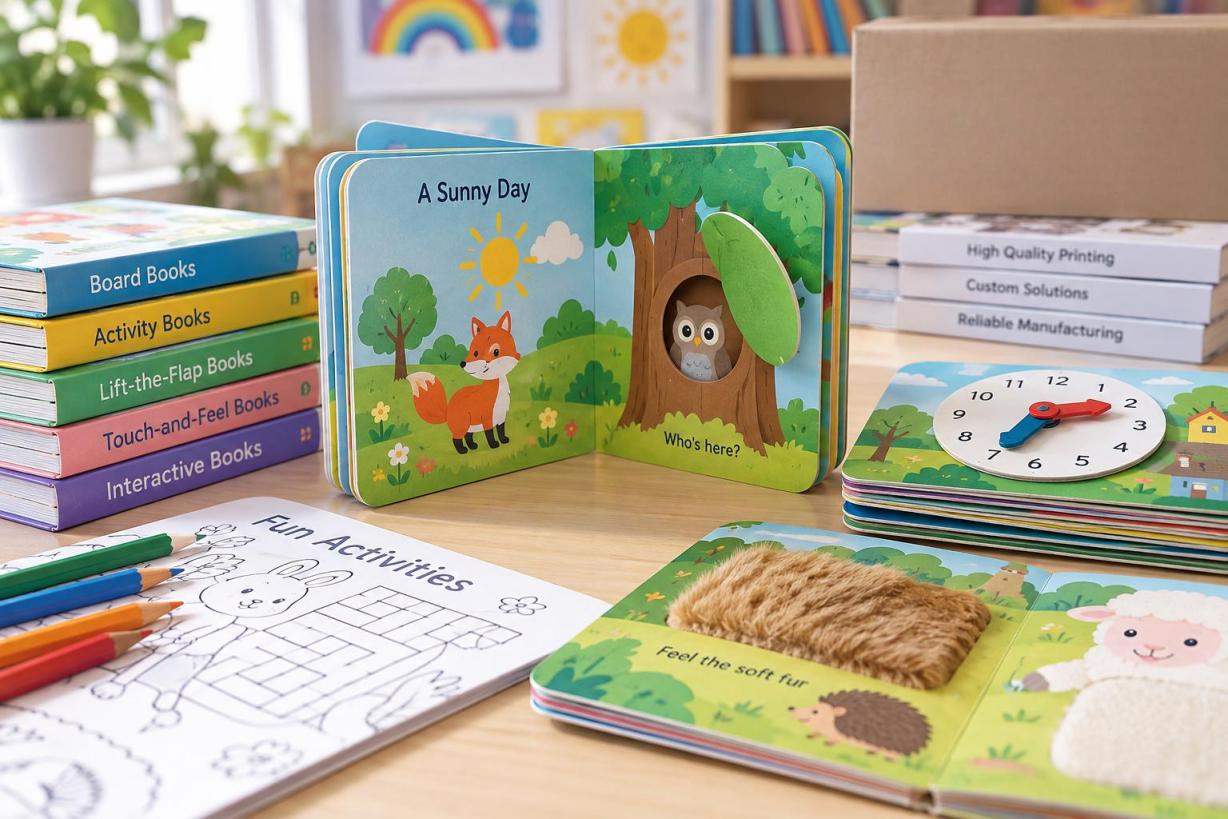
Children’s Book Printing for Publishers: 2026 Interactive Book Trends
September 30, 2026

Bulk Journal Printing Quality Control: Binding Strength, Page Order and Trim Accuracy
September 29, 2026

Softcover Book Printing in China: Short Runs, Bulk Orders and Reprint Planning
September 29, 2026
For Bulk Journal Printing, “strong binding” and “clean trimming” are incomplete specifications. Buyers need defined measurement methods, approved reference samples and clear rejection criteria.

At CAIMEI, our journal manufacturing capabilities include in-house pagination and prepress verification, paper-handling controls, and checks from printing through binding. Our 30,000+ m² production facility supports customized journal projects; each order still needs specifications matched to its materials and construction.
Start With the Defects That Affect Journal Use
A journal can look acceptable during unpacking yet fail during writing. Bulk Journal Printing quality control should distinguish structural, content and dimensional defects.
| Observed Defect | Possible Process Causes | Verification Required |
| Loose pages | Inadequate spine preparation, adhesive incompatibility or incomplete curing | Defined page-pull test and failure-mode review |
| Missing or repeated sections | Gathering errors or mixed file versions | Signature sequence and content checks |
| Uneven writing margins | Print, fold, gathering or cutting displacement | Image-to-edge measurements and squareness |
| Difficult opening | Grain direction, signature structure or spine construction | Opening assessment using actual materials |
| Warped covers or closure marks | Moisture changes or packing pressure | Packaging and arrival-condition checks |
An approved sample establishes the reference construction. Production records and batch inspection establish whether the order follows it.
Measure Binding Strength Without Overlooking Usability
Record How the Page Fails
For applicable adhesive-bound journals, page-pull testing should use a documented method. Reports should identify:
• Test-page positions and sample batch.
• Force units and any normalization by binding length.
• Conditioning and elapsed time after binding.
• Individual results and failure locations.
Paper tearing, separation at the paper–adhesive interface and failure within the adhesive layer require different corrective actions. An average alone can conceal weak positions within the book block.
Check Opening and Cover Attachment Separately
Single-page strength does not establish comfortable writing or cover durability. Specify opening angle, cycle count and failure criteria for repeated-opening checks. Examine endpapers, hinges and book-block-to-case connections independently.
“Sewn” does not automatically mean fully lay-flat. Paper grain, folds, adhesive application and case construction all affect opening resistance.
Compare Binding and Verification Routes
For Bulk Journal Printing, construction should follow intended use, page count and the evidence needed for acceptance.
| Comparison | Technical Trade-Off | Approval Focus |
| EVA vs. PUR adhesive | Different substrate compatibility, processing and curing requirements | Actual paper–adhesive combination; confirm availability |
| Sewn vs. adhesive-only | Thread-connected signatures versus adhesive-dependent page retention | Opening resistance and structure-specific failure |
| Sewn hardcover vs. Wire-O | Protected case structure versus fold-back convenience | Case attachment versus hole tearing and wire closure |
| Manual vs. code-assisted collation | Flexible visual review versus signature identification | Detection coverage, including mixed versions |
| Digital proof vs. bound production sample | Content verification versus physical construction evidence | Approve both for different purposes |
Code-assisted gathering can identify signatures without verifying every printed page inside them. Final sampling likewise complements process inspection rather than replacing it.
Match Paper Thickness, Grain and Pagination
CAIMEI offers woodfree, cream/ivory, recycled and high-opacity paper options, alongside lined, dotted and planning layouts. These choices should be evaluated together with the binding and intended writing instruments. CAIMEI journal customization
Calculate Thickness From Caliper, Not Grammage
A preliminary paper-stack estimate is:
Page count ÷ 2 × single-sheet thickness
For illustration, 192 pages using 0.10 mm paper produce a theoretical 9.6 mm stack. Adhesive, folded-signature swelling and inserts change the finished thickness. Confirm spine and cover dimensions with actual materials.
Paper substitutions can affect folding, adhesion and opening behavior even when grammage remains unchanged.
Verify Content Beyond Page Count
For Bulk Journal Printing involving planners or guided journals:
• Freeze the approved file version before imposition.
• Check dates, weekdays, language and section transitions.
• Verify folded signatures and insert placement.
• Remove superseded files and work-in-progress during version changes.
• Check unnumbered journals for sheet completeness and correct layout orientation.
A missing signature and a duplicated signature can leave the total page count unchanged.

Specify Trim Accuracy Against Clear Datums
Measure book-block size separately from hardcover size. Define tolerances for:
• Finished width and height.
• Squareness and edge condition.
• Printed rules or grids relative to trimmed edges.
• Cover overhang and rounded-corner consistency.
Length and width can pass while the book remains visibly skewed. Bleed is artwork allowance, not a cutting tolerance. Agree on measurable limits for the selected construction rather than assuming a universal millimetre value.
Inspect Attachments and Packing Conditions
Check elastic anchors, ribbon attachment and pocket adhesion where included. Attachment tests need agreed loads or handling procedures and failure criteria.
Observe required curing before testing and packing. Avoid excessive carton compression, unsupported corners and moisture exposure. Journals should be stored without sustained loads that mark closures or distort covers.
Set Batch Acceptance Before Production
A Bulk Journal Printing quality agreement should define:
| Item | Required Agreement |
| Tests | Applicable method, edition, conditioning and limits |
| Defects | Severity of loose pages, missing content and cosmetic damage |
| Sampling | Lot size, inspection level, AQL and acceptance/rejection numbers |
| Coverage | Production periods, cartons and product versions |
| Resolution | Rework, reinspection, responsibility and retained samples |
Where applicable, please check ISO 19594 for perfect-bound page-pull testing and ISO 2859-1 for Attribute sampling. AQL cannot be used to calculate the exact defective – unit ratio.Plans should be made for destructive testing and for visual inspections separately. Certification of the source or management system cannot be used to establish the performance of a batch.
For your next print order, please provide CAIMEI with the page count and other details on the materials, layout and intended use. This will allow us to understand the construction of the print and the requirements for representative samples and acceptance.
FAQs
Q1. What Binding Options Does CAIMEI Offer for Bulk Journal Printing?
CAIMEI OFFERS perfect binding, sewn binding, spiral/Wire-O and saddle stitching, alongside hardcover and softcover formats. Select the construction according to page count, opening requirements and intended use.
Q2. Which Papers Can I Choose for CAIMEI Journals?
CAIMEI offers woodfree, cream/ivory, recycled and high-opacity paper options. Confirm the specific grammage, thickness and writing performance with samples, particularly when journals will be used with fountain pens or markers.
Q3. Can CAIMEI Customize Both Journal Covers and Interior Pages?
Yes. CAIMEI supports personalized covers and lined, dotted, grid or planning layouts. Buyers can specify logos, graphics, prompts and calendars while confirming writing margins and binding clearance before production.
Q4. How Does CAIMEI Address Page Order During Production?
CAIMEI describes in-house pagination and prepress verification, together with checks through printing and binding. For dated or multilingual journals, agree on version identification, signature sequence and insert verification for the specific order.
Q5. Can I Specify Binding Strength Requirements for a CAIMEI Order?
Include your binding performance requirements in the quotation request. Confirm the applicable test method, acceptance limits, sample quantity and reporting arrangements with CAIMEI; its public product page does not publish a universal page-pull threshold.



NAME
text text text text. text text text text. text text text text. text text text text. text text text text. text text text text. text text text text. text text text t text xt. text text text text. text text text text. text text text t text
Contact Us
In This Article
Related Posts
Bulk Custom Book Printing in China for Publishers and Brands
September 30, 2026
Children’s Book Printing for Publishers: 2026 Interactive Book Trends
September 30, 2026
Bulk Journal Printing Quality Control: Binding Strength, Page Order and Trim Accuracy
September 29, 2026
Softcover Book Printing in China: Short Runs, Bulk Orders and Reprint Planning
September 29, 2026


