

28gsm vs 32gsm Bible Paper: Key Differences Explained
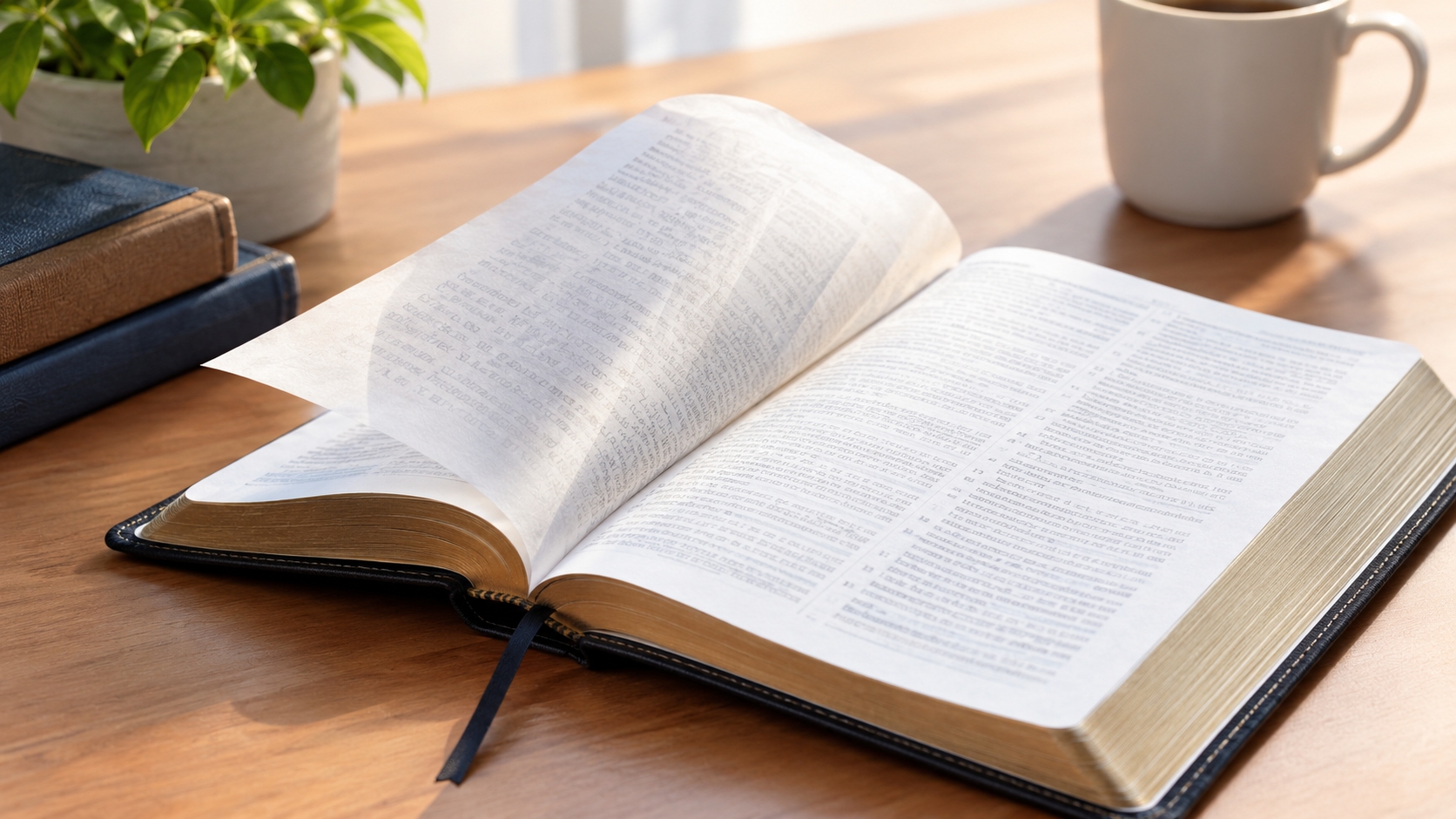
One of the most critical decisions in Bible printing is picking the right paper. Bible paper needs to be thin enough to allow for a compact book, but strong enough to endure frequent reading, turning pages and long-term storage. There are two choices: 28gsm or 32gsm Bible paper and they each have benefits in terms of thickness, opacity, durability and printing quality.
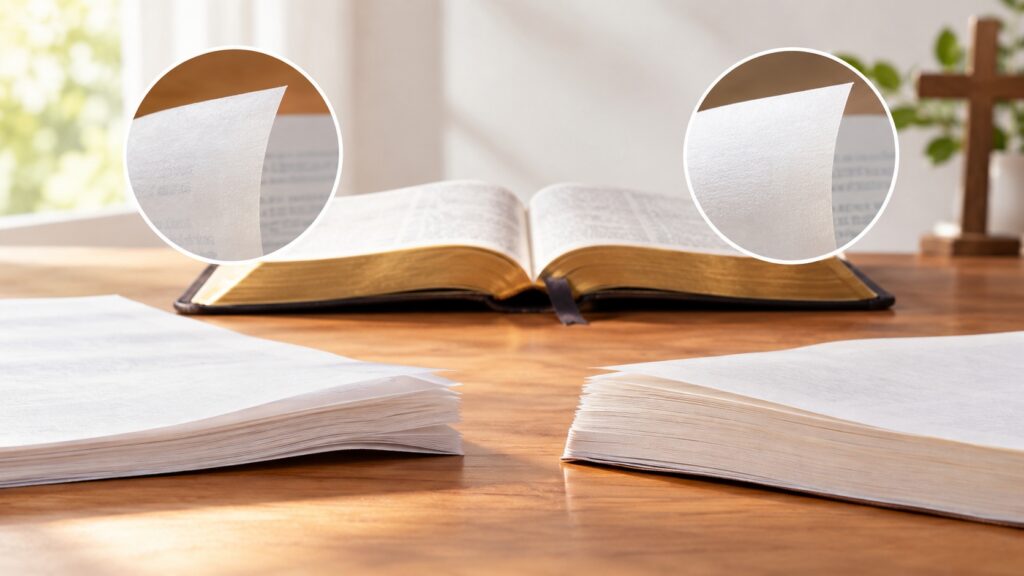
The 28gsm vs 32gsm Bible paper difference helps you choose the best paper for your Bible.As a Bible publishing company, book printing company, religious group or self publishing author, you’ll find it handy to know the difference between 28gsm and 32gsm Bible paper to choose the appropriate paper for your Bible printing project.
In this guide, we’ll be contrasting the 28gsm and 32gsm Bible paper sizes, giving you some ideas on how to use them, and helping you decide which Bible paper is the best for your printing.Single Wall Paper Cup, disposable paper cups used in coffee and bubble tea shop
What Is GSM in Bible Paper?
GSM is grams per square meter. It is a measure of the weight of paper of a standard size of 1m x 1m and is used to compare paper weights.
Bible paper is typically much lighter than regular book paper since the Bible may have thousands of pages. The use of lightweight paper will help to keep the thickness and weight of the book to a minimum, which will make it easier to carry and use.
The 28gsm paper is lighter paper used for compact book production, as is 32gsm Bible paper. The extra four grams per square meter of 32gsm paper can affect its opacity, handling properties and book size, though.
Always remember the GSM is of paper weight and not the thickness directly. Pulp composites, fillers, production process and paper finishes can result in varying thickness at the same GSM.
28gsm vs 32gsm Bible Paper: Key Differences
The primary difference between 28gsm and 32gsm Bible paper is the balance between lightweight construction and improved sheet substance.
1. Paper Thickness and Book Size
In part 28gsm Bible paper is selected because it is lightweight. It makes thick books with lots of biblical words, references, indexes and additional information lighter and thinner.
Compact pocket Bibles, travel Bibles, and for portability use 28gsm paper may be an appealing choice.
On average, the 32gsm Bible paper offers more weight to the paper per sheet when compared to other papers. Depending on the type of paper and its density, it can make a thicker book.
If you are creating a large-print Bible or one with a lot of notes, the extra paper may be worth it for the better handling, and possibly for better opacity.
Best choice: If weight and thickness of the books are a concern, pick 28gsm. Use 32gsm for a slightly heavier sheet.
2. Opacity and Show-Through
One of the most important points to be taken into account in Bible printing is opacity because many Bibles are printed on both sides of thin paper with relatively small text.
If there isn’t enough opacity to the paper, text on the backside of the paper can show through. This is sometimes referred to as show through or print through and can have a detrimental effect on reading comfort.
The 32gsm Bible paper can generally be more opaque than the 28gsm paper, especially if other material properties are equal. The opacity is also influenced by pulp selection, the type of fillers used, the coating, calendering and manufacturing technology.
Sometimes a well-designed 28gsm paper can be more effective than a poorly designed 32gsm paper.
Publishers should consider actual samples instead of relying on GSM for Bibles that contain a significant number of footnotes, cross-references and small serif fonts.
Best choice: If show-through is a concern, look at 32gsm, but check opacity with the paper type and printing techniques needed.
3. Durability and Page Handling
Bible paper should be readable and turn the pages over and over. Many readers mark scripture and open their Bibles daily to study, to attend religious services or to bring in a book of scripture to other destinations.
32gsm paper has more mass to area, so it could provide a heavier feel and handling resistance against some handling damage. However, the weight is not the only factor that determines the tear strength, folding endurance and surface strength of the paper.
The thinner, 28gsm, can also be well suited for Bible printing, when made with this in mind. The suitability depends on the use and binding process of the material.
Publishers should test the folding endurance and resistance of the paper, the way the paper will turn in the pages, and the binding method it will be used for in the premium editions.
Best choice: 32gsm for more substance in the page; consider actual mechanical properties of both paper grades.
4. Printing Quality and Text Readability
In Bible printing, fine typography is of paramount importance. Small fonts, thin strokes, punctuation, footnotes and reference symbols should be sharp and legible.
You can achieve good results with both 28gsm vs 32gsm Bible paper if you have the right ink, printing equipment and production conditions.
Lightweight paper, however, does not allow for the same leeway of ink penetration, drying and show-through. High ink absorptive paper or wrong ink type can cause difficulty to read and reverse side coloration.
When offset printing, the publishers should consider the following factors: ink density, dot reproduction, drying performance and interaction between the ink and paper. For digital printing projects, it is important to also ensure compatibility with the particular printer and finishing system.
Best choice: GSM does not necessarily mean better quality printing. Choose paper that is suitable for the print tests—with the actual text, fonts, ink, and printing technique.
5. Cost and Material Consumption
The difference between 28gsm and 32gsm paper can affect material consumption and purchasing costs.
For the same sheet area and number of pages, 32gsm paper uses approximately 14.3% more paper mass than 28gsm paper.
The calculation is:
(32 − 28) ÷ 28 × 100% = 14.3%
This does not mean that 32gsm paper will necessarily cost 14.3% more. Actual costs depend on supplier pricing, paper grade, order volume, manufacturing efficiency, waste rates, shipping, and finishing requirements.
For high-volume Bible printing, even a relatively small difference in material consumption can influence the total production budget.
Best choice: Compare quotations based on the same paper specifications, order quantity, delivery terms, and quality requirements.
Comparison Table: 28gsm vs 32gsm Bible Paper
| Feature | 28gsm Bible Paper | 32gsm Bible Paper |
|---|---|---|
| Paper weight | Lighter | Heavier |
| Finished book weight | Generally lower | Generally higher |
| Book thickness | Potentially more compact | Potentially thicker |
| Opacity | Depends on grade; may show more reverse-side text | May provide improved opacity |
| Handling feel | Very lightweight and delicate | Often feels more substantial |
| Durability | Depends on fiber quality and construction | May offer advantages in some handling tests |
| Printing quality | Excellent with suitable specifications | Excellent with suitable specifications |
| Paper mass for equal area | Lower | About 14.3% higher |
| Typical priority | Portability and compactness | Opacity and sheet substance |
These comparisons describe general tendencies. Actual performance should be confirmed with technical data sheets and production samples.
Which Bible Paper Is Better for Different Applications?
The right paper weight depends on the intended Bible format, target audience, printing requirements, and budget.
Pocket Bibles and Travel Bibles
For compact Bibles designed to fit into a handbag, jacket pocket, or travel bag, 28gsm paper is worth considering. Its lower paper mass can help reduce the weight of the finished product.
However, the publisher must ensure that the paper remains sufficiently opaque and durable for the selected type size and printing layout.
Study Bibles and Reference Bibles
Study Bibles frequently contain extensive footnotes, maps, cross-references, and supplementary content. These features can increase page count and make show-through more noticeable.
A suitable 32gsm grade may provide a useful balance of opacity and handling comfort, particularly for editions with dense text. Publishers should still assess whether the additional weight and thickness are acceptable.
Premium Gift Bibles
Premium editions often emphasize paper quality, reading comfort, binding, cover materials, and overall presentation.
A carefully selected 32gsm Bible paper may contribute to a more substantial reading experience. However, premium quality is not determined by GSM alone. Smoothness, whiteness, opacity, surface strength, and compatibility with premium binding also matter.
Large-Print Bibles
Large-print Bibles use larger fonts and may require more pages to accommodate the same content. Choosing a lightweight paper can help manage the final book’s weight and thickness.
Both 28gsm and 32gsm grades can work. Publishers should compare the complete book specifications, including page count, text size, opacity, and finished dimensions, before making a final decision.
How to Choose the Right Bible Paper
Before selecting a supplier or confirming a production order, consider the following factors.
1. Check opacity. Request opacity measurements and printed samples to assess whether reverse-side text interferes with reading.
2. Confirm thickness. Ask for the paper’s caliper or thickness measurement in addition to GSM. This helps estimate the final book block thickness.
3. Evaluate mechanical strength. Review tear resistance, tensile strength, folding endurance, and surface strength where relevant.
4. Test the printing process. Print representative pages containing small fonts, bold text, footnotes, and fine lines. Inspect both sides of each sheet.
5. Calculate the finished book dimensions. Consider total page count, paper thickness, binding allowance, and cover construction.
6. Compare total production costs. Include paper prices, printing efficiency, waste, shipping weight, and finishing costs rather than comparing paper prices alone.
7. Request consistent specifications. Ensure that the supplier can maintain the required GSM, thickness, opacity, whiteness, and other quality parameters throughout production.
Frequently Asked Questions
Is 28gsm Bible paper too thin?
Not necessarily. Many lightweight Bible papers are specifically engineered for thin-page applications. A 28gsm grade can be suitable when it offers sufficient opacity, strength, and print performance for the intended Bible design.
Is 32gsm Bible paper more durable than 28gsm?
Not always. The higher weight may provide a more substantial feel, but durability also depends on fiber composition, manufacturing quality, tear resistance, and folding endurance. Compare technical specifications and samples before deciding.
Does 32gsm Bible paper prevent show-through?
It may reduce show-through compared with a similar 28gsm grade, but it does not guarantee that reverse-side printing will be invisible. Paper opacity and ink behavior are important factors.
Which paper is more economical for Bible printing?
28gsm paper generally uses less paper mass for the same printed area. Whether it is more economical overall depends on the supplier’s price, quality requirements, waste rates, shipping, and production conditions.
Can 28gsm Bible paper be used for offset printing?
Yes, provided the paper is designed for the intended offset printing process and its ink absorption, surface strength, and opacity meet the project’s requirements. Production testing is recommended.
Conclusion: 28gsm or 32gsm Bible Paper?
A 28gsm Bible paper vs 32gsm Bible paper comparison will come down to the different priorities of your Bible printing project.
Opt for 28gsm Bible paper if portability, reduced material usage, and a compact finished book are significant concerns.
If you’re interested in exploring a slightly heavier paper that may provide a better opacity, have a more substantial feel, or benefits in particular handling applications, opt for 32gsm Bible paper.
Both are not ideal per se. The safest way is to check and print out paper specifications, and then view the final product prior to ordering in bulk.
A Bible paper supplier with experience can be of great help to Bible publishers, book manufacturers, and printing companies to provide them the consistent quality and reliable production results. When you factor in GSM, opacity, thickness, strength and printability, you’ll be able to pick the best paper to help you make your Bible readable, durable and well designed!
Share on Social:


