

Book Printing Quality Control Guide for Better Print Quality

Related Posts
Bulk Custom Book Printing in China for Publishers and Brands
September 30, 2026
Children’s Book Printing for Publishers: 2026 Interactive Book Trends
September 30, 2026
Bulk Journal Printing Quality Control: Binding Strength, Page Order and Trim Accuracy
September 29, 2026

Softcover Book Printing in China: Short Runs, Bulk Orders and Reprint Planning
September 29, 2026
Book Printing Quality Control Guide: How to Check Quality at Every Stage
A beautiful book may soon become worthless when the pages are not in place, the colors change, or the binding begins to break. Quality control is not a last-minute check for publishers, brands, retailers, and authors. It starts with the art and proceeds to printing, binding, finishing, packing, and shipping.
- The book printing quality control guide of a reliable book printer should thus address the entire production cycle. From a keen PDF examination up to paper checking and binding tests, each process contributes to the creation of books that appear refined and work well.
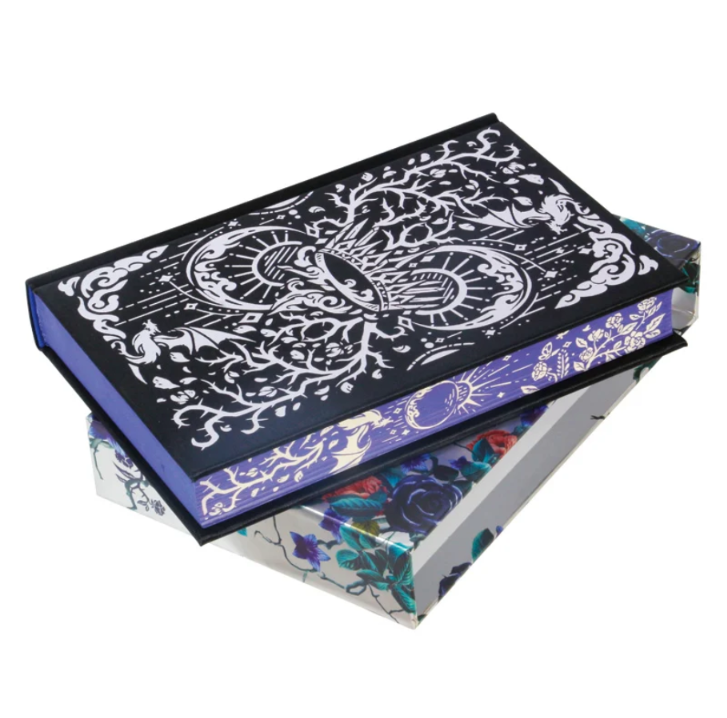
- The hardcover book with slipcase of CAIMEI is a helpful illustration of how various processes that are sensitive to quality are combined. The product is a combination of offset printing, case-bound construction, thread sewing, foil stamping, sprayed edges, a custom slipcase, and a variety of finishing options. Its process list comprises a pre-production sample and 100 percent final inspection.
Importance of Quality Control in Book Printing
Quality control of good book printing is concerned with consistency. All copies within a production lot must be of the same size, color, page order, binding, and finishing as the approved sample.
This is even more significant when it comes to bulk book printing, where a minor flaw can be replicated in hundreds or thousands of copies. A good quality assurance process in book printing can help to detect issues before they turn out to be costly production problems. Quality control of professional commercial printing is usually checked prior to, during, and after production. The process, depending on the type of book, is different, but the overall objective is the same: ensure that the final product meets the approved specifications.
An effective inspection system must include:
• Prepress files and artwork.
• Cover and paper material.
• Binding strength
• Accuracy of cover and spine.
• Finishing quality
• Final appearance
• Condition of packaging and shipment.
Start with Prepress, Not the Printing Machine
A lot of printing issues can be avoided prior to production. This is why one of the most significant steps of the process is prepress quality control. An adequate prepress check must ensure that the files provided are complete and technically appropriate. An inspection of a book artwork can reveal the lack of pages, wrong images, bad typography, and other problems before they are sent to the press.
A handy print-ready file checklist must consist of:
• Correct finished size
• Proper bleed and trim settings
• Crop marks where necessary
• Adequate safe margin
• Correct page order
• Embedded fonts
• High-resolution images
• Proper preparation of CMYK files.
• Stable image color profile.
• Proper cover and spine sizes.
Some of these checks can be automated by a PDF preflight. An effective PDF preflight checklist must indicate missing fonts, low-resolution images, wrong color spaces, transparency problems, and page-size anomalies. Quality of the print file should also ensure that all the text is included and that no artwork has moved during PDF export. This last print file check is an easy procedure, yet it can save big issues in the future.
Check Registration, Clarity and Ink Coverage
The artwork in a book can be technically correct and yet appear poor unless the press is adjusted appropriately. Print registration is significant in case several color plates should be aligned. Bad registration may result in colored halos or blurred edges around graphics and text. Checking printing alignment is thus to be done during the press run. Other visual checks are:
• Print clarity
• Image reproduction quality
• Ink coverage
• Fine text definition
• Solid color areas
• Gradient transitions
• Image sharpness
• Ink smudging prevention
• Digital printing banding
With illustrated books and high-quality editions, these checks are particularly crucial, as photographs, artwork, and decorative elements are often the primary focus of the product.
Needs Binding Requires Its Own Inspection
After the pages have been printed, the book must still be made a solid physical object. Here, the quality control of book binding is critical.
- The correct book binding check should include the assessment of the pages being firmly bonded, the straightness of the spine, and the cover being properly placed with the book block.
- Checks are needed in different binding styles. The ideal binding quality control should be based on adhesive coverage, page adhesion, spine construction, and cover placement. The inspection of the hardcover binding should look at the board alignment, hinge construction, wrapping of the covers, and accuracy of the spine.
- In case of stitched books, the thread position and sewing uniformity must be checked. Staple position, page sequence, folding accuracy, and overall alignment should be checked by a saddle stitch inspection.
- The simplest binding strength test will allow detecting loose pages or weak adhesive. With high-quality books, the spine or hinge may also be problematic as shown by repeated opening and closing.
Last Check Before Books Go Out of the Factory
The last stage of the book printing quality control guide is the last chance to identify defects prior to shipment. It must be a combination of visual inspection and a few physical checks.
- Random copies of the batch that has been finished can be inspected and compared to the approved sample by the inspectors. In high-value projects, extra checks can be suitable to bind, cover finishing, page sequence, and packaging.
- An effective book printing inspection procedure must be able to detect significant flaws and distinguish them from minor cosmetic problems. Missing pages, incorrect text, severe color differences, and failed binding are much more serious than a small cosmetic variation.
The quality inspection of book printing is not aimed at requiring that all the details that look like they are made by hand should be the same. It is to provide sensible production tolerances and ensure that the completed books are always of the agreed specification.
Conclusion
The outcome of dozens of little decisions is a great printed book. The painting should be done properly. The paper must be appropriate to the project. Colors ought to be the same. There should be proper registration of pages. The binding should be solid. The final appearance should be clean, and the final inspection should ensure that the final product is the same as the approved sample. In case you are planning a new print run, call CAIMEI Printer with your artwork, specs, quantity, and finishing needs. The correct quality process will make a printed file look like a book, feel like one, and be strong enough to withstand the real world.
Share on Social:


Contact Us
Related Posts
Bulk Custom Book Printing in China for Publishers and Brands
September 30, 2026
Children’s Book Printing for Publishers: 2026 Interactive Book Trends
September 30, 2026
Bulk Journal Printing Quality Control: Binding Strength, Page Order and Trim Accuracy
September 29, 2026
Softcover Book Printing in China: Short Runs, Bulk Orders and Reprint Planning
September 29, 2026


