

Top 10 Bible Printing Manufacturers for Publishers

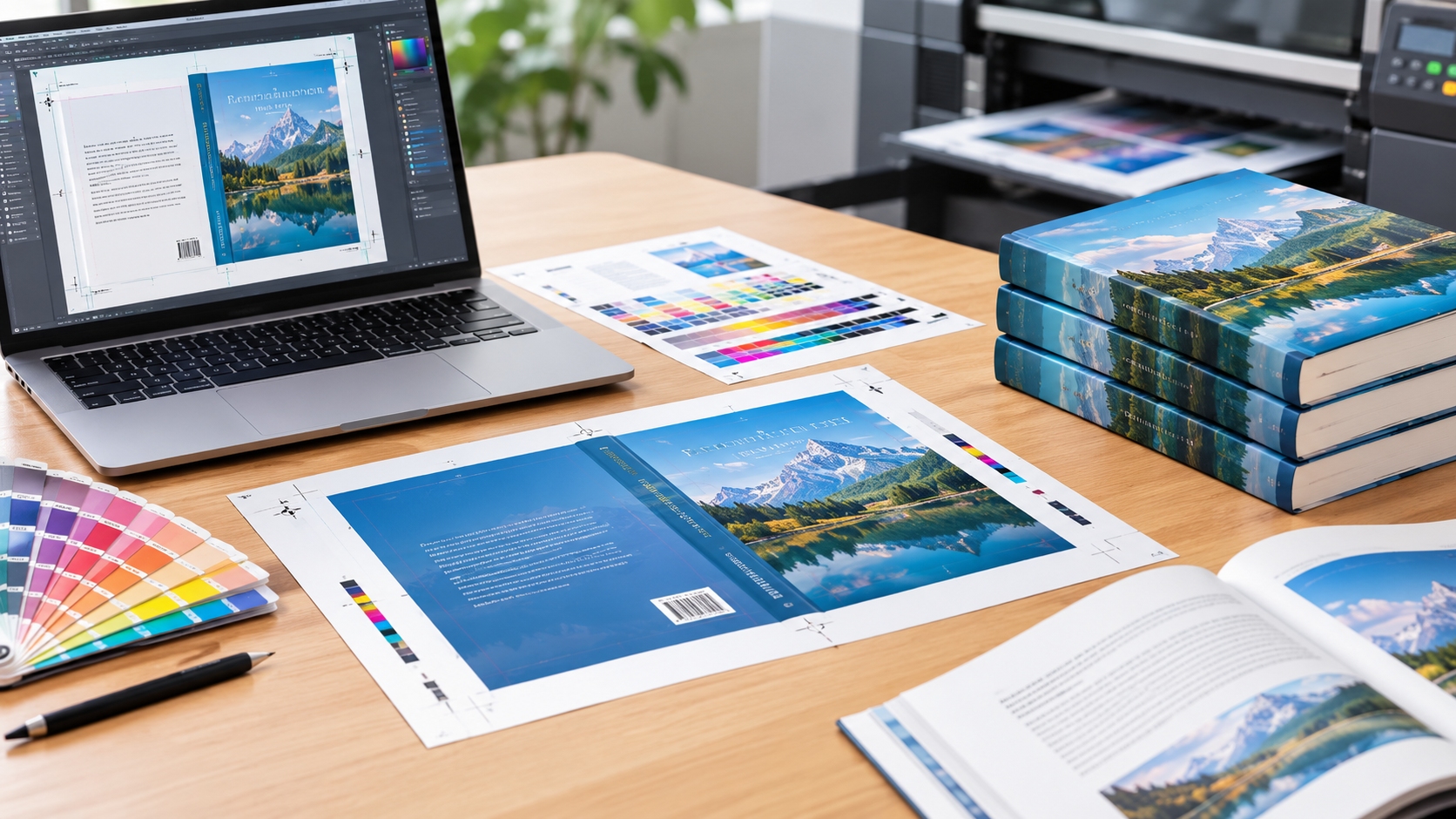

Printing the Bible is a different process than printing a book. Readability and binding performance are particularly critical when pages are numerous, paper light, text is small and handling is frequent. Even a beautiful cover cannot make up for pages which are hard to read.
When assessing Bible printing manufacturers, publishers may want to look at CAIMEI, Amity Printing, Jongbloed, CPI Print, Printcorp, Fusheng Printing, Berean Press, QinPrinting, KS Printing and Chinaprinting4u.
This editorial shortlist is based on a list of Bible printing services that have been described publicly. Contains manufacturers that specialize in printing books and wider book printers, but not an audited ranking of them. Numbering is not a measure of quality nor of production capacity.
Bible Printing Manufacturers at a Glance
Start by matching the manufacturer’s experience to your edition. A compact reference Bible and an illustrated children’s Bible need different specifications.
| Manufacturer | Relevant published focus | First evaluation point |
|---|---|---|
| CAIMEI | Custom Bibles, thin paper, varied covers | Edition construction |
| Amity Printing | Bible manufacturing | Publishing-program requirements |
| Jongbloed | Ultra-thin-paper Bibles and binding | Premium reading experience |
| CPI Print | Thin-paper religious publications | Production and replenishment |
| Printcorp | Bibles and religious-book binding | Paper and cover combinations |
| Fusheng Printing | Thin-paper printing and Bible production | Paper handling and finishing |
| Berean Press | Bibles, Scripture portions, hymn books | Language and binding requirements |
| QinPrinting | Custom standard and premium Bibles | Materials and customization |
| KS Printing | Bible and religious-book printing | Edition specifications |
| Chinaprinting4u | Custom Bible printing | Paper, covers, and packing |
1. CAIMEI
CAIMEI offers custom Bible printing with thin-paper options, multilingual layouts, decorative edges, and different cover constructions.
It is worth evaluating when an edition combines several custom features. Ask for a representative sample using the proposed paper and binding. Review text clarity, show-through, opening behavior, and cover flexibility together. These qualities determine how the Bible feels during everyday reading.
2. Amity Printing
Amity Printing is a manufacturer of bibles by the Amity Foundation and United Bible Societies.
It can be used as a criterion when considering established Bible-production partners. Start with the final language, edition, number and distribution plan. Get samples similar to the book you’re considering; experience with Bible manufacturing has yet to match your specific needs.
3. Jongbloed
Jongbloed specializes in ultra-thin-paper printing and Bible binding, with a published focus on high-end Bibles and hymnbooks.
Consider it when paper feel, compact dimensions, and binding craftsmanship are central to the edition. Discuss the complete finished structure rather than selecting paper weight alone. Ask to handle comparable books before finalizing the specification.
4. CPI Print
CPI Print describes Bible and religious-book production within its thin-paper offering. Its broader services also cover publishing and stock replenishment.
Publishers managing recurring demand can explore both manufacturing and supply arrangements. Confirm which production site would handle the edition, the available materials, and the process for repeat orders. Keep approved specifications attached to each reprint request.
5. Printcorp
Printcorp presents Bible printing as a major product line, with thin-paper production and several binding and cover options.
It provides another candidate for publishers comparing flexible and rigid editions. Request samples showing the proposed paper, cover material, and edge treatment. Confirm that the production samples represent comparable page counts, since a thinner book may behave differently when opened.
6. Fusheng Printing
Fusheng Printing refers to thin paper printing of Bible pages as well as sewing, hardcover making, and making custom covers.
Consider it when evaluating the connection between the paper printing and finishing. Inquire about checking of folded sections, page sequence, binding, etc. and how final appearance will be checked. Set up specific approval points for complex editions – one for the printed pages and another for the finished book.
7. Berean Press
Among Berean Press’s publications are Bibles, Scripture portions, and hymnbooks, in Indian and international languages. It refers to printing and binding services that are performed within the company.
Language-specific edition publishers can talk about appropriate production references. Make clear who will do proofreading of the language. A printer’s file checks should be used in tandem, not instead of editorial checks, with the publisher’s approved text.
8. QinPrinting
QinPrinting offers custom Bible printing for standard and premium editions, with material and finishing choices.
It can be included when comparing different product specifications. Send one complete brief and request clearly identified alternatives. For example, changing paper, binding, and cover simultaneously makes it difficult to understand which choice affects the price.
9. KS Printing
KS Printing lists Bible printing alongside its broader book-production services, including foil-stamped editions.
Publishers can evaluate it for customized religious-book projects. Confirm the proposed paper stock, printing colors, binding, and cover construction in writing. If requesting a red-letter edition, make the relevant artwork and approval requirements explicit from the beginning.
10. Chinaprinting4u
Chinaprinting4u offers custom Bible printing with paper and cover options.
It offers another quotation possibility for publishers to compare full editions. Distinguish between manufacturing costs and optional items like ribbons, indexing, single boxes and shipping. Specify what’s included and don’t take anything for granted.
What Should Publishers Specify Before Requesting Quotes?
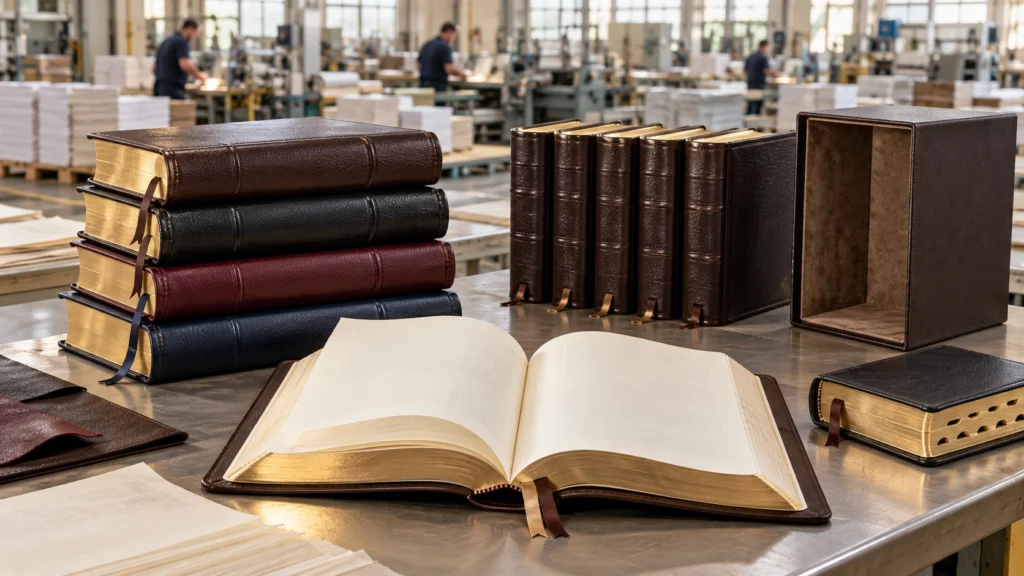
“Thin paper, leather cover, gold edges” is a starting description, but it leaves important decisions unresolved.
| Specification | What to confirm |
|---|---|
| Text and edition | Approved files, language, version, and revision |
| Format | Trim size, page count, columns, and margins |
| Paper | Stock, weight, opacity, shade, and thickness |
| Printing | Black-only, red-letter, or additional colors |
| Binding | Book-block construction and cover attachment |
| Cover | Genuine leather, PU, cloth, or printed material |
| Accessories | Indexing, ribbons, edge finish, and packaging |
| Approval | Sample type and written acceptance criteria |
A thumb-index Bible needs accurate index positions and clearly approved labels. Check these against the finished pagination.
For a zippered Bible edition, inspect how the zipper and cover fit around the book block. Confirm the material rather than relying on the description “leather-look.”
Frequently Asked Questions
Which Bible printing manufacturer is best?
The strongest match depends on your edition. Compare relevant samples, technical proposals, communication, and complete quotations before choosing.
Is the lightest Bible paper always preferable?
No. Weight is only one factor. Compare opacity, thickness, strength, surface feel, and printed readability using actual samples.
Can a printer eliminate show-through?
Avoid expecting an absolute guarantee. Agree on an acceptable printed reference and assess it under consistent viewing conditions.
Does sewn binding guarantee a flat opening?
Not by itself. Paper, sewing, adhesives, spine construction, and cover attachment all affect opening behavior. Test the representative sample.
Can manufacturers produce red-letter Bibles?
Ask each candidate to confirm the option. Provide approved artwork and check the additional color carefully during proofing.
What should a physical sample demonstrate?
It should answer agreed questions about size, thickness, paper, binding, covers, and accessories. Clarify any differences from final production.
How do publishers maintain reprint consistency?
Retain approved files, specifications, and physical references. Confirm substitutions before production, especially when paper or cover materials change.
What should be agreed before paying a deposit?
Confirm specifications, sample approvals, payment terms, inspection arrangements, packing, and delivery scope. Name the final approved artwork revision explicitly.
Share on Social:


